Editorial: When a Party Refuses to Look in the Mirror
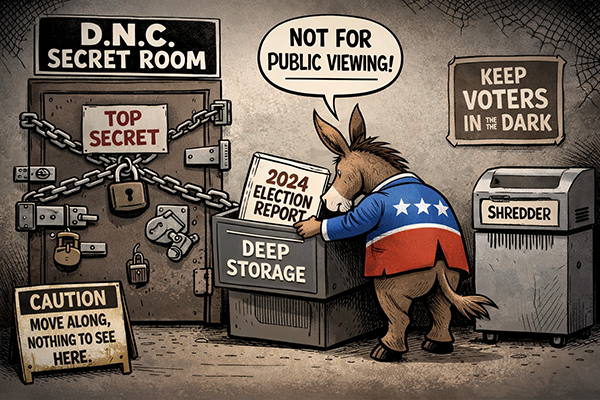
The Democratic National Committee’s decision to shelve its long-promised review of the 2024 election raises a troubling question: what is the party afraid of learning – or revealing?
After commissioning more than 300 interviews across all 50 states to understand what went wrong in 2024, DNC Chair Ken Martin has chosen to keep the findings under seal, arguing that public introspection would be “counterproductive” to winning future elections. In other words, transparency is lost to political calculus.
Political costs
That decision may be understandable in the narrow language of campaign strategy, but it carries a broader cost.
Political parties, like institutions of any kind, erode trust when they refuse to examine their own failures openly – especially after losing every battleground state and suffering historically low approval ratings in Congress.
What makes the move especially unsettling is what the report was expected to avoid. Early indications suggested it would largely sidestep hard questions about whether President Joe Biden should have sought reelection, how Vice President Kamala Harris’s campaign was run, and how $1.5 billion was spent in just 15 weeks. Several senior campaign officials reportedly declined to participate at all. That alone signals unresolved internal fractures.
Familiar Democratic instinct
Instead of confronting those questions, party leadership appears to be reverting to a familiar Democratic instinct: tight central control. Control over messaging. Control over accountability. Control over who is scrutinized and who is protected.
For many voters, this looks less like strategic discipline and more like institutional self-preservation – shielding powerful consultants, senior staff, and future presidential hopefuls from uncomfortable scrutiny.
Did withholding the report do more damage than releasing it?
Ironically, withholding the report may be doing more damage than releasing it ever could. Polling already shows deep voter dissatisfaction with Democratic leadership. Avoiding a candid reckoning reinforces a perception that mistakes are buried rather than corrected. History suggests this pattern carries consequences: Hillary Clinton’s insular 2016 campaign, Joe Biden’s delayed exit in 2024, and now a party leadership reluctant to publicly ask how it got here.
Yes, Democrats have won some recent special elections. Yes, dissatisfaction with Donald Trump may create opportunities in 2026. But political momentum built on silence is fragile. Winning elections requires more than attacking the opposition. It requires earning trust, including from one’s own base.
The deeper risk
The deeper risk is not tactical. It is cultural. A party that prioritizes “Does this help us win?” over “What did we get wrong?” risks repeating the same errors under new banners and new candidates.
If Democrats want voters to believe they can govern responsibly, they must first show they can evaluate themselves honestly.
Transparency is not a distraction from winning. It is a prerequisite for it.