Covid Heroes Now Hunted Down
When the world shut down during the pandemic, immigrant workers kept Iowa open. They stood shoulder-to-shoulder in meatpacking plants, cleaned hospital rooms, delivered food, and worked the soil that sustains us all.
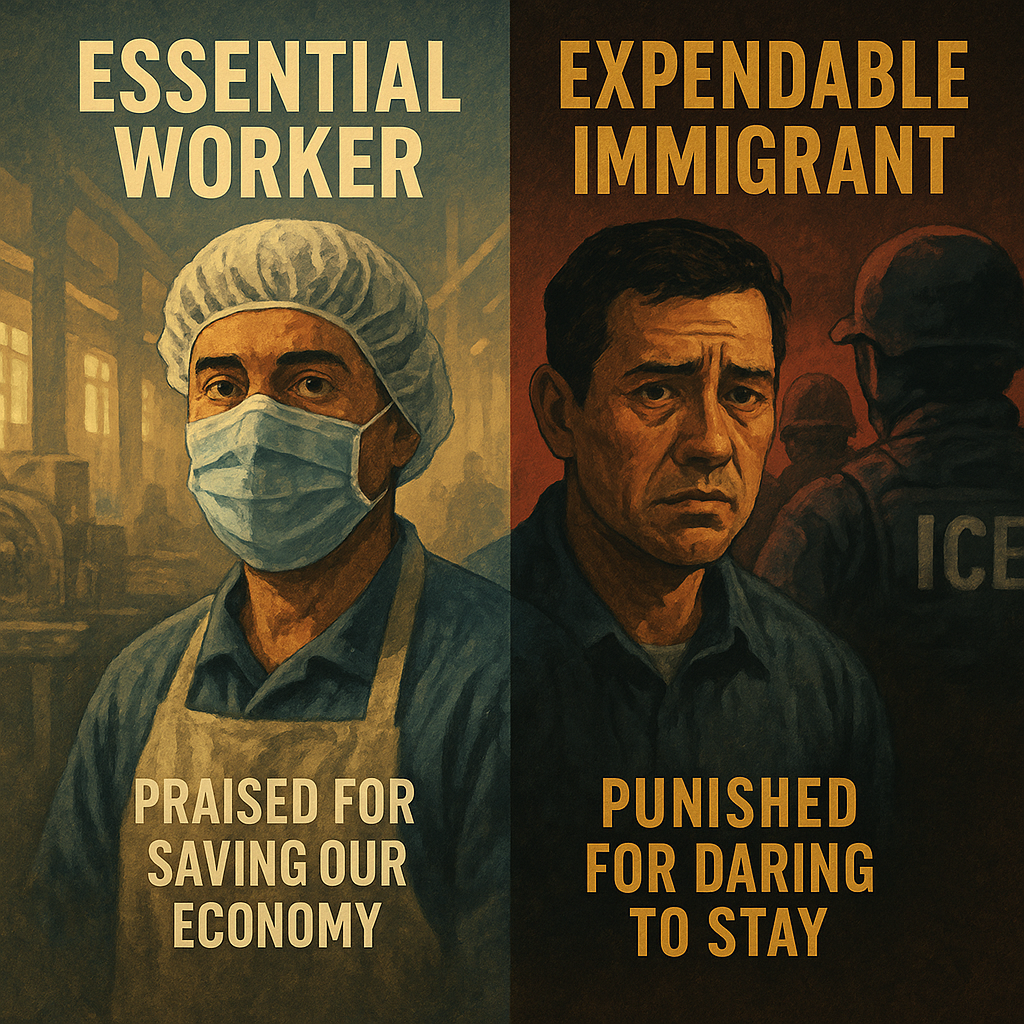
They were called “essential workers.” They kept our shelves stocked, our families fed, and our economy alive.
Now, many of those same workers are being called something else entirely: “illegal.”
They are being detained, deported, and demonized by the very state that once depended on them for survival.
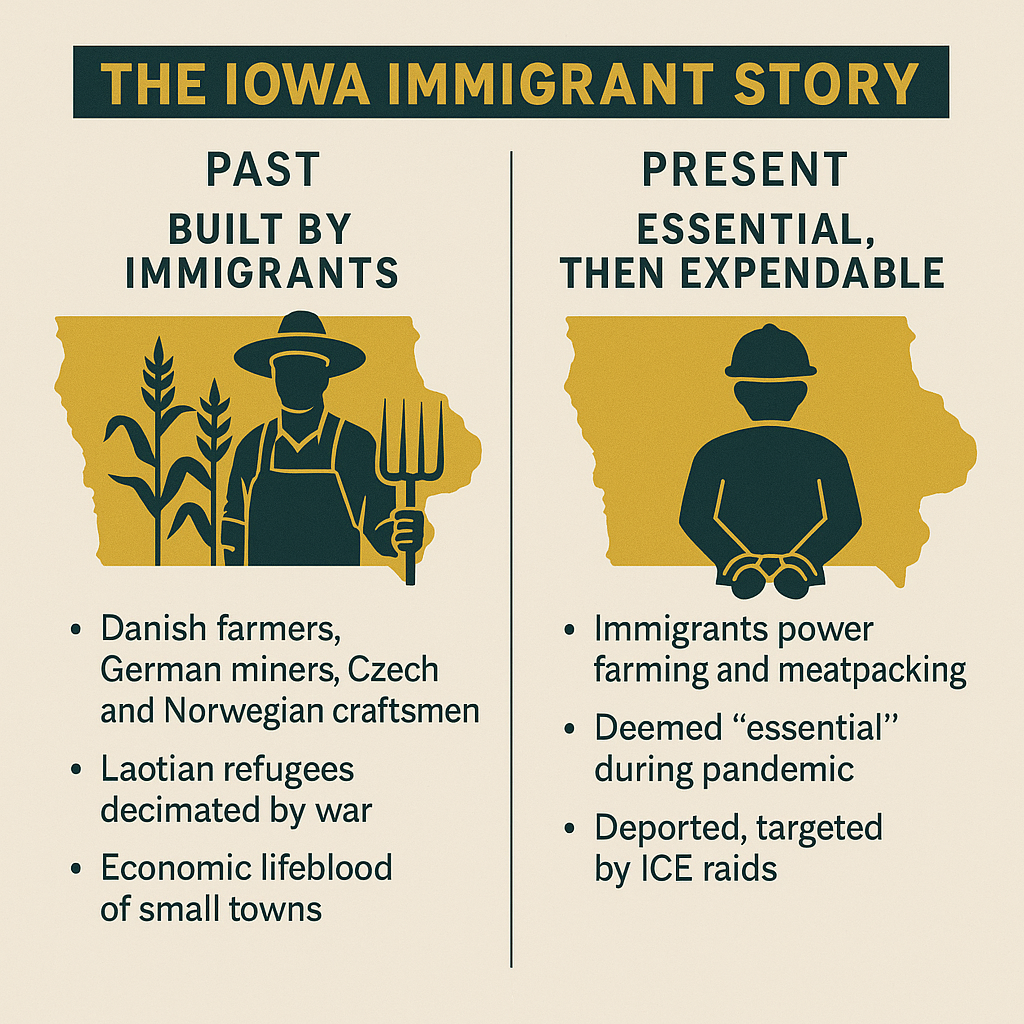
This is Iowa’s paradox — a place built by immigrants, nourished by immigrants, and yet, increasingly hostile toward them.
The Frontline of the Pandemic
When COVID-19 hit, Iowa’s immigrant workforce — especially in the meatpacking industry — didn’t have the luxury of staying home. They worked long shifts in crowded plants while the rest of us stayed safe behind closed doors.
They risked infection and, in many cases, lost their lives to keep the supply chain running. Some became sick; others died. Yet they were hailed as heroes — the lifeblood of “essential America.”
Many Iowans saw them as neighbors, friends, and colleagues. Families dropped off meals, churches offered prayers, and small towns stood together in gratitude.
But that gratitude was fleeting. As the crisis faded, so did compassion.
Raids and Repercussions
Fast-forward to today. ICE agents, with support from the Iowa National Guard, conduct raids in the same towns the workers helped sustain.
Families that once gathered for community festivals now hide behind locked doors. Children fear that a knock at the door could mean losing their parents.
Many of the deported have lived here for decades — raised families, paid taxes, and built homes. These aren’t nameless migrants passing through; they are part of Iowa’s family. Their absence leaves hollow spots in classrooms, church pews, and workplaces.
And yet, those who profit most — the massive agribusiness corporations that depend on immigrant labor — remain untouched.
Corporate Immunity
The meatpacking industry and its lobbyists have ensured that raids rarely touch the boardroom. Corporate executives are spared the scrutiny that falls on the people who make their profits possible.
During the pandemic, these same companies labeled their immigrant employees as “essential” to keep production lines moving — even as they failed to provide adequate safety measures.
Now, as anti-immigrant fervor sweeps through Iowa politics, those workers have become politically “expendable.”
Meanwhile, companies post record profits, CEOs host fundraisers, and the cycle of exploitation continues — sanctioned by a state that shields power and punishes poverty.
Faith, Fear, and the Triad
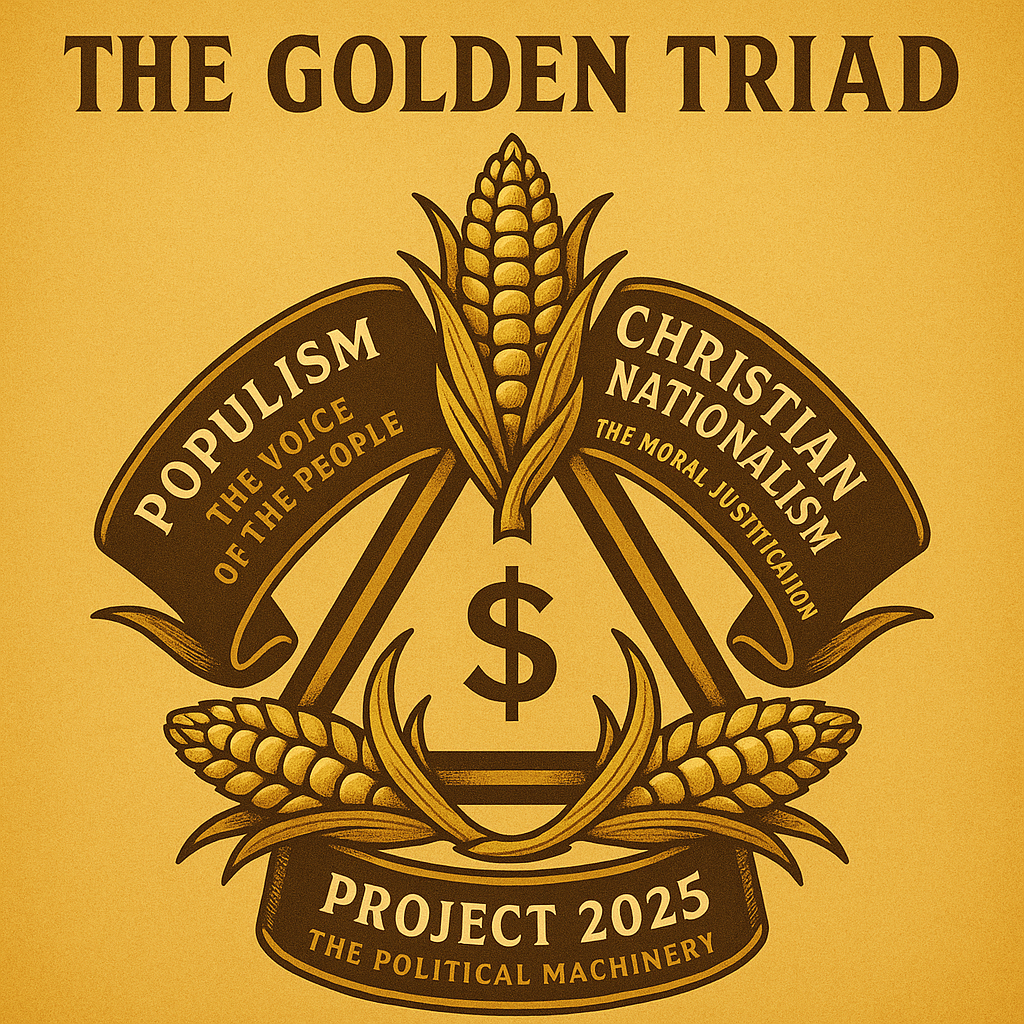
Behind this transformation lies a powerful ideological engine — what I call The Golden Triad: Populism, Project 2025, and Christian Nationalism.
Together, they have reframed compassion as weakness and rewritten the Gospel to serve political ends.
Christian Nationalists preach about “protecting families” while tearing immigrant families apart. Project 2025’s architects draft blueprints for mass deportations under the guise of “order and sovereignty.”
And populist politicians, claiming to speak for “real Americans,” rally voters by weaponizing fear — blaming immigrants for crime, inflation, and cultural decline.
But here’s the truth: Iowa doesn’t have a crime problem because of immigrants. Iowa has a moral problem because of politicians.
Reclaiming Humanity
Still, in small towns and city neighborhoods, hope endures. You can see it in the church that shelters families at risk of deportation. In the teachers who quietly help immigrant students stay in school. In the employers who speak out against unjust policies even when it’s unpopular.
These acts of courage — small and steady — remind us that the heart of Iowa beats stronger than the hate that tries to divide it.
Our story is not finished. It is still being written by every farmer, teacher, nurse, and immigrant who believes that compassion is not a weakness — it’s a responsibility.
As a native Iowan and the grandson of Danish immigrants, I know this deeply: Iowa’s greatness has never come from exclusion. It comes from the hands that build, harvest, and heal — no matter where those hands were born.