Summary
Today’s Iowa411 News Briefs examine the impact of Trump-era federal grant cuts on rural schools, leaving districts without mental health counselors and enrichment programs.
In politics, Republican gubernatorial candidate Rep. Randy Feenstra fully embraces Trump policies as he campaigns for Iowa governor.
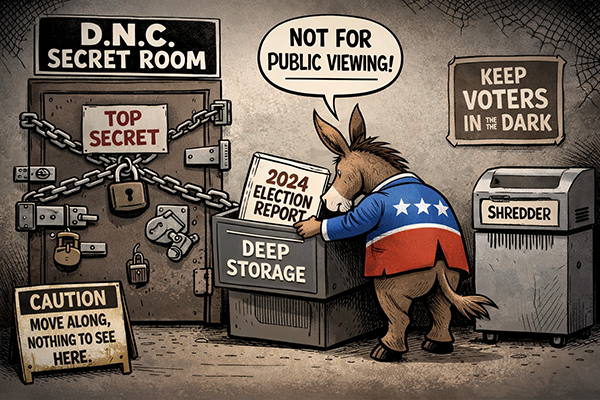
And growing criticism of the Democratic National Committee’s decision to withhold its 2024 election “lessons learned” report raises questions about the party’s lack of transparency.
Together, these stories highlight the costs of centralized political decision-making, accountability gaps, and the real-world consequences of policy choices for Iowans.
Rural schools hit by Trump grant cuts have few options to make up for lost funding
Federal grant cancellations under the Trump administration are hitting rural school districts especially hard, eliminating programs that support student mental health, teacher development, and academic enrichment.
In many cases, the funding was cut mid-grant, forcing counselors, educators, and program coordinators to leave before initiatives could mature.
Rural districts, which rely more heavily on federal dollars than wealthier suburban systems, often lack the tax base to replace lost funding.
In Kentucky and other rural states not challenging the cuts in court, schools face stark tradeoffs: eliminate counseling and after-school programs, increase class sizes, or cut enrichment opportunities.
Administrators stress that the affected programs were not political, but practical – focused on early mental-health intervention, community engagement, and student attendance. The long-term consequences may not surface immediately, but educators warn the absence of these supports will widen achievement gaps over time.
Community-school models, partnerships with local governments, and volunteer-driven programs have softened the blow in some districts. But leaders acknowledge these stopgaps cannot fully replace dedicated staff funded through multi-year federal grants.
Our Take
This is a textbook example of policy decisions made far from classrooms producing real consequences for students closest to the margins.
Rural schools already operate with fewer resources and thinner staffing. Cutting grants midstream doesn’t just end programs – it erases trust, continuity, and institutional momentum. If federal leaders want rural America to thrive, stripping away early-intervention supports is an odd place to start.
Feenstra embraces Trump agenda as MAGA litmus test for Iowa governor’s race
U.S. Rep. Randy Feenstra continues to position himself as the most unapologetically pro-Trump candidate in Iowa’s 2026 gubernatorial race. He defends the “Big Beautiful Bill,” Trump-era tariffs, and a trade strategy that has required billions in federal farm aid to offset farmer losses.
Speaking to small, friendly crowds, most recently a Pizza Ranch stop in Cedar Rapids, Feenstra argues that affordability gains will materialize once Trump’s policies “fully kick in,” even as many Iowans report continued cost pressures.
Feenstra framed tariffs as a necessary short-term sacrifice to revive U.S. manufacturing and rebalance trade, while acknowledging farmers’ frustration with volatile markets and rising input costs.
He defended temporary aid packages as a bridge to future export growth, though many producers say they prefer stable markets to government checks. On health care, Feenstra emphasized rural hospital access but declined to support extending Affordable Care Act premium subsidies, instead backing a GOP alternative that does not address looming premium hikes for those enrolled in the ACA marketplace.
Critics note Feenstra has skipped several GOP candidate forums, opting instead for controlled appearances. Supporters argue his congressional experience and name recognition make him the frontrunner.
Our Take
Feenstra’s campaign is less about persuasion than validation – a test of how deeply MAGA politics resonate in Iowa once economic tradeoffs are fully felt. The strategy may energize the base, but it leaves unanswered questions about health care costs, farm stability, and accountability. Whether Pizza Ranch crowds translate into statewide support remains an open question.
Editorial: When a Party Refuses to Look in the Mirror
The Democratic National Committee’s decision to shelve its long-promised review of the 2024 election raises a fundamental issue of trust.
After conducting more than 300 interviews nationwide to understand what went wrong, party leadership chose secrecy over transparency, arguing that public introspection would distract from winning future elections.
That calculation may make short-term political sense, but it risks reinforcing long-standing voter skepticism. Early reports suggested the review would avoid tough questions about President Joe Biden’s reelection bid, Kamala Harris’s campaign decisions, and the spending of $1.5 billion in just 15 weeks. Some senior officials reportedly declined to participate at all – itself a signal of unresolved fractures.
By withholding the report, Democrats appear to be reverting to a familiar instinct: centralized control over accountability. History suggests this approach often backfires. Trust erodes when mistakes are buried rather than confronted, and winning elections requires more than opposition to Donald Trump – it requires credibility with voters.
Our Take
Transparency is not a distraction from victory; it is a prerequisite for it. A party unwilling to publicly examine its failures risks repeating them. Democrats may find that refusing to look in the mirror costs more than any uncomfortable truth ever could.