Summary
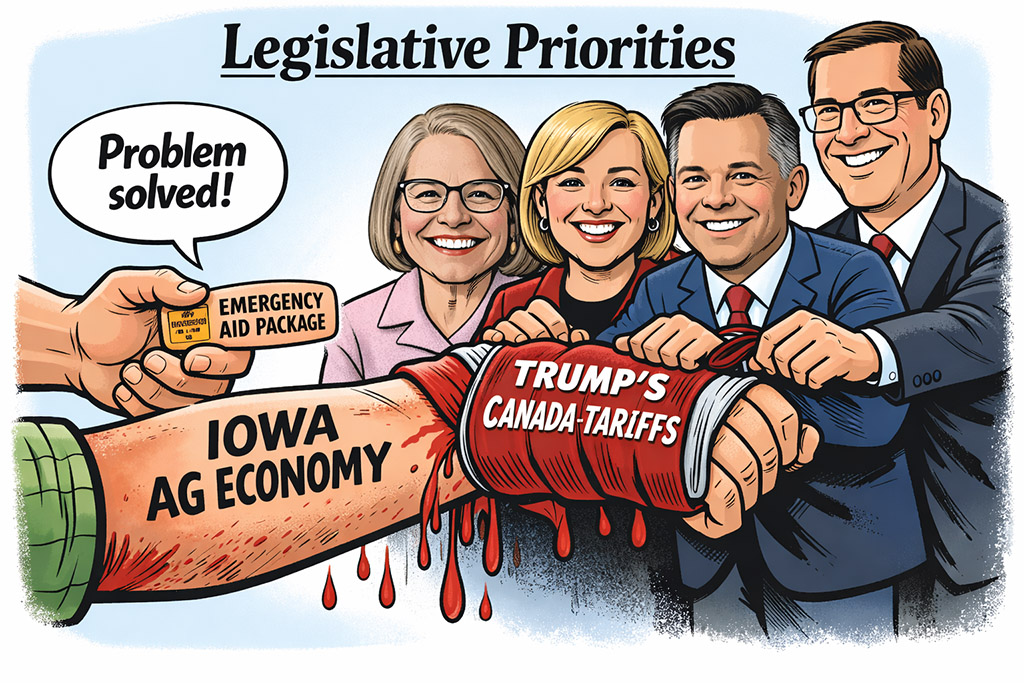
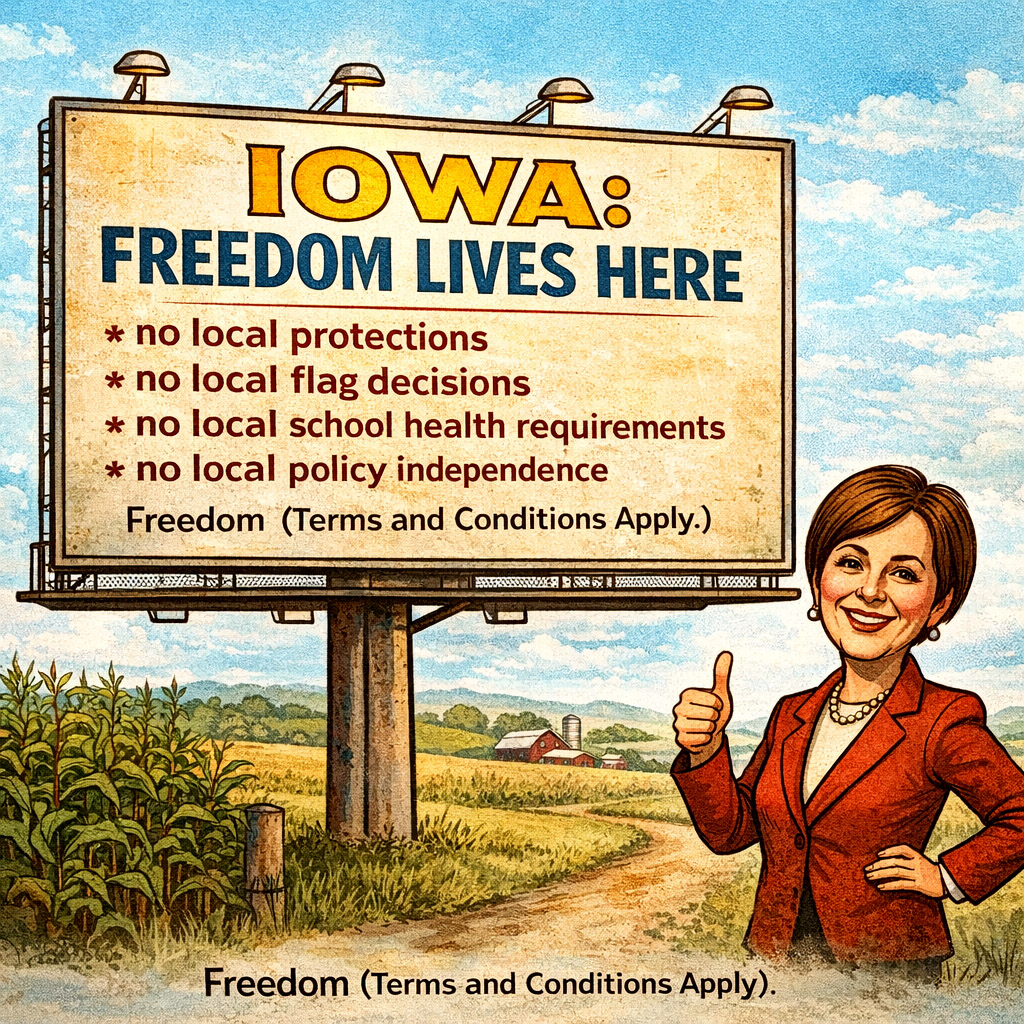
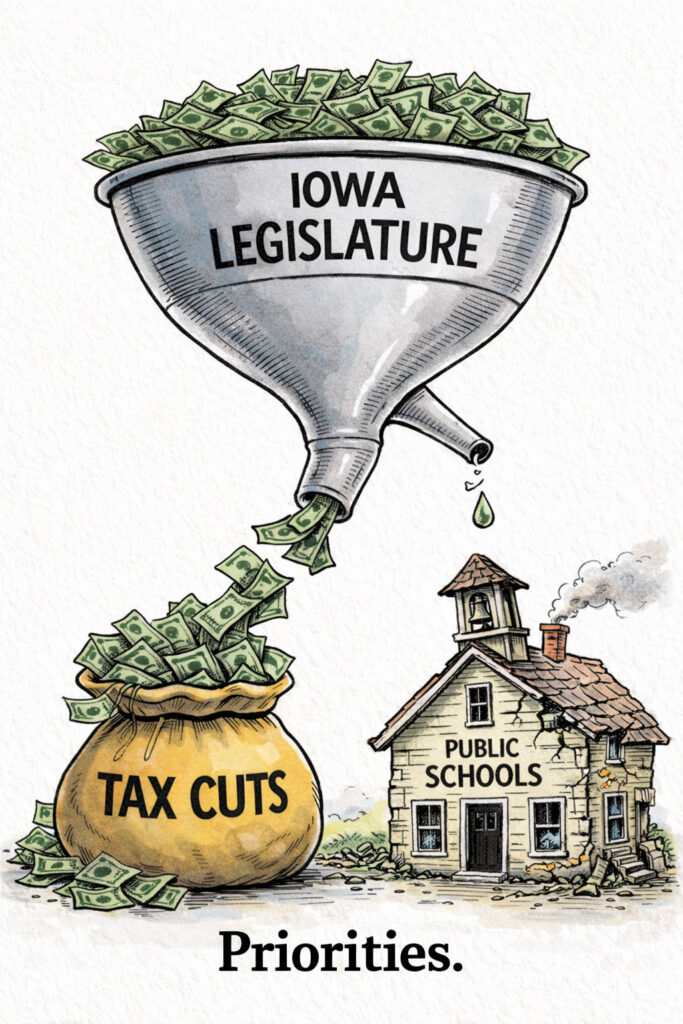
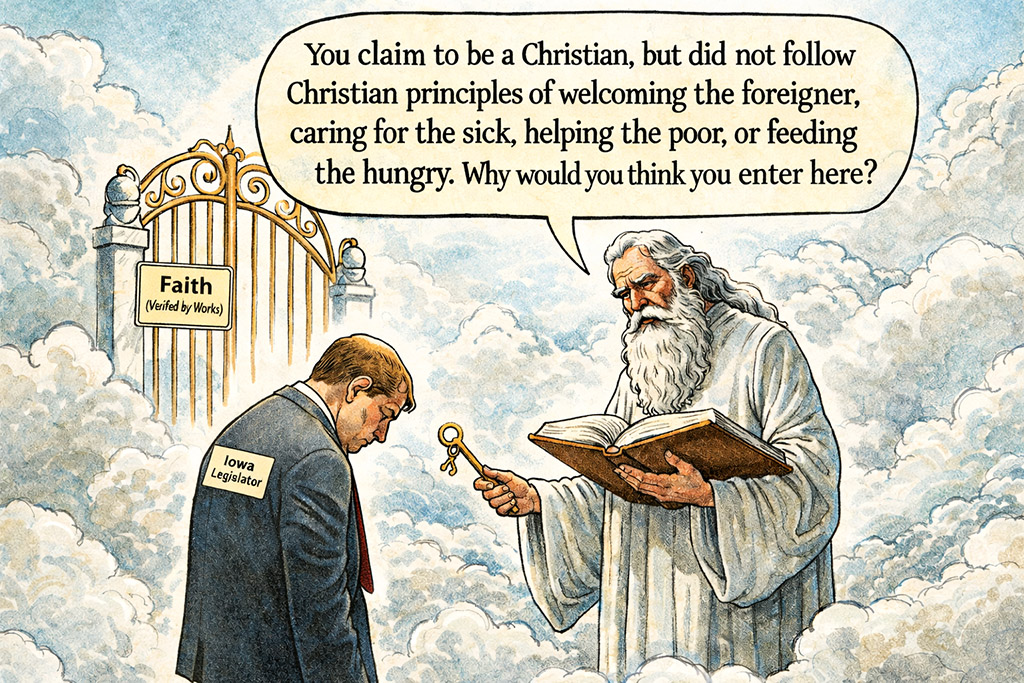
Across these stories, Iowa’s Legislature appears to be moving in two directions at once. And both directions point toward greater control and weaker accountability.
On one side, lawmakers are advancing proposals that would restrict access to basic supports (like WIC), reshape government oversight in ways that could weaken environmental enforcement (DNR-IDALS merger study), and burden public schools with new mandates (dress codes, reporting requirements).
The proposed measures disproportionately affect the vulnerable: infants, low-income families, disabled Iowans trying to work, and public institutions already stretched thin.
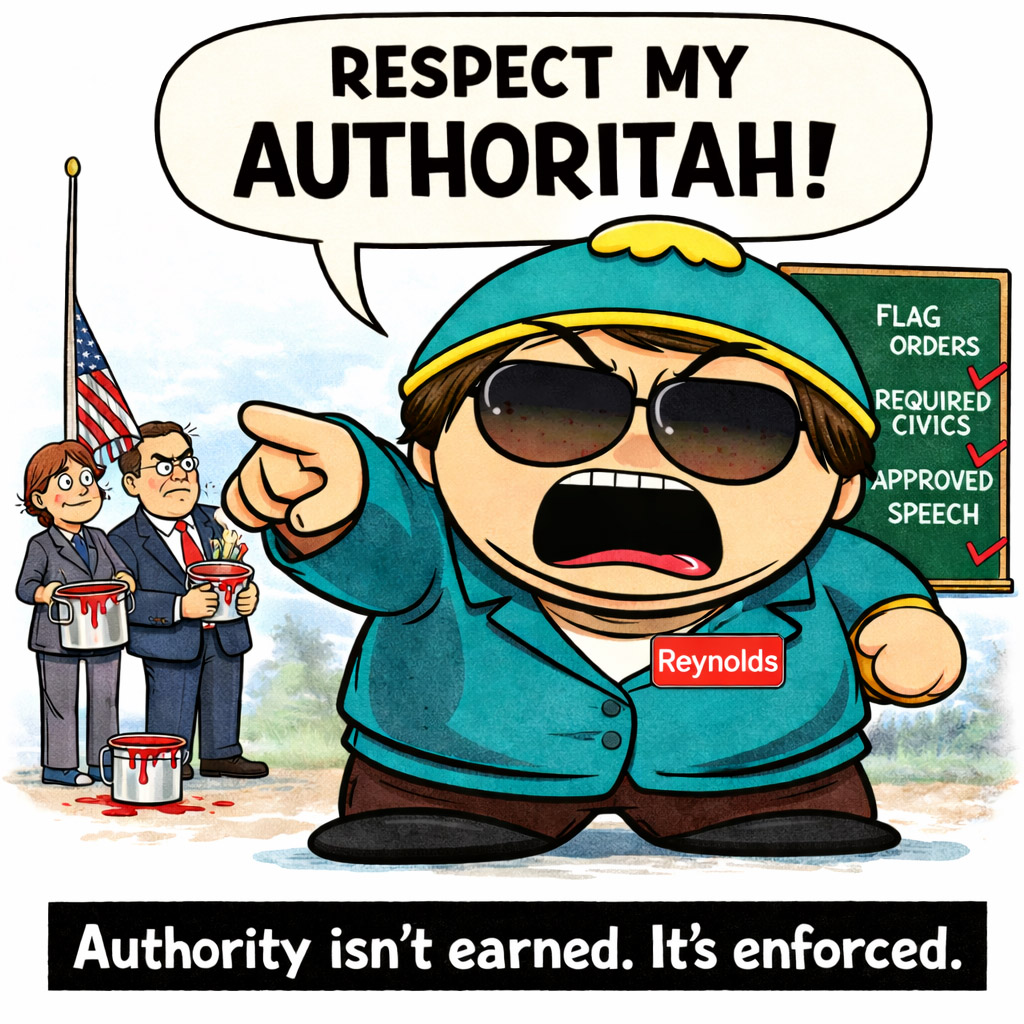
On the other side, Iowa lawmakers are increasingly proposing legislation that functions less like governance and more like ideological enforcement. Whether through controlling student expression disputes, policing online content, restructuring historical access, or creating criminal penalties tied to political polling.
The pattern is hard to ignore where public needs are urgent (health care access, workforce stability, rural water quality, public education funding), the Legislature often chooses symbolic fights that consolidate power and reshape narratives.
Taken together, these bills suggest a government less focused on solving Iowa’s structural problems and more focused on shaping who is protected, who is punished, and which institutions are allowed to function independently.
Undocumented people ineligible for WIC under House legislation
Iowa House lawmakers advanced a bill that would make undocumented women, infants, and children ineligible for WIC, the federal nutrition program for low-income pregnant and postpartum women and children under 5. The bill would also allow Iowa to impose a 12-month residency requirement before someone can qualify for WIC.
Supporters said the bill would align WIC with other federal programs that require immigration status verification, such as SNAP and Medicaid. Critics warned the change would increase infant and child malnutrition, create administrative barriers, and harm vulnerable families, including survivors of domestic violence who may need to relocate quickly.
The bill also includes Medicaid changes affecting working disabled Iowans, increasing the income cap to 300% of the federal poverty line and changing how pension funds count toward asset limits. Disability advocates called it a step forward but watered down compared to what’s needed.
Our Take
This is one of those bills that reveals priorities in a way no campaign speech can hide. WIC is not a luxury benefit. It’s basic nutrition for babies and mothers, and it exists because society knows what happens when infants and toddlers are underfed.
Even if lawmakers want to debate immigration policy, using baby formula and prenatal nutrition as the enforcement mechanism is morally indefensible and strategically stupid. It will not “solve” immigration. It will simply make children hungrier.
The 12-month residency requirement is also a red flag. It creates a punishment structure for people in crisis (including families fleeing domestic violence) and it effectively turns WIC into a political tool instead of a public health program.
Should Iowa’s agriculture and natural resource departments merge?
A House subcommittee advanced a bill requiring a study of merging the Iowa Department of Natural Resources (DNR) and the Iowa Department of Agriculture and Land Stewardship (IDALS). Environmental and conservation groups strongly opposed the idea, arguing the two agencies have conflicting missions.
Critics warned that putting environmental enforcement under an agency aligned with agricultural production risks weakening regulation and turning oversight into self-policing. Some also raised concerns about federal funding and compliance if Iowa’s environmental enforcement capacity is reduced.
The only registered group supporting the bill was Americans for Prosperity, a billionaire-funded group that supports energy interests.
Our Take
This is the kind of proposal that sounds “efficient” until you realize what it would actually do: it would structurally tilt Iowa’s government toward the industries most responsible for water and soil impacts.
The DNR exists in part to regulate environmental harm. IDALS exists to promote agriculture. Combining them risks turning environmental enforcement into a political inconvenience managed by the very institution designed to protect the state’s agricultural economy.
If Iowa wants smarter government, it should strengthen monitoring, transparency, and enforcement, and not experiment with a merger that looks like regulatory capture dressed up as reform.
Funnel-week bill blitz: dress codes, antisemitism reports, “free speech,” loud commercials, porn age verification, nitrous oxide, Iowa City history center
As the first legislative funnel deadline approaches, Iowa lawmakers advanced a large number of bills, including proposals affecting schools, consumer protections, online content, and state institutions. Proposed legislation includes:
A public school dress code mandate, that would require “modesty,” and ban exposed midriffs/undergarments, along with requiring consequences for violations.
A bill requiring annual antisemitism incident reports in public schools, community colleges, and regents universities, but not charter or nonpublic schools.
A “student free speech” bill framed as protecting ideological/religious expression, with concerns raised about costly penalties for schools.
A bipartisan bill to limit loud commercials on streaming services.
A porn site age verification requirement, with critics warning it is easily bypassed and creates data privacy risks.
A nitrous oxide distribution restriction bill, responding to growing recreational misuse.
And a bill allowing the state to formally close the State Historical Society Research Center in Iowa City, following public backlash and an ongoing lawsuit.
Our Take
This is Iowa’s Legislature in a nutshell. Heavy-handed control in the cultural arena, selective “accountability,” and a consistent tendency to burden public institutions with new compliance duties while starving them of resources.
The dress code bill is a perfect example of performative governance. It creates enforcement overhead and disproportionately harms low-income students while claiming to promote “pride.” The antisemitism reporting bill as written is also suspect, because excluding nonpublic schools makes it structurally biased and raises questions about political intent.
And the Iowa City historical research center move is perhaps the most alarming item in this group. It fits a broader national pattern: when political movements want to control the narrative, they start by controlling archives, institutions, and access to public history.
Bill would create ‘fraudulent polling scheme’ charge and penalties
A House subcommittee advanced a bill creating a criminal offense for “engaging in a fraudulent polling scheme.” The bill would impose misdemeanor penalties for campaigns or groups that raise money using polls they know are fraudulently compiled, with escalating penalties for repeat offenses.
The bill follows Donald Trump’s lawsuit against pollster Ann Selzer and the Des Moines Register over a 2024 poll that missed Iowa’s final results by a large margin. The bill claims it is not intended to regulate viewpoints or penalize good-faith methodological disagreements.
Our Take
This bill is dangerous in concept even if it is written with careful disclaimers. Polling is not a consumer product like a toaster. It is probabilistic measurement that captures a snapshot in time and is sometimes wrong.
The real effect of this kind of law is predictable: it puts a legal chill on pollsters, media outlets, and even academic researchers, because it invites politically motivated accusations whenever results anger powerful people.
If lawmakers truly cared about fraud, they could focus on transparency standards and disclosure rules. Criminalizing polling mistakes in a hyper-partisan environment is not consumer protection, it is intimidation.