Summary
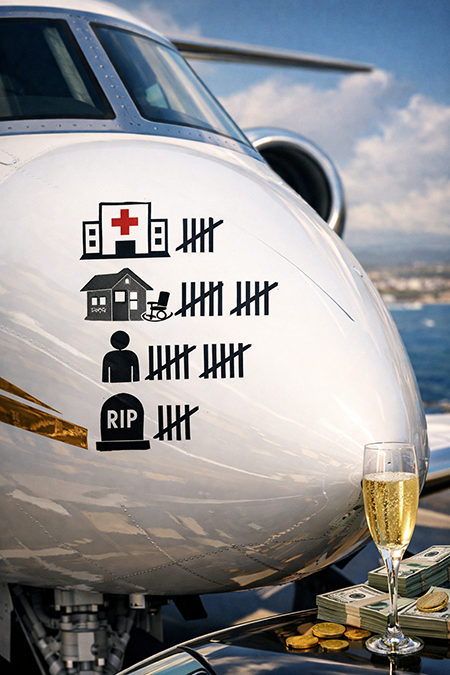
At first glance, today’s stories may appear unrelated: gunfire at a community event, lawmakers reshaping university admissions, and another outbreak of avian influenza. But together, they reveal a recurring pattern in Iowa’s public life. Serious risks treated as routine and complex problems addressed with blunt, ideologically driven tools rather than evidence-based solutions.
In Des Moines, more than 50 rounds were fired at a neighborhood celebration, injuring a bystander and narrowly avoiding mass casualties. The muted public response reflects how normalized extreme gun violence has become—even when the outcome could have been catastrophic.
At the Statehouse, lawmakers are advancing residency mandates for elite professional programs under the banner of “keeping Iowans in Iowa,” despite warnings that such measures may lower academic standards, reduce diversity, weaken the workforce pipeline, and ultimately harm the very communities they claim to protect.
And in Kossuth County, Iowa enters yet another year battling highly pathogenic avian influenza—no longer an emergency anomaly, but an ongoing structural threat to agriculture, food systems, and rural livelihoods—still managed largely as a series of isolated outbreaks rather than a long-term policy challenge.
The throughline is not chaos. It is complacency.
Near disasters are minimized. Long-term consequences are deferred. Expertise is sidelined. And decisions with statewide impact are increasingly made without fully reckoning with evidence, tradeoffs, or unintended harm.
Today’s briefs are not just news items, they are warning signs. Iowa can choose to confront risk honestly, invest in prevention, and listen to professionals. Or it can continue reacting after the fact, hoping that “non-life-threatening,” “manageable,” and “temporary” remain the outcomes next time.
History suggests that hope is not a strategy.
Bystander Shot as 50 Rounds Fired at Weekend Celebration in Des Moines
A 26-year-old man working at a food truck was shot in the leg after more than 50 rounds were fired during a weekend celebration at the Wellmark Urban Dreams Community Center in Des Moines’ River Bend neighborhood.
Police responded around 10:30 p.m. on Jan. 17 and recovered shell casings both inside and outside of the building. Two suspects, a 15-year-old and a 22-year-old, were arrested after allegedly fleeing police. The minor was charged with possession of a handgun as a minor, along with interference with official acts. The victim’s injuries were non-life-threatening, and the investigation remains ongoing.
Our Take
This incident is deeply troubling not only for what happened, but for what could have happened. Fifty rounds discharged in and around a crowded community event could easily have resulted in mass casualties.
That this story received minimal placement in local coverage underscores a dangerous normalization of extreme gun violence. When such events are treated as routine, the urgency to address systemic causes like illegal access to firearms, youth gun possession, and community safety quietly erodes. Iowa cannot afford to shrug at near-misses simply because the body count was “low.”
Iowa Lawmakers Advance Residency Requirements for UI Nursing and Law Programs
Iowa lawmakers advanced bills that would impose residency requirements on the University of Iowa’s College of Nursing and College of Law.
House Study Bill 530 would require at least 80% of nursing students to be Iowa residents, while House Study Bill 532 would impose similar requirements on the law school, with broader residency definitions.
University officials and the Iowa Board of Regents raised concerns that the measures could lower admissions standards, reduce diversity, discourage out-of-state talent, and worsen workforce shortages. And UI College of Law Dean Todd Pettys warned the law school could lose $7–11 million annually and face declining bar-pass rates and reputational harm.
Our Take
On its face, this legislation is framed as “keeping Iowans in Iowa.” In practice, it risks doing the opposite.
By constraining admissions based on residency rather than merit, the state may reduce program quality, discourage high-achieving applicants, and weaken Iowa’s ability to attract and retain talent from elsewhere.
This approach quietly narrows geographic, racial, and international diversity while giving lawmakers indirect control over who enters elite professional pipelines.
If Iowa truly wants more nurses and attorneys practicing here, the solution lies in incentives, working conditions, and retention, and not in admissions mandates that could hollow out flagship programs.
Highly Pathogenic Avian Influenza Detected in Kossuth County Flock
Highly pathogenic avian influenza (H5N1) was detected in a Kossuth County flock consisting of approximately 7,000 pheasants and 120 chickens, marking Iowa’s first bird flu case of 2026.
The Iowa Department of Agriculture and Land Stewardship confirmed the detection, and Gov. Kim Reynolds issued a disaster proclamation to mobilize state resources.
Nationwide, the outbreak has affected more than 186 million domestic birds since 2022, with over 1.1 million birds impacted so far this month. While the CDC continues to rate public health risk as low, 71 human cases linked to animal contact have been confirmed nationally.
Our Take
This latest outbreak is a reminder that avian influenza is no longer a short-term crisis; it is a persistent, multi-year threat to agriculture, food supply stability, and rural economies.
Iowa producers are now entering a fourth year of heightened biosecurity with no clear long-term solution in place. Calls for poultry vaccination and stronger state response mechanisms deserve serious attention, particularly as outbreaks increasingly intersect with dairy operations.
Treating HPAI as an episodic emergency rather than a structural risk leaves producers, workers, and taxpayers perpetually exposed.