Imminent Threat
Summary
Iowa stands at the intersection of workforce reform, global conflict, manufacturing contraction, and entitlement solvency.
Higher education is responding to teacher shortages with evidence-based expansion. Meanwhile, foreign military action reshapes domestic political divides. Manufacturing layoffs challenge reshoring promises. And Social Security faces accelerated insolvency.
Together, these stories highlight a broader theme. Policy decisions, domestic and international, are increasingly translating into measurable consequences for Iowa families.
As the 2026 elections approach, voters will not only assess rhetoric. They will assess outcomes.
University of Iowa Launches Special Education Major to Address Teacher Shortage
The University of Iowa College of Education has approved a new undergraduate major in special education, responding to Iowa’s ongoing teacher shortage in high-demand special education roles.
Iowa currently has more than 660 full-time teaching vacancies statewide, with special education accounting for 221 of those openings. While Iowa’s overall vacancy rate of 1% remains below the national average of 3%, the concentration in special education highlights a persistent gap.
The new Bachelor of Arts degree, approved by the Iowa Board of Regents on Feb. 26, will prepare graduates to teach K-12 special education. The program is expected to launch in the 2026–2027 academic year with 10 students, growing to 48 by 2030–31.
UI joins three other Iowa institutions offering a special education major. The university anticipates interest from freshmen, transfer students, current students, and paraeducators seeking licensure.
Our Take
This is how higher education policy should work.
A documented need creates an evidence-based response, a higher education program designed around measurable demand.
Rather than legislative mandates dictating curriculum direction, this initiative originated from labor market data and institutional capacity. It reflects alignment between higher education and real workforce gaps, not political theater.
If Iowa wants sustainable teacher pipelines, this model should become standard practice.
Iowa Leaders Respond to U.S.-Israel Strike on Iran
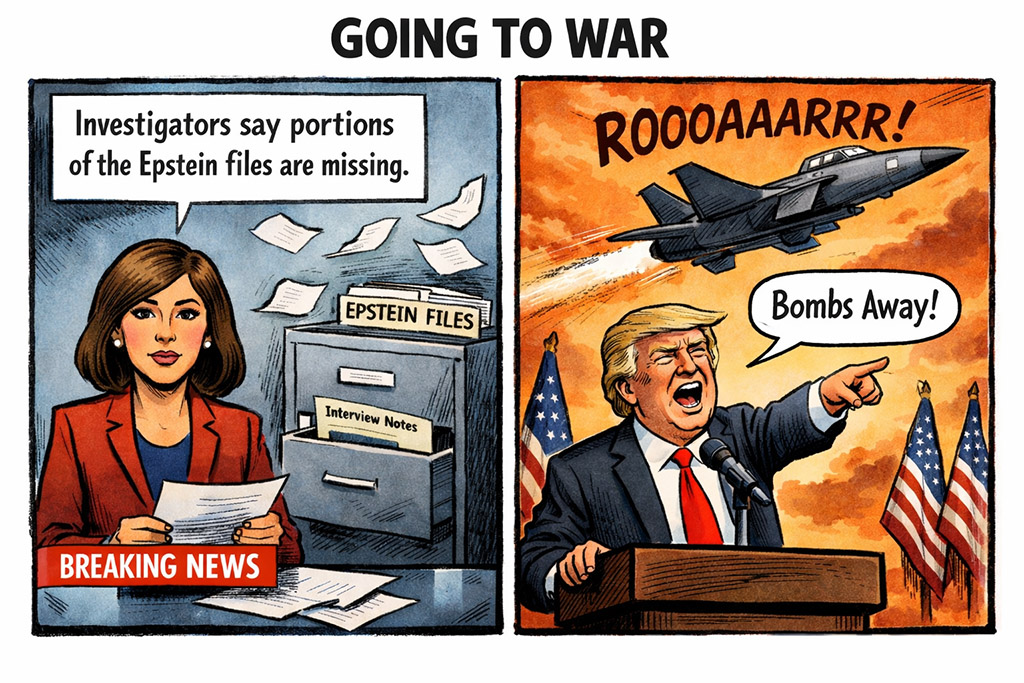
Iowa’s federal and statewide elected officials and candidates responded sharply to the coordinated U.S.-Israel military action against Iran, which reportedly resulted in the death of Supreme Leader Ayatollah Ali Khamenei and triggered a widening regional conflict.
Republican officials, including Sens. Joni Ernst and Chuck Grassley, Reps. Ashley Hinson, Mariannette Miller-Meeks, Zach Nunn, Randy Feenstra, and Gov. Kim Reynolds, broadly expressed support for President Trump’s action, framing it as necessary to prevent Iranian nuclear capability and protect American interests.
Democratic candidates, including Zach Wahls, Josh Turek, Clint Twedt-Ball, and Travis Terrell, emphasized constitutional war powers, caution against escalation, and the need for congressional authorization.
Libertarian Senate candidate Thomas Laehn criticized the strike as unconstitutional absent formal congressional declaration of war.
The issue is likely to become central in Iowa’s 2026 federal races, particularly regarding congressional authority, military restraint, and the risk of prolonged regional conflict.
Our Take
Two competing narratives are forming. Decisive action for security and constitutional concern over escalation.
What unites both sides rhetorically is concern for servicemembers. What divides them is the question of authorization and long-term strategy.
For Iowa, a state with a significant National Guard presence and deep military tradition, the political implications are not abstract. Any escalation directly affects families across the state.
This is not merely foreign policy. It is a domestic political and economic issue for Iowa communities.
Union Seeks Political Support Over Whirlpool Layoffs in Middle Amana
The International Association of Machinists and Aerospace Workers (IAM) is seeking assistance from Iowa’s congressional delegation and Gov. Kim Reynolds following Whirlpool’s announcement of 341 additional layoffs at its Middle Amana plant on March 9.
The layoffs follow 251 job cuts in July 2025, and additional reductions are expected in the second quarter. Employment at the once 3,000-employee facility may fall below 1,000 workers, potentially declining further.
Whirlpool states the cuts are part of a modernization plan aimed at restructuring the facility for long-term competitiveness. The union contends the company is shifting production to its growing Mexico operations, citing over $1 billion invested there since 2002.
Workers report immediate loss of health insurance for those laid off, with no severance package announced.
Our Take
This is a defining test of reshoring rhetoric.
Federal leaders frequently emphasize strengthening domestic manufacturing and imposing tariffs to protect American jobs. The Amana case presents a real-world stress test of those claims.
If production migrates abroad despite policy incentives, voters will notice. This issue cuts across party lines because it is economic, not ideological. Manufacturing remains central to Iowa’s identity and wage base.
Middle Amana may become a symbol in the 2026 elections. Not because of rhetoric, but because of economic realities.
Social Security Trust Fund Projected to Run Dry in 2032
The Congressional Budget Office now projects that the Old-Age and Survivors Insurance Trust Fund will be depleted in 2032, one year earlier than previously expected. If insolvency occurs without congressional intervention, beneficiaries could face an average 28% reduction in retirement and survivor benefits.
Combined legislative changes are estimated to increase Social Security’s shortfall by hundreds of billions over the next decade. Contributing factors include the bipartisan Social Security Fairness Act (2025), the “One Big Beautiful Bill Act” tax and spending package, Demographic pressures, and revenue shortfalls.
Policy options under discussion include raising payroll tax income caps, increasing the retirement age, and structural reforms to the system.
No legislative solution has yet been enacted.
Our Take
Social Security insolvency is no longer a distant projection; it is within a single election cycle. For Iowa, where a significant portion of the population relies on retirement benefits, the political stakes are profound.
Both parties have contributed to the funding imbalance through recent legislation. The longer Congress delays action, the narrower the available options become.
This is not merely a fiscal issue. It is a generational contract issue. And time is accelerating.