Summary
Across all five stories, Iowa and the Midwest are confronting a common theme: the compounding effects of federal decisions, rising costs, and large-scale structural pressures hitting households, small businesses, and institutions simultaneously.
The THC/hemp crackdown threatens a fast-growing industry Iowa only recently formalized. The PBM legal battles spotlight the tension between local pharmacies, national insurers, and federal preemption. The Regents’ caution on tuition guarantees reflects deep fear about funding volatility and political expectations.
The polar-vortex winter pattern foreshadows higher heating costs and operational stress. And now, electricity rate spikes tied to data centers introduce a new affordability pressure that is already shaping elections elsewhere.
And for Iowa, the addition of the energy-cost story tightens the narrative arc: as the Midwest becomes a magnet for data-intensive infrastructure and experiences increasingly unstable winter patterns, the region risks higher utility bills – just as voters are already frustrated with rising living costs.
Federal, state, and grid-level policies will determine whether these pressures remain manageable or push Iowa into the same political turbulence emerging in Georgia, New Jersey, and Indiana.
Federal Hemp and THC Restrictions Threaten Fledgling Iowa Industry
A new federal provision passed within the government-funding bill would cap the level THC in hemp-derived products at 0.4 mg per container, far below Iowa’s current limits of 4 mg per serving / 10 mg per container.
The change takes effect in one year and would effectively eliminate nearly all THC and CBD products currently sold in Iowa. Local manufacturers and retailers warn that the ban threatens a fast-growing industry – estimated at $28 billion nationally – and could hurt farmers, tax revenue and small businesses.
Iowa Sen. Chuck Grassley supports the ban, saying the 2018 Farm Bill never intended to legalize intoxicating THC products.
The coming year is expected to be a pressure cooker as industry groups, regulators and lawmakers fight over new rules or a possible alternative federal framework.
Our Take
This is one of the most consequential federal preemption fights to hit Iowa’s consumer-products market in years. The federal cap is so low it functions as a de facto prohibition, and Iowa’s young THC framework – only a year old – could be rendered irrelevant overnight.
The political dynamic is notable: Republicans who initially backed hemp legalization now argue they must shut down unintended THC markets, while Iowa’s small-business ecosystem pushes back against Washington’s one-size-fits-all approach.
Expect intense lobbying for a more nuanced federal regulatory scheme before the deadline hits. The broader signal: Congress is increasingly willing to revisit and rein in the unintended consequences of the 2018 Farm Bill loophole.
Third Lawsuit Filed against Iowa PBM Law (SF 383)
OptumRx and several UnitedHealth affiliates filed the third major federal lawsuit against Iowa Insurance Commissioner Doug Ommen, challenging Iowa’s new law regulating pharmacy benefit managers.
The law, SF 383, limits steering incentives, mandates reimbursement formulas (including a $10.68 dispensing fee), and restricts PBMs’ ability to preference lower-cost pharmacies. Plaintiffs argue the law is preempted by ERISA and violates the First Amendment.
Two earlier lawsuits (ABI and Wellmark) have resulted in injunctions pausing enforcement of large portions of the law. OptumRx’s suit argues the commissioner has signaled he now intends to enforce SF 383 against entities not protected by prior injunctions, prompting their request for equal relief.
The case reopens a long-running battle between independent pharmacies – who back the law – and insurers, who warn it will shift up to $340 million annually to consumers.
Our Take
The core issue is not just PBM regulation – it’s ERISA preemption. States nationwide have been testing how far they can go in reshaping the drug-pricing ecosystem without running afoul of federal law.
Iowa is now an important test case. With three lawsuits pending and fragmented injunctions, the state’s ability to implement SF 383 is deeply uncertain. Consumers could be caught in the crossfire if insurers pass projected costs into premiums.
The pattern mirrors trends across the Midwest: rural pharmacies are fighting for survival, while large insurers and PBMs argue state reforms undermine cost control.
Expect this case to end up shaping national PBM policy – or at least clarifying the boundaries of state authority.
Iowa Regents Hesitant on Tuition Guarantee Programs
The Iowa Board of Regents reviewed a mandated study on tuition-guarantee programs – policies that lock in a student’s tuition rate for four years – but declined to advance any proposal.
The study found mixed outcomes nationwide: some universities abandoned guarantees after budget shortfalls, while others (like Drake University) maintained them. Regents worry that the programs require a predictable, stable funding base, which Iowa’s universities do not currently have due to fluctuating state appropriations and federal research/aid uncertainty.
The board also cited major technical hurdles: different campus billing systems, variable tuition rates by program, and frequent student major changes. Some regents raised concerns that locking in tuition would force universities to make staffing cuts.
For now, the Regents prefer to observe the state’s new policy that caps annual tuition hikes at the three-year Higher Education Price Index average.
Our Take
You’re not misreading the subtext: Regents are wary that offering guaranteed tuition to any group could create political and student pressure to expand it universally, locking the system into financial commitments without stable state backing.
Barker’s and Berg’s technical worries are real, but the strategic concern is bigger – a loss of flexibility. Midwestern higher-ed systems depend heavily on year-to-year legislative funding; without stability, a tuition guarantee can quickly become a budget trap.
This hesitancy also reflects the broader Midwest pattern: universities are squeezed between legislative pressure to hold tuition down and unpredictable state revenues, leaving little appetite for multi-year financial guarantees.
States across the region (Illinois, Minnesota, Missouri) face similar funding volatility and have been cautious about tuition guarantees for exactly these reasons.
Artic Blast, Weak Polar Vortex, and Holiday Weather
Meteorologists warn that an unusually weak polar vortex – possibly on the verge of a rare November sudden stratospheric warming event – may send Arctic air plunging into the central U.S. later this month.
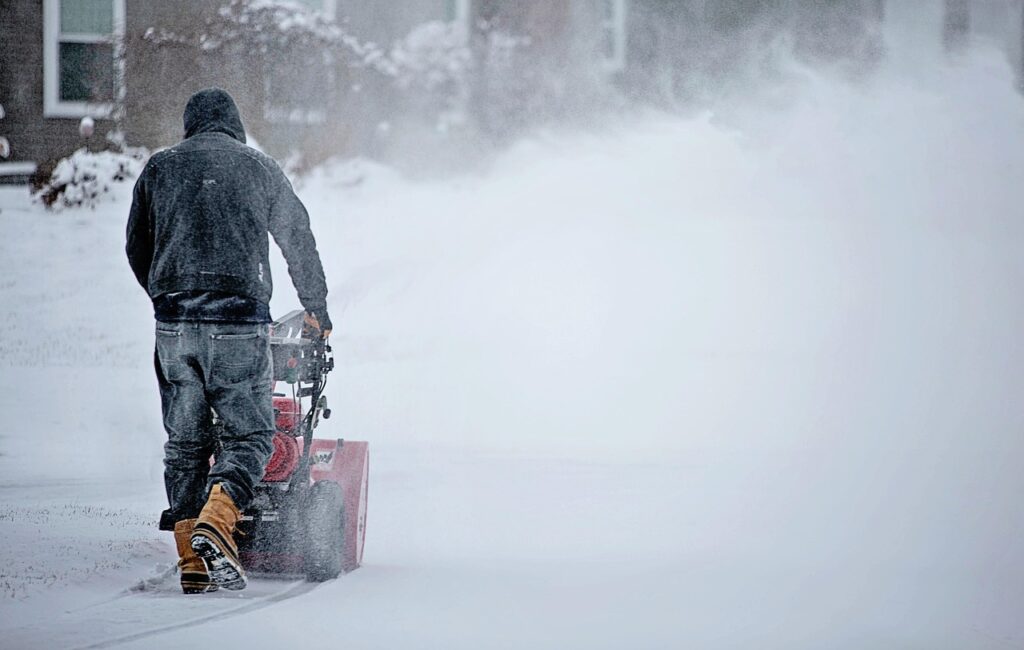
Iowa could see several inches of snow around Thanksgiving, plus a chance (still uncertain) of blizzard-level winds and reduced visibility. Two systems next week may bring light to moderate snow, with larger impacts expected in early December as the atmosphere adjusts to major stratospheric changes.
The combination of La Niña, the Madden–Julian Oscillation, and an easterly-phase Quasi-Biennial Oscillation favors more persistent cold intrusions across the northern tier. If the stratospheric warming event materializes, it would be the first documented in November since satellites began recording.
Our Take
Climate-watchers consider this setup highly unusual. A November sudden stratospheric warming is extremely rare – and often precedes sharp, prolonged cold outbreaks.
For Iowa, this suggests early-season winter hazards, above-normal chances of snow events, and volatile holiday travel conditions.
The broader implication is that extreme atmospheric disruptions are becoming more common winter drivers in the Midwest, and this year’s early signal could shape the entire season.
Voter Anger Rises with Electric Bills and Data Center Growth
Electricity costs – rising in many regions faster than inflation – are becoming a defining political issue heading into the 2026 midterms.
Across states like New Jersey, Virginia, Georgia, California, and parts of the Midwest, voters report escalating frustration as utilities pursue more than $34 billion in rate increases in the first three quarters of 2025 alone, more than double the previous year.
Roughly 80 million Americans struggle to pay their utility bills, and some states warn winter heating assistance may be delayed due to the federal shutdown.
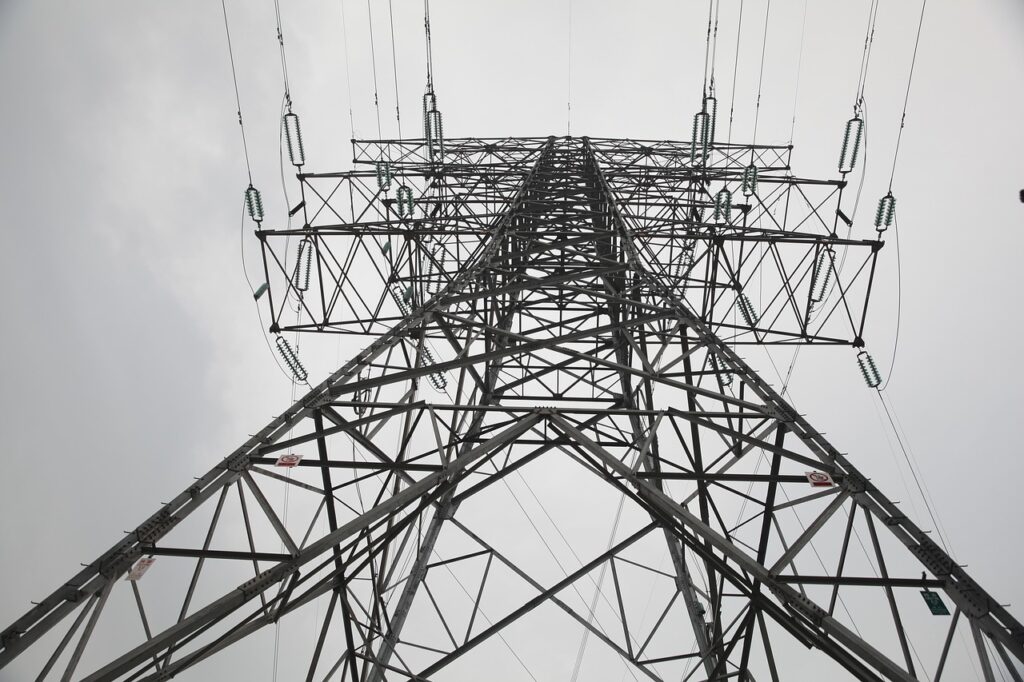
A major driver of tension: explosive electricity demand from AI and cloud data centers, bitcoin mining, and manufacturing expansions. A single AI data center can consume as much power as 100,000 homes, and some proposed facilities would require more electricity than entire mid-size U.S. cities.
Communities are increasingly angry that they – not Big Tech – may be absorbing the grid-upgrade costs necessary to connect these energy-intensive hubs.
In Georgia, this anger helped Democrats win two seats on the utility commission after repeated bill increases, now averaging $175/month for typical customers. Similar political flashpoints are emerging in Michigan, Ohio, Pennsylvania, Indiana, and Texas.
In the 13-state PJM grid region – from Illinois through the mid-Atlantic – ratepayers are already paying billions for future data center demand, including facilities not yet built, with another cost surge expected in June tied to wholesale power prices.
Utilities argue costs vary widely and that only certain states – like California and New England – are seeing extreme increases. But residents in multiple states, including Indiana and Midwestern metros, say they are hitting a breaking point.
Our Take
This issue hasn’t fully erupted in Iowa yet – but it’s coming.
Iowa sits at the western edge of the PJM-adjacent grid conversation and is already positioning itself as a data center corridor thanks to cheap land, renewable generation, and attractive tax structures. Meta, Microsoft, and Google have all expanded in the Midwest, and Iowa utilities are planning large capital projects that will eventually flow into rates.
The political risk is clear: If Iowa continues attracting data centers without clear cost-allocation rules, residential customers could face the same backlash seen in Georgia and Indiana. Many Midwestern states are discovering that data centers – while job-light – are grid-heavy, requiring expensive transmission upgrades and new generating capacity whose costs are often socialized across all ratepayers.
Against the backdrop of expected early-winter cold and the potential for high heating bills, frustration over affordability could combine with energy infrastructure debates into a potent election issue in Iowa’s 2026 congressional races. Voters won’t blame data centers directly – they will blame whoever they think let their electric bills spike.