Summary
Today’s Iowa411 Briefs examine how political theater is overtaking constitutional neutrality as Iowa officials again deny the Satanic Temple access to the Capitol, how “cheaper” Thanksgiving dinner prices are largely the result of retail manipulation rather than real food inflation relief, and how Iowa farmers face growing anxiety despite a near-complete harvest due to rising input costs, consolidation, and economic uncertainty ahead of 2026.
State Denies Satanic Temple Capitol Event for Second Year
For the second straight year, Iowa officials have denied a request from the Satanic Temple to hold a holiday-themed event in the Iowa Capitol rotunda, citing concerns that elements of the proposed program could be “harmful to minors.”
According to the Iowa Department of Administrative Services, the proposal included a Satanic altar display, “Satanic holiday carols,” a Krampus costume contest, ornament-making activities and a ritual. The department said the request was denied under state rules that prohibit displays involving obscene, violent, or explicit imagery, especially where children are present.
The Satanic Temple argues that the denial constitutes discrimination and violates its rights to free speech and religious expression. The group, along with the ACLU of Iowa, has previously filed a complaint alleging unequal treatment compared with Christian holiday displays and other faith-based events in the Capitol building.
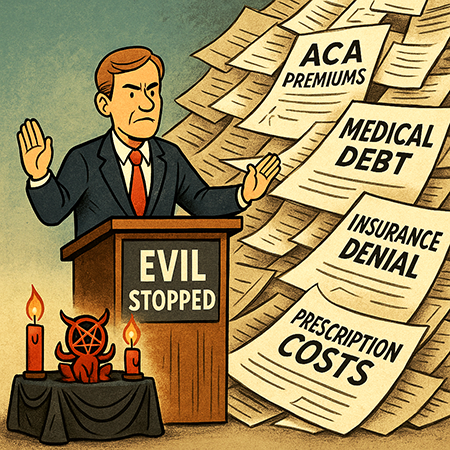
Adding a political layer to the controversy, Republican gubernatorial candidate Adam Steen – who helped deny a similar request last year during his tenure as Director of Administrative Services – publicly praised the new decision, stating it represented a stand “in the face of evil.” Steen is now using his opposition to the display as a cornerstone of his campaign messaging.
The situation continues to raise questions about equal access to public space, selective rule enforcement, and the use of religious controversy as a political tool in the 2026 Iowa governor’s race.
Our Take – Rights vs. Reaction
Let’s remove the costumes, Latin phrases and theatrics. What is really happening here is simpler, and more important.
The Capitol is not being treated as neutral ground. It is being treated as controlled territory. Once a government building allows religious displays, it must either allow all of them equally or allow none of them.
There is no “religious taste filter” written into the Constitution.
But just as concerning as the legal question… is the political behavior. Adam Steen’s statement that he is “the guy who stood in front of the Satanists” is not leadership – it’s marketing. The event denial is less about protecting children and more about creating a moment he can weaponize in his campaign.
It is fear-based branding.
The Satanic Temple, for its part, is not primarily trying to spread devil worship. It is pushing legal boundaries to test government neutrality. That’s its entire model. It thrives on predictable overreaction.
And that overreaction is exactly what certain politicians are happy to provide. In short, one side stages a provocation. The other stages a performance. And the Constitution becomes the prop.
The joke isn’t on God. It’s on the voters.
Thanksgiving Dinner Costs Drop As Turkey Prices Continue to Surge
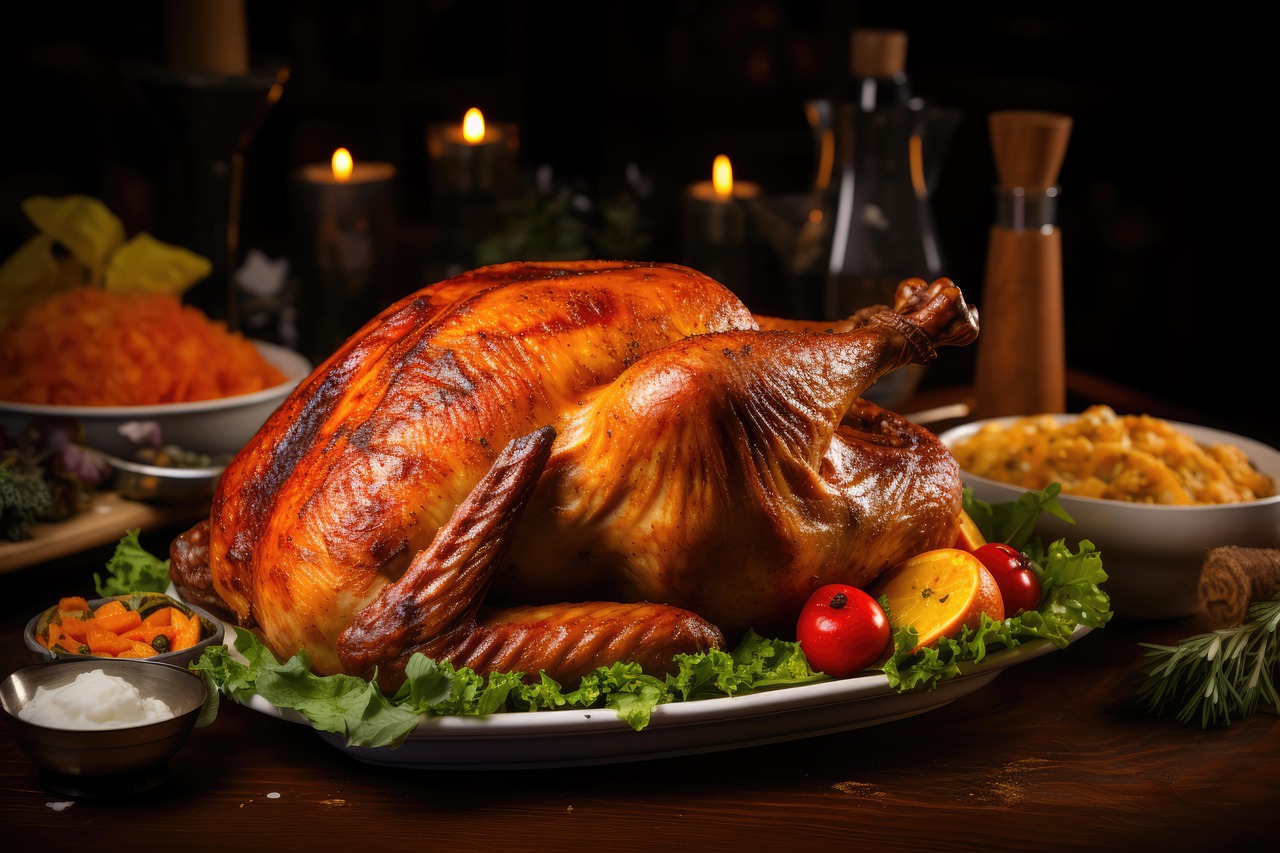
The Des Moines Register reported today that, according to the American Farm Bureau Federation (AFBF), the average cost of a traditional Thanksgiving dinner for 10 people in the U.S. is $55.18, down about 5% from last year. This marks the third consecutive year of declining “holiday basket” costs after the post-pandemic price spike in 2022.
Despite widely reported dramatic turkey price increases, the Farm Bureau reports that the price of a frozen turkey – typically the most expensive single item in the meal – fell by more than 16%, mostly accounting for the overall decrease.
Other items including stuffing, rolls, and cranberries also declined slightly in retail cost. However, several side dishes rose sharply in price, such as:
- Sweet potatoes: +37%
- Vegetable tray (carrots & celery): +61%
- Whole milk: +16%
- Frozen peas: +17%
Our Take – The Wholesale vs. Retail Reality
The “cheaper Thanksgiving dinner” headline is technically true at the checkout counter – but misleading without context.
Major retailers have aggressively promoted low-cost Thanksgiving meal bundles, including advertised turkey prices under $1 per pound, to draw customers into stores during the competitive holiday season.
At the same time, industry data and agricultural reporting show a very different reality on the production side. Wholesale turkey prices have increased significantly due to continued effects of highly pathogenic avian influenza, higher feed, biosecurity, and labor costs, and reduced turkey flocks and tighter supply chains.
This means the apparent drop in consumer turkey prices is not primarily driven by lower production costs, but rather by retail discounting and loss-leader strategies intended to boost store traffic and seasonal sales.
In reality:
- Wholesale turkey prices have not decreased – they have risen in many regions
- Retailers are absorbing margin losses or subsidizing holiday birds
- Turkeys are being used as loss leaders to attract shoppers, and
- Cost increases are simply being shifted – not eliminated
In other words
The price of Thanksgiving didn’t really go down. Retailers just chose not to pass the increase on to consumers – this time.
This is standard retail behavior during holidays, and it does not reflect broader, sustained relief in food inflation or agricultural production costs. In fact, the sharp price spikes seen in side items (produce and dairy) confirm that underlying inflationary pressure in the food system is still very much present.
Additionally, political and industry groups benefit from optimistic messaging about falling prices. But seasonal discounts are not the same as structural price reductions. Once the holiday passes, those suppressed retail prices typically disappear.
Sorry to dampen any optimism regarding the manipulated price reductions. This is a marketing adjustment – not an economic turnaround.
Iowa Harvest Nearly Complete as Farmers Look Ahead to Uncertain 2026
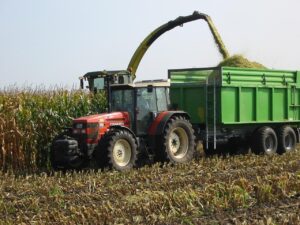
The Iowa Capital Dispatch reports that Iowa’s 2025 corn and soybean harvest is nearly finished, with 99% of corn acres harvested across the state, according to the latest U.S. Department of Agriculture report. Nationally, the top corn-producing states have only about 4% of their harvest remaining. https://iowacapitaldispatch.com/briefs/2025-harvest-complete-in-iowa-producers-hope-to-improve-ag-economy-for-2026/
Despite challenges from variable weather, crop disease, and economic uncertainty, Iowa Agriculture Secretary Mike Naig called the year a “significant crop,” noting strong overall production. Still, some farmers reported disappointing yields in specific fields, particularly those affected by southern corn rust and unusually warm nighttime temperatures, which led to smaller kernel sizes.
Soil moisture conditions remain mixed across the state, with 67% of topsoil and 66% of subsoil rated adequate, while south-central Iowa continues to experience drier-than-normal conditions. Precipitation during the reporting period was about half of the seasonal average, and temperatures remained above normal.
Farmers also faced difficulty marketing crops due to a 43-day federal government shutdown, which delayed key agricultural reports — forcing many to make decisions with limited data. While China has since resumed some purchases of U.S. soybeans and removed select tariffs, market uncertainty remains high.
Concerns over rising input costs have reignited bipartisan interest in examining consolidation within the fertilizer and seed industries. In response, Sen. Chuck Grassley and Rep. Ashley Hinson introduced the Fertilizer Research Act, which would authorize a federal study into industry consolidation and its impact on pricing.
Our Take – A Strong Harvest, But Growing Anxiety
On paper, Iowa had a solid harvest. But the mood among farmers tells a different story.
Yes, bins are full, but the cost of filling them is higher than ever. The real concern isn’t what was grown in 2025 – it is whether farmers can afford to plant in 2026.
What stands out most in this report is not optimism – it’s unease cause by:
- Rising fertilizer, fuel, equipment and labor costs
- Market volatility
- Consolidation by powerful agribusinesses
- Delayed or unreliable government data, and
- Lingering climate and drought risk
The shutdown-induced “data blackout” is especially alarming. Farmers were forced to make financial and marketing decisions blind – a risk most industries would never tolerate but one Iowa farmers quietly absorbed.
The new legislative focus on consolidation is important and overdue. But studying the problem is only a first step. Iowa farmers don’t just need research – they need relief, transparency, and fair competition.
Without meaningful change, the question won’t be “How big was the 2025 harvest?”
It will be “Who can still afford to plant the 2026 crops?”
That is the real story.