
Deep Iowa Roots
Homeschooling has deep roots in Iowa’s religious and family-centered culture. For many families, it reflects love, responsibility, and a belief in shaping their child’s moral and educational environment.
It is not inherently harmful – and in many cases, it provides exactly what a child needs.
But as homeschooling expands, especially within religious or ideological curricula, it is shaping the next generation of Iowans in ways that have broad social consequences.
The question is not whether homeschooling is “good” or “bad,” but what kind of Iowa it leads us to become.
Homeschooling in Iowa
| Benefit | Why It Matters |
| Individualized Learning | Children can advance at their own pace (especially helpful for gifted or neurodivergent learners). |
| Learning Environment Control | Fewer classroom disruptions; parent can tailor materials to learning style. |
| Stronger Family Bonds | More time together strengthens trust and emotional connection. |
| Religious or Value-Based Instruction | Families can intentionally shape moral development in line with their beliefs. |
| Protection from School Culture Stressors | Some children thrive away from bullying or social pressure. |
These are real, meaningful advantages, especially for rural families far from quality schools, children with special learning needs, and families with strong cultural, linguistic, or religious identity. Homeschooling itself is not an issue.
Significant Social Risks
Limited Exposure to Diverse Viewpoints
Most public schools expose students to multiple cultures, students from different backgrounds, varied perspectives, structured debate, discussion, and disagreement. Homeschool networks in Iowa are often ideologically homogenous – frequently centered around conservative or evangelical Christian communities. And when children hear only one worldview, they often grow into adults who cannot tolerate or understand others.
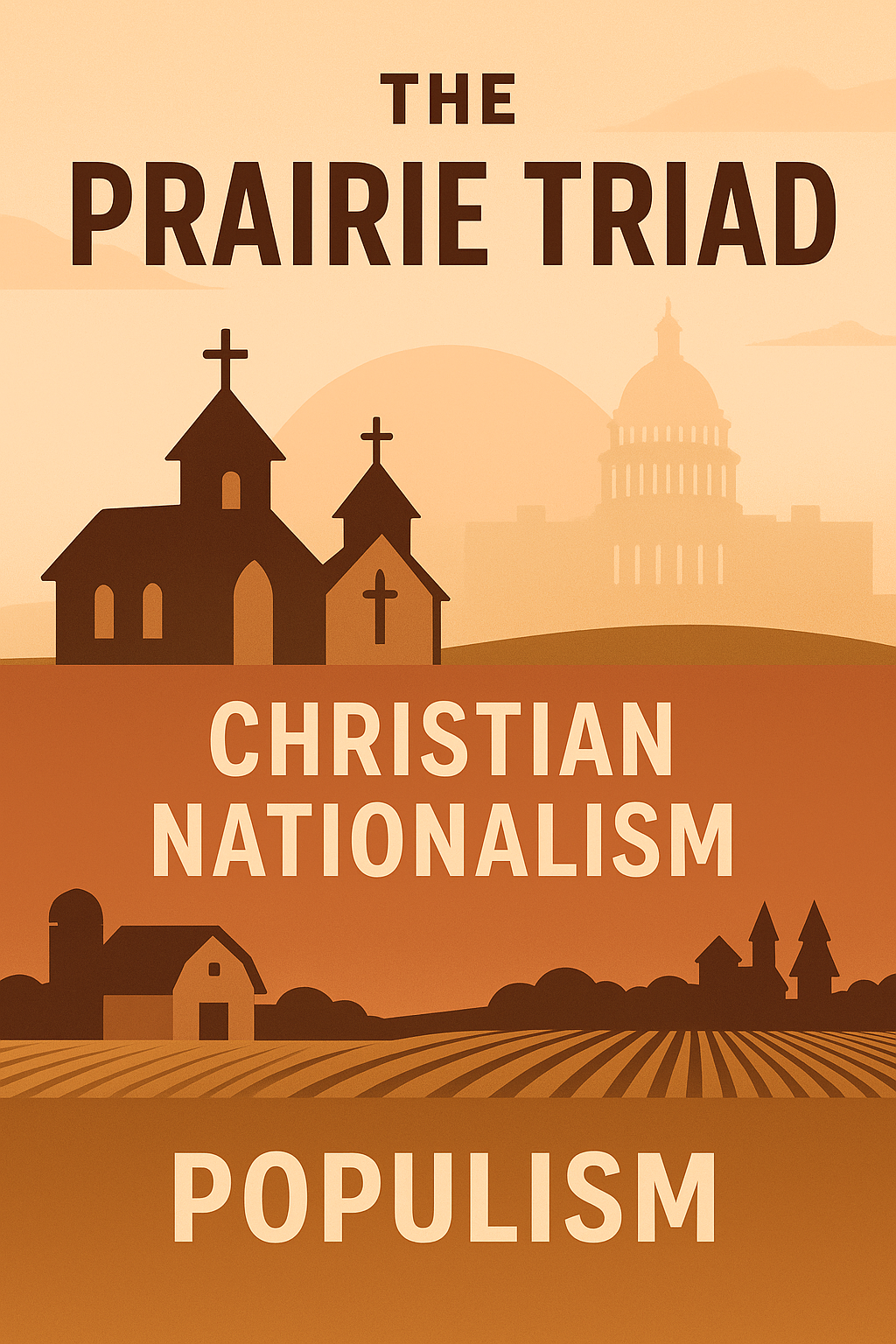
This is one of the strongest predictors of susceptibility to Christian Nationalism.

Identity Formation in Closed Systems
Children learn who they are by comparing their experiences, beliefs, and their cultural environment with others.
If they never encounter difference, then difference may feel like a threat. Disagreement feels like disrespect and diversity feels like destabilization. That is how “us vs. them” thinking forms.
Christian Nationalism thrives in exactly that environment.
Replacement of Education with Indoctrination
Some homeschooling materials used widely in Iowa come from explicitly ideological publishers, including Abeka, Bob Jones University Press, and ACE (Accelerated Christian Education).
The curricula often teach false or pseudo-history (e.g., America was founded as a Christian nation), reject evolution and modern science, portray pluralism and democracy as moral decline, and frame political disagreement as spiritual warfare
In such cases, homeschooling becomes identity programming, not education. This is not intentionally malicious – but profoundly consequential.
Reduced Civic Socialization
Public schooling is the largest institution that teaches social skills like how to cooperate with strangers, how to resolve conflict peacefully, and how to build shared civic identity.
Without this exposure, future civic engagement declines, a mistrust of democratic institutions rises, and susceptibility to conspiracy movements increases.
That is how communities become polarized, isolated, and vulnerable to authoritarian political messaging.
Iowa-Specific Dynamic
Iowa is predominantly white, largely rural, religiously homogeneous in many regions, and politically influenced by Christian conservative networks. Homeschooling in such an environment further concentrates those dynamics.
This is how we see Christian Nationalism normalizing as “just Christianity,” populism being mis-framed as “common sense,” and Project 2025-style anti-pluralism gaining ground under the radar.
Not because parents intended harm – but because social isolation magnifies ideological certainty.
A Balanced, Constructive Path Forward
We do not need to oppose homeschooling. We need to supplement it.
Healthy Support Models
- Co-ops with diverse families, not ideological enclaves
- Shared activities with public school sports, arts, and clubs
- Encouraging debate, critical thinking, and media literacy
- Access to public libraries, museums, community programs, and
- Parent training in pluralism and civic development.
The goal is not to replace values, but to widen horizons.
Summary
Homeschooling can be nurturing, effective, and meaningful.
But when practiced inside closed ideological systems, especially in a state as demographically uniform as Iowa, it can unintentionally weaken democratic literacy, limit empathy for diverse experiences, and increase susceptibility to Christian Nationalism.
The question is not whether children are taught at home – but whether they are taught to live in community.