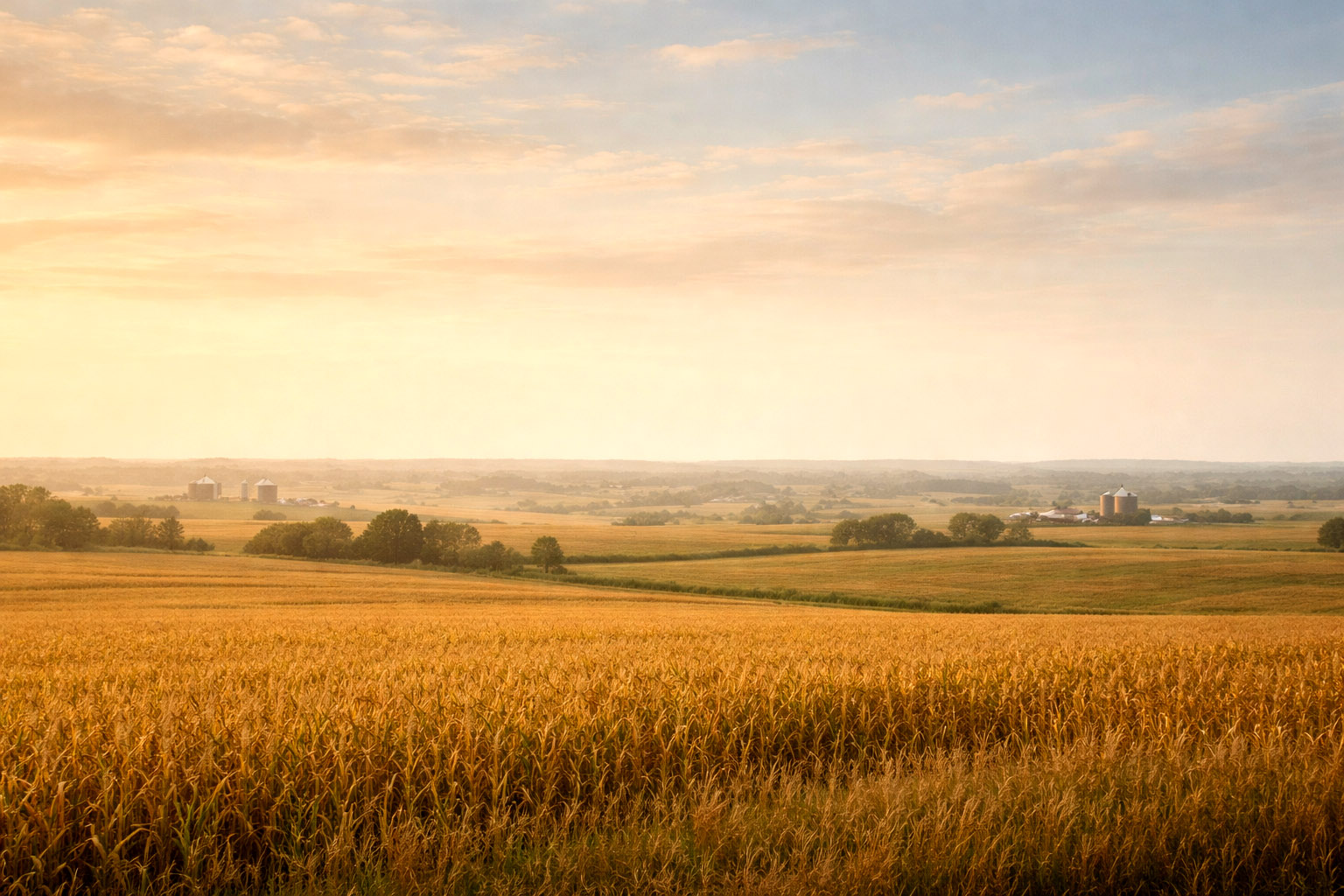
Iowa did not begin as fields. It began as prairie. Vast, untamed, and alive in ways that defied easy ownership or control. Before towns, before farms, before boundaries, the land moved with the rhythms of seasons, water, and migration. It was not empty. It was inhabited, understood, and lived upon by those who came long before the state itself.
The story of Iowa is not a straight line of progress. It is a series of transformations of land, of people, and of purpose, shaped by ambition, hardship, resilience, and change.
Before Iowa: Land and First Peoples
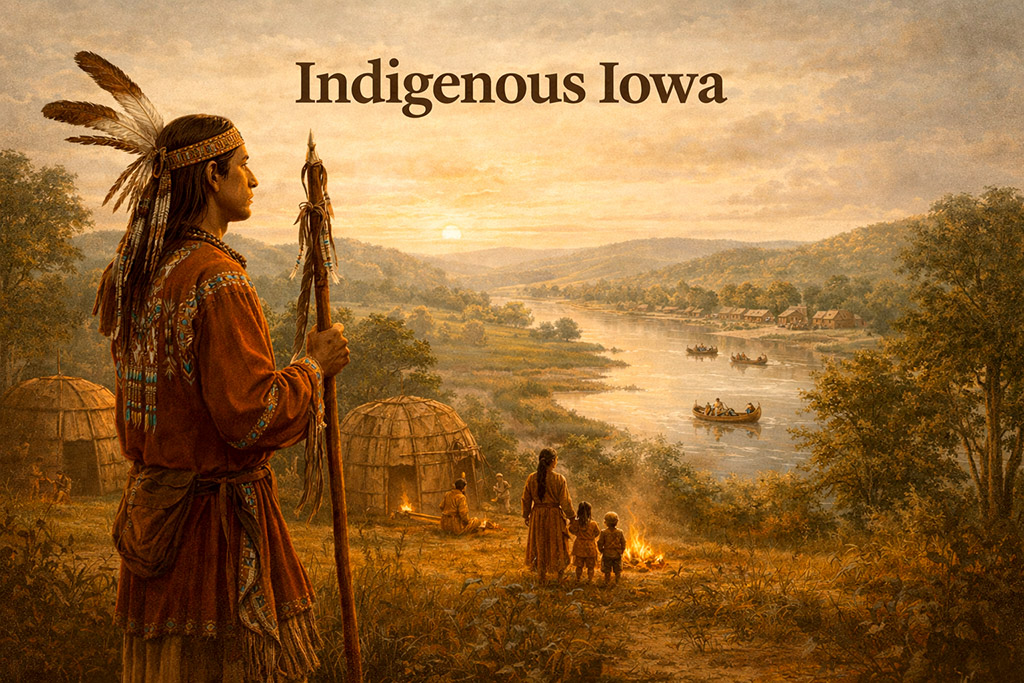
Long before it was called Iowa, this land was home to Native nations including the Meskwaki (Fox) and Sauk. Their relationship with the land was not defined by ownership, but by balance. Seasonal movement, hunting, agriculture, and a deep understanding of the prairie’s cycles.
That world changed rapidly in the 19th century. Treaties, pressure, and conflict forced the removal of many Indigenous people from their ancestral lands. The Meskwaki, uniquely, found their way back, purchasing land in Iowa and maintaining a presence that continues today. Their story remains part of Iowa’s foundation that is often overlooked, but essential.
Settlement and the Prairie
To settlers arriving in the mid-1800s, Iowa was both opportunity and obstacle. The prairie was fertile, but it was also difficult to break. Early farmers faced soil that resisted the plow, weather that could not be predicted, and isolation that defined daily life. And yet, they stayed.
With steel plows, railroads, and determination, the land was transformed. Towns emerged. Farms expanded. A new identity began to take shape, one that was rooted in work, land, and community. But transformation always carries cost. The prairie that once defined the region was largely replaced, and with it, a different way of life.
Iowa and the Civil War
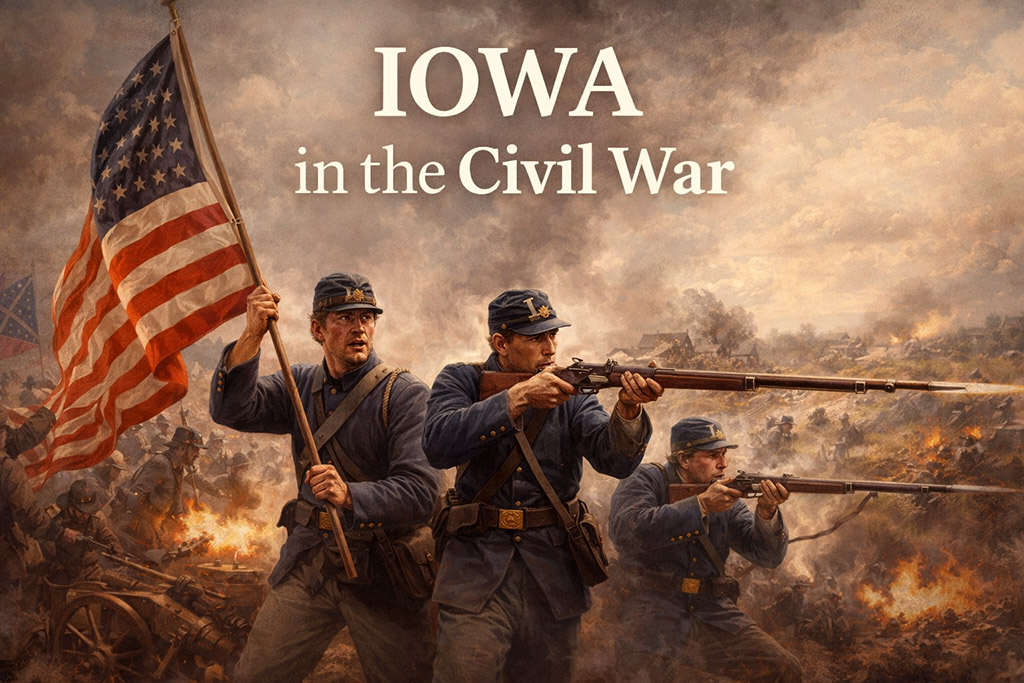
When the Civil War began, Iowa was still a young state. But it responded with force and conviction. A significant portion of Iowa’s population served in the Union Army. Communities sent their sons to fight in battles far from home, and many did not return.
The war helped define Iowa’s moral and political identity. It reinforced a sense of purpose tied not just to survival, but to principle; a belief that the state had a role to play in shaping the nation’s future.
Growth, Community, and Identity
In the decades that followed, Iowa grew. Agriculture became more organized and more productive. Small towns became centers of commerce, education, and faith. Schools, churches, and local institutions created a framework that supported both stability and connection.
Life was not easy. But it was structured. And in that structure, a shared identity emerged: practical, resilient, and deeply tied to place.
The Great Depression: Hardship and Survival
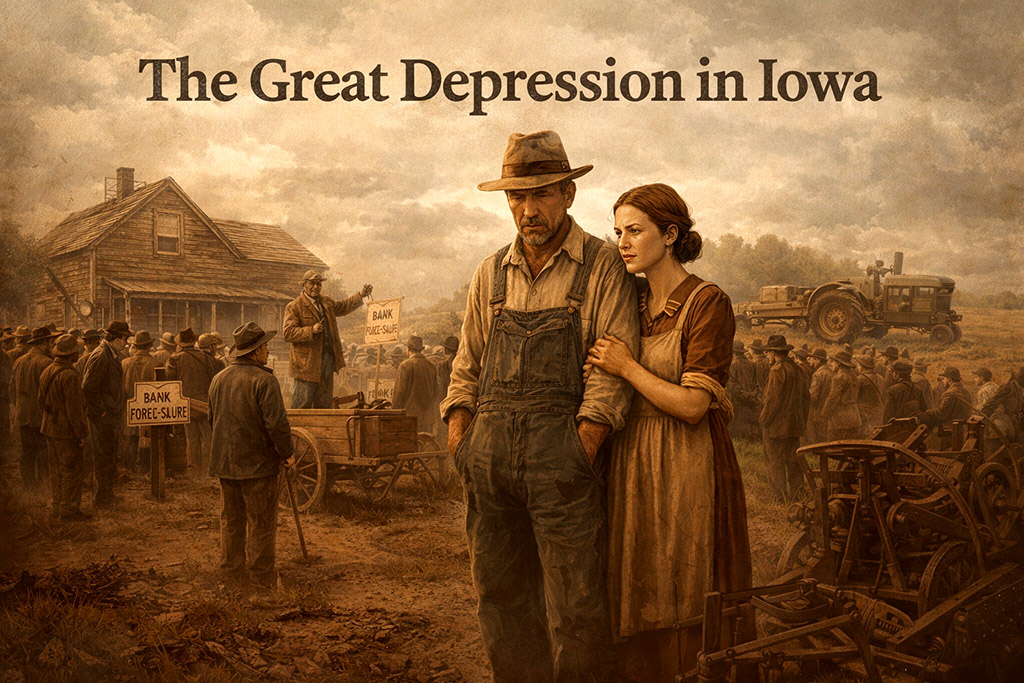
The 1930s tested that identity like never before. Crop prices collapsed. Banks failed. Farms were lost. Families faced decisions that could not be undone. But alongside the hardship came something else: collective response. Neighbors supported one another. Communities adapted. “Penny auctions” and other grassroots efforts helped some hold on when the system itself failed them.
The Depression left scars, but it also reinforced a truth that continues to define Iowa. Resilience is not optional. It is required.
War, Industry, and Change
World War II brought both disruption and opportunity. Iowans served again on battlefields across the globe while those at home contributed through production, agriculture, and support of the war effort.
After the war, change accelerated. Industry expanded. Technology advanced. Rural life began to shift. Slowly at first, then more rapidly. The balance between farm and town, tradition and modernization, became more complex.
Celebration and Reflection
By the time of the nation’s Bicentennial in 1976, Iowa stood at a moment of reflection. There was pride in what had been built, the communities, farms, and institutions. But there was also a growing awareness that change was inevitable.
Agriculture was becoming more consolidated. Small towns faced new pressures. The pace of life, once steady and predictable, began to accelerate. Celebration was accompanied by quiet questions about what would come next.
Modern Iowa: Tension and Transition
Today, Iowa remains deeply connected to its agricultural roots. But the landscape, both physical and cultural, continues to evolve. Farms are larger. Technology is more central. Economic pressures are more complex. Communities face challenges related to population shifts, industry consolidation, and political change.
At the same time, many of the defining characteristics of Iowa endure, like work ethic, community, and adaptation. The tension between continuity and change is no longer occasional, it is constant.
The Iowa Perspective
To understand Iowa’s history is to understand its pattern. The land changes. The economy shifts. The pressures evolve. But the response remains consistent. Iowans adapt. They endure uncertainty. They respond to hardship. They rebuild when necessary and move forward when possible.
History in Iowa is not distant. It is lived, repeated, and carried forward.
Then and Now
The questions facing Iowa today are not entirely new. They echo earlier moments, and questions about how land should be used and who benefits from it, how communities should respond to economic pressure, and what balance should exist between tradition and change.
The answers may differ, but the underlying challenges remain familiar.
The Story Continues
Iowa’s story is not finished. It is written each season, shaped by each generation, and influenced by forces both local and global.
From prairie to farmland, from hardship to resilience, from past to present, the story continues. And like the land itself, it is always in motion.