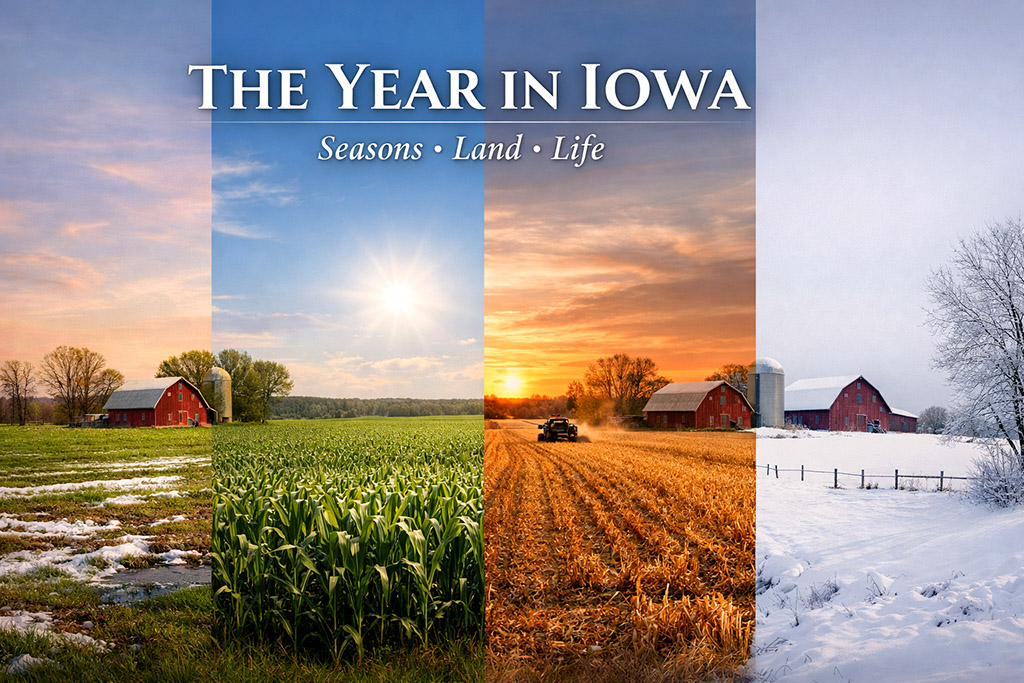
The Year in Iowa: Seasons, Land, and Life
In Iowa, the year is not measured in months. It is measured in seasons.
The land sets the rhythm. The weather enforces it. And the people adapt, endure, and return to it again.
From the first thaw of spring to the stillness of winter, life in Iowa follows a cycle that is as predictable as it is unforgiving—and as familiar as it is deeply personal. It is a rhythm rooted in agriculture, shaped by climate, and lived out in everyday rituals that define what it means to call this place home.
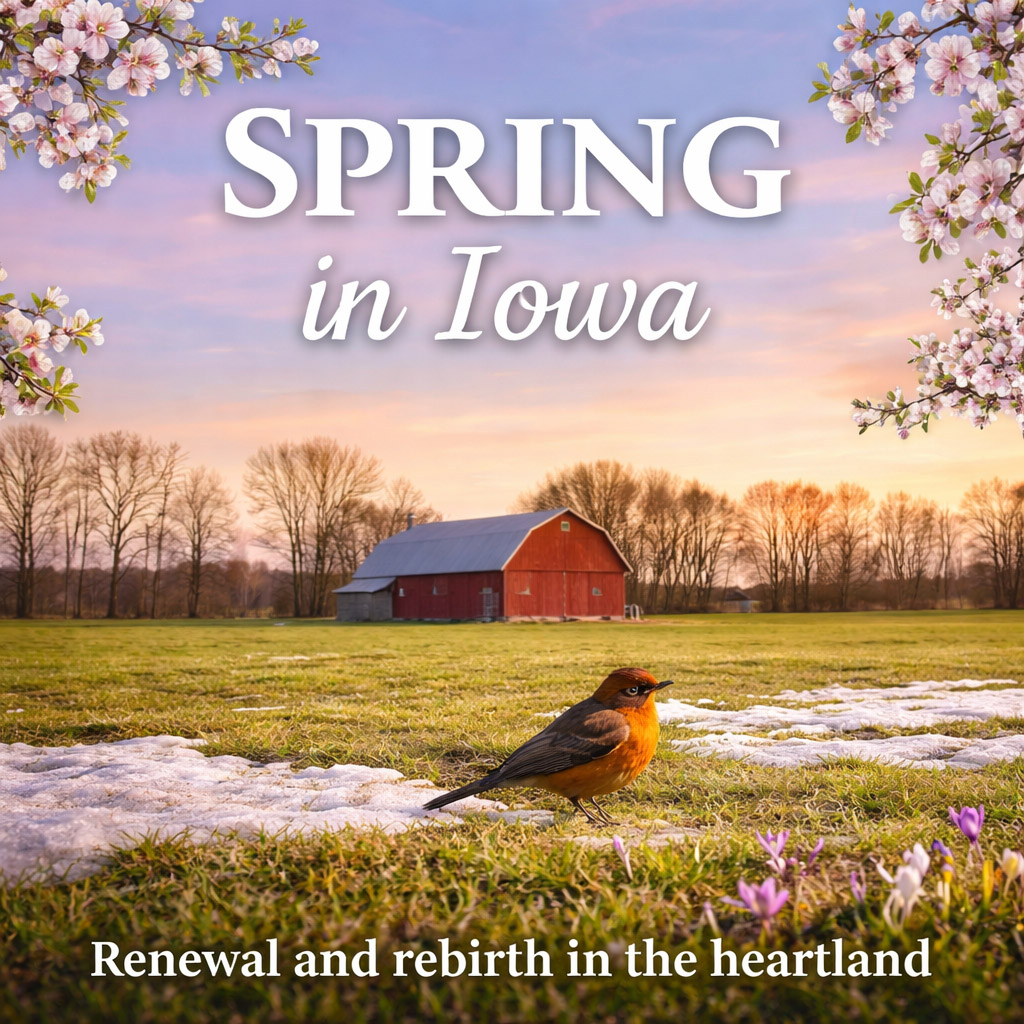
Spring: Return
Spring in Iowa does not arrive all at once, it negotiates its way in.
The snow recedes, but not without leaving behind mud, swollen rivers, and a lingering sense of caution. A warm day opens the windows; a cold snap reminds everyone that winter has not fully released its grip. Still, the signs of return are unmistakable.
Robins appear. Geese cut across the sky. The first green pushes through soil that has been frozen for months.
Inside, homes are opened and aired out. Spring cleaning begins not just as a task, but as a ritual of renewal. Outside, another ritual takes shape: yard sales and garage sales, where neighborhoods reconnect and the informal economy of Iowa life quietly reawakens.
Most importantly, Iowans return to the land.
Gardens are planned. Soil is turned. Equipment is inspected and readied. Farmers begin preparing for planting, knowing that timing is everything and that nature still holds the final say. Even as the calendar declares spring, experience warns otherwise: another snowstorm may yet arrive, a final reminder that in Iowa, certainty is always provisional.
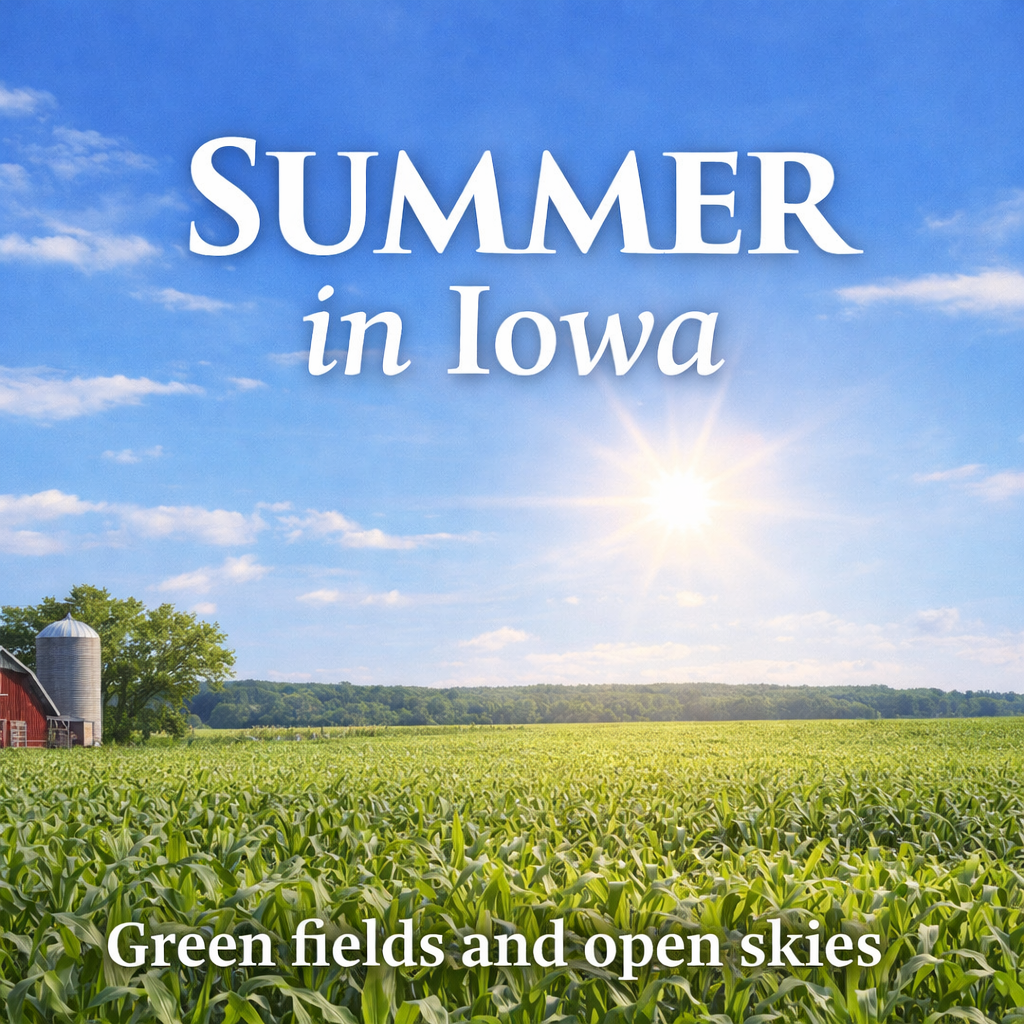
Summer: Growth
By summer, the hesitation of spring gives way to momentum.
Fields that were once bare now stretch in ordered rows of green. Corn rises, soybeans fill in, and the landscape transforms into a living map of growth and expectation. Long days and warm nights define the rhythm, and work intensifies alongside it.
Summer in Iowa is both labor and celebration.
County fairs, festivals, and community gatherings bring people together, reinforcing the social fabric that holds small towns and rural communities in place. At the same time, the demands of the season are constant. Weather is watched closely, crops are managed carefully, and the margin for error narrows.
It is a season of abundance in progress but not yet guaranteed.
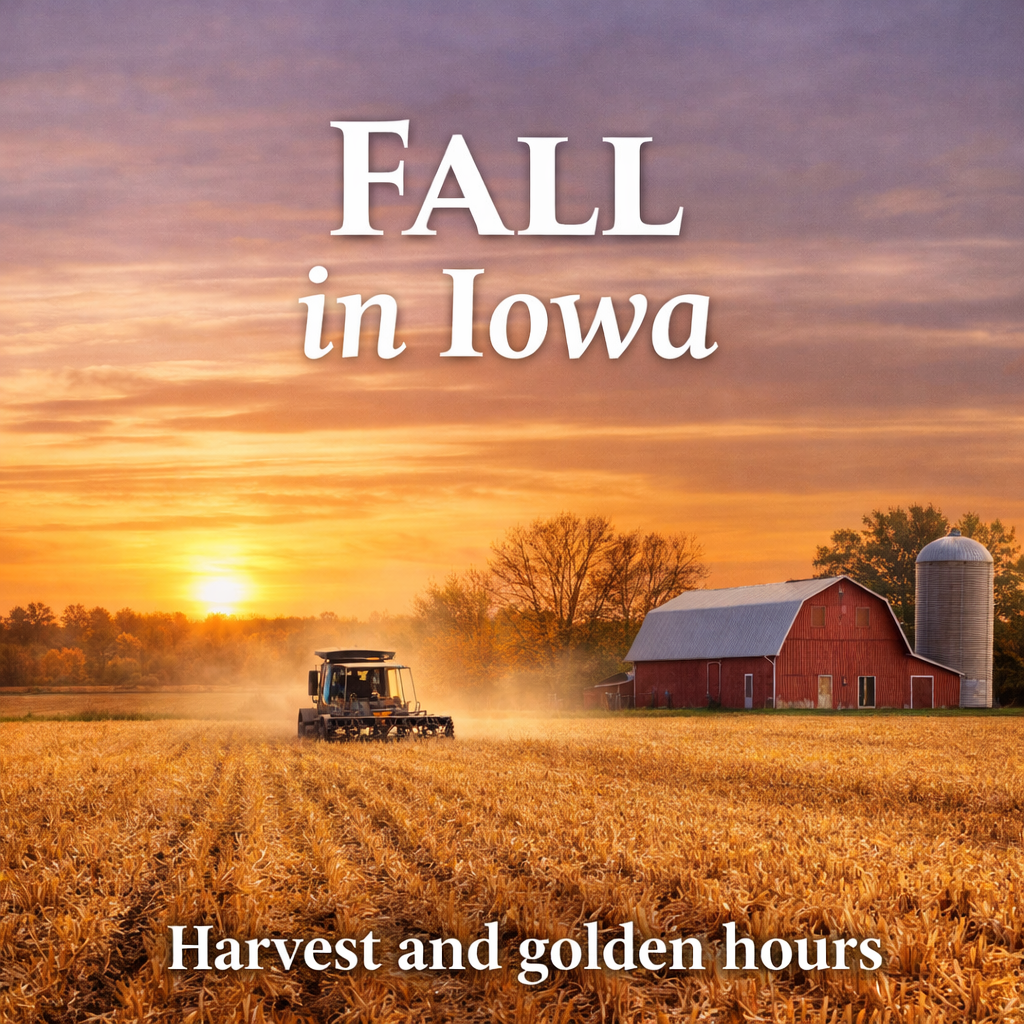
Fall: Harvest
Fall is the season of outcome.
The fields that defined the summer are now the focus of harvest. Combines move steadily across the landscape, bringing in the results of months of planning, labor, and risk. It is a time of long hours, tight windows, and constant attention to conditions.
The air cools. The colors change. The pace shifts.
At the same time, another Iowa tradition takes center stage: football. From high school fields to college stadiums, communities gather in a different kind of ritual. One that reflects identity, loyalty, and shared experience.
Fall carries a sense of completion, but also reflection. What worked, what didn’t, and what comes next are questions that linger long after the last field is harvested.
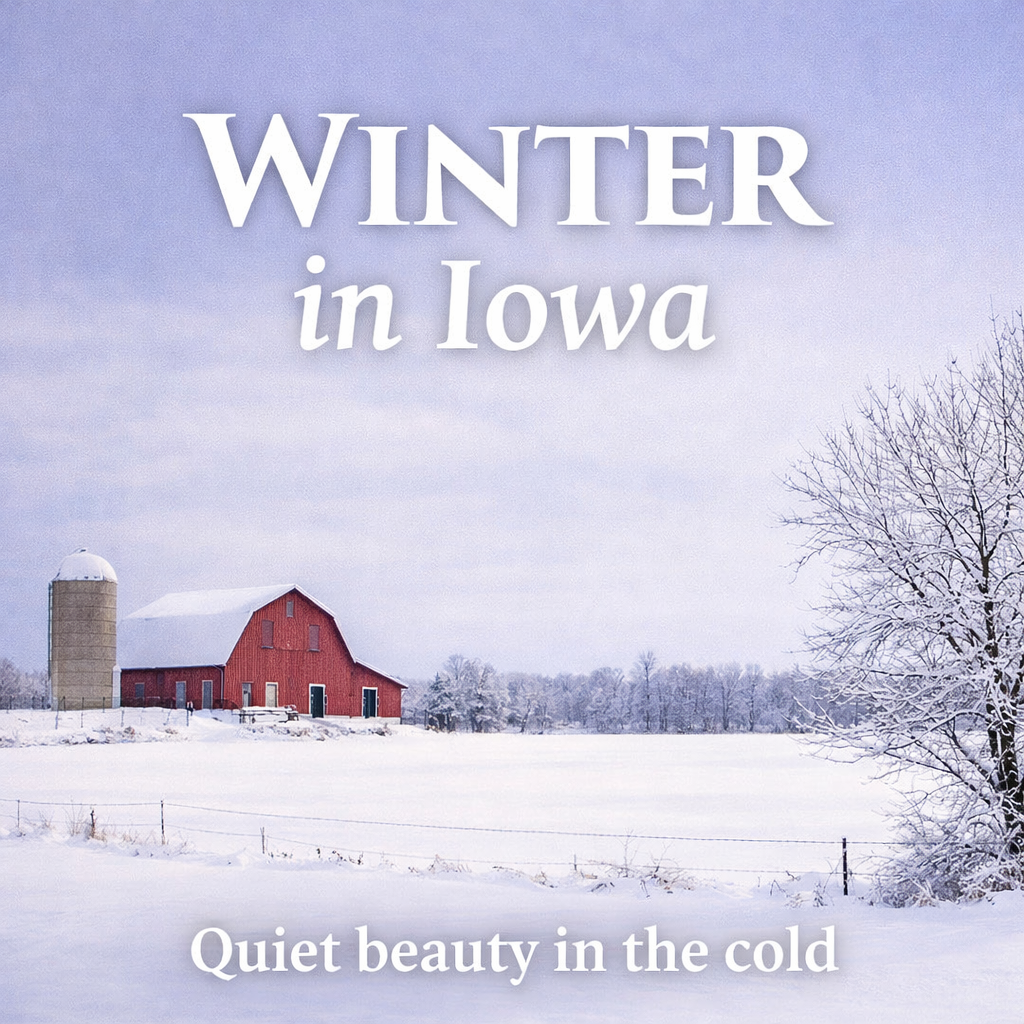
Winter: Endurance
Winter brings everything to a stop. Or at least, it appears to.
Snow covers the fields. The landscape is quiet. Days shorten, and temperatures drop to levels that demand respect. Travel becomes more difficult. Isolation increases, especially in rural areas.
But winter is not simply inactivity. It is endurance.
Communities adapt. People check on neighbors. Daily routines continue under harsher conditions. It is a season that tests resilience, and not just physically, but mentally.
And beneath the surface, preparation begins again.
Equipment is maintained. Plans are made. The next cycle is already taking shape, even as the current one appears frozen in place.
The Iowa Cycle
To understand Iowa, you must understand its cycle.
Each season brings its own demands, its own risks, and its own rewards. There is no permanent state of comfort, only movement from one phase to the next. Success depends on timing, adaptation, and an acceptance that not everything can be controlled.
This cycle shapes more than agriculture. It shapes perspective.
Patience is not optional, it is required. Resilience is not abstract, it is practiced. And the connection to the land is not symbolic, it is lived, season after season.
More Than Weather
The seasons of Iowa are not separate from its broader story; they are central to it.
Debates over agriculture policy, land use, environmental regulation, and rural economics all trace back, in one way or another, to this underlying rhythm. The same forces that shape planting and harvest also shape decisions, priorities, and identity across the state.
As Iowa goes through its seasons, so too does its culture, its economy, and its politics. Understanding the cycle is the first step to understanding the state itself.
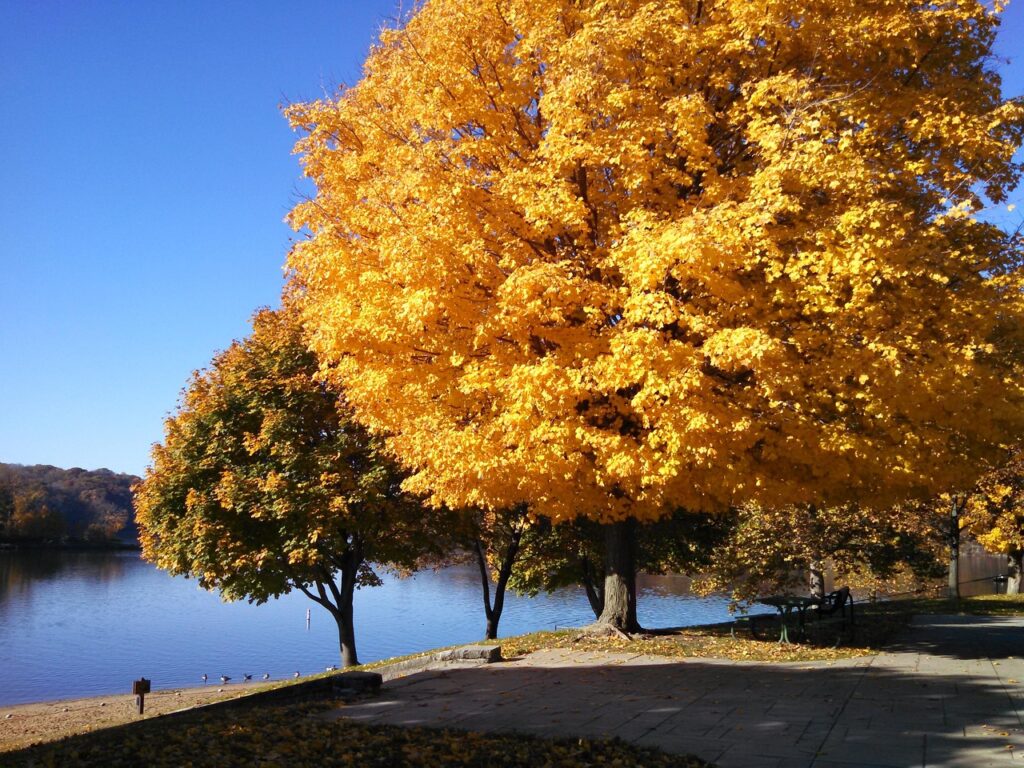
Fall scene in Iowa. Photo by Leonardo Marchini/Pixabay.