
Introduction
Once a political bellwether, Iowa has become solidly red – not just because of MAGA’s grip, but because Democrats lost their voice, message, and connection to rural voters. And now, Iowa Democrats struggle not just to win elections, but to define a coherent identity.
This Iowa411 editorial examines how the state’s Democratic Party abandoned its grassroots, allowed the far-right “Golden Triad” to control the cultural narrative, and what it must do to rebuild – with moral courage, authenticity, and a return to common-sense Iowa values.
Why Iowa Democrats Keep Losing – And What It Would Take to Win Again
For more than a generation, Iowa Democrats held their own in statewide politics – electing governors like Tom Vilsack and Chet Culver, sending Tom Harkin to the U.S. Senate for three decades, and occasionally swinging the state for Democratic presidents.
But in recent years, they’ve fallen into near-total irrelevance. Every congressional district is red. Republicans hold supermajorities in the legislature. The party is barely a rumor in many rural counties.
So what happened?
They lost the cultural narrative
Donald Trump didn’t just win elections – he reframed Iowa’s political vocabulary.
He understood that rural and small-town voters respond emotionally to cultural identity far more than to policy nuance. Issues like transgender athletes, immigration, and “woke education” became emotional shorthand for who is on your side.
Instead of directly confronting these distortions, Democrats largely avoided the conversation. They talked about programs and budgets while Republicans talked about belonging and values.
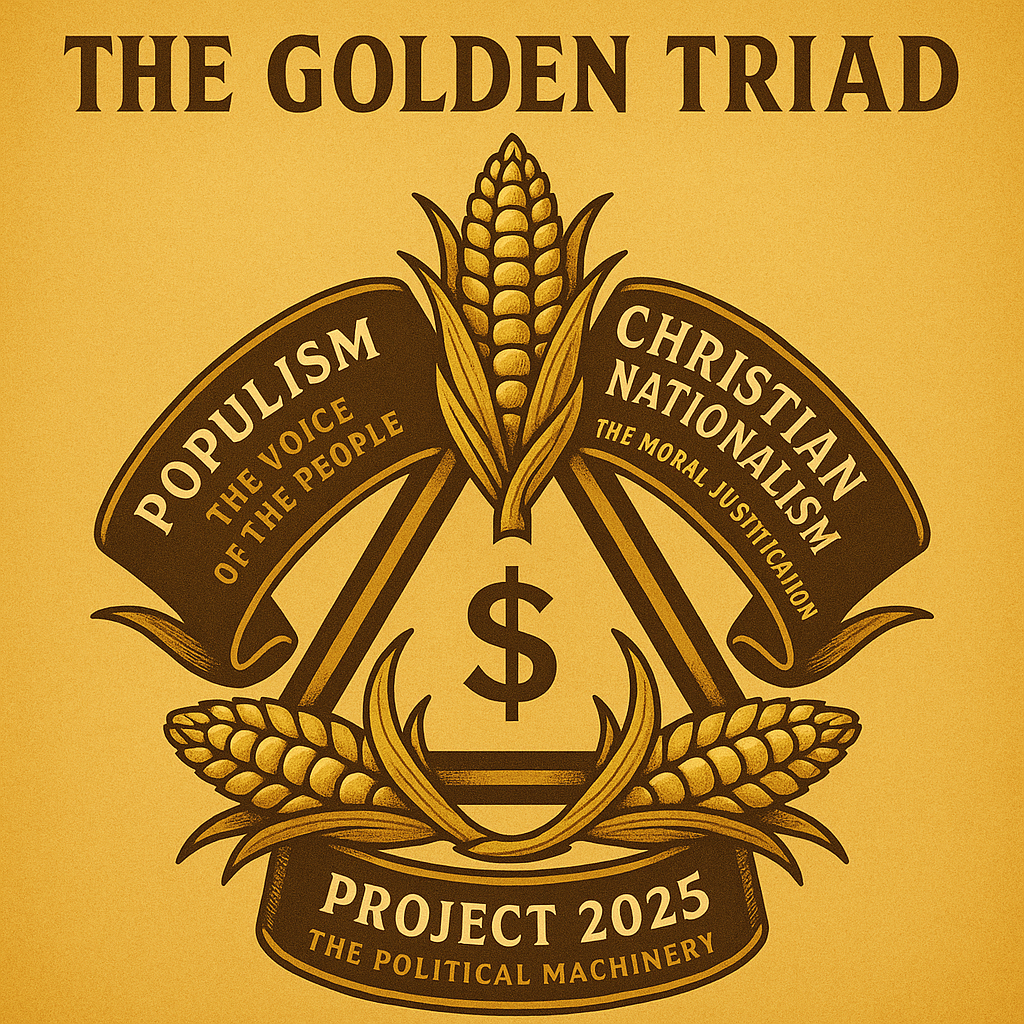
That silence created a vacuum – one that the “Golden Triad” (MAGA, Christian Nationalism, and Project 2025 operatives) quickly filled.
The result: Democrats appeared defensive, technocratic, and timid.
They became a party of urban bubbles
Des Moines, Iowa City, and Ames became blue islands in a deepening red sea. Party leadership increasingly came from – and catered to – these areas, leaving rural Iowans feeling alienated.
Democrats stopped talking about local control, small-town entrepreneurship, and agrarian fairness – traditional Iowa Democratic values that once appealed to both farmers and factory workers.
Instead, their messaging became nationalized, often indistinguishable from Washington talking points. It was as if the party forgot how to speak Iowan.


The “process party” syndrome
The caucus disaster of 2020 wasn’t just a technical failure – it was symbolic of a party obsessed with process over persuasion. Voters watched Democrats bicker over app glitches while Republicans were delivering sound bites that stuck.
Too many Democrats became policy purists and procedural perfectionists, while Republicans became storytellers. The GOP told simple, emotionally charged narratives; Democrats handed out policy binders.
The leadership vacuum
After Vilsack, Harkin, and Culver, there’s been no clear statewide Democratic voice capable of bridging Iowa’s rural-urban divide. The current generation – including Rob Sand – has potential, but the party hasn’t yet united behind a message that connects moral courage with common sense.
Many Democratic insiders still look upward to Washington for cues instead of outward to Iowans for inspiration. That’s a fatal mistake in a state where authenticity matters more than ideology.
How Democrats could rebuild in Iowa
The path back isn’t impossible – but it requires humility, courage, and a complete rethinking of how Democrats communicate.
Reclaim the moral narrative. Don’t surrender values language to the far right. Talk about honesty, fairness, service, and stewardship – not just policy mechanics. Frame compassion as strength, not weakness.
Speak “Iowan,” not “Washington.” Focus on local schools, family farms, independent businesses, and the dignity of work. Make politics personal again.
Confront, don’t cower. When Trumpers attack democracy, call it out as un-American. Iowans respect directness and despise cowardice. Being civil doesn’t mean being silent.
Build from the ground up. Invest in county-level leadership. Reopen the shuttered field offices. Recruit school board and city council candidates who know their neighbors. Iowa’s Democratic revival will start with town halls, not think-tanks.
Find a new face of courage. Rob Sand may be the closest the party has to a credible statewide messenger – pragmatic, rural roots, ethical backbone.
But Iowa Democrats must also nurture a new generation of leaders who don’t apologize for believing in both compassion and accountability.
The Bottom Line
Iowa didn’t turn red overnight. Democrats walked away from the barn before it caught fire.
If the party wants to rebuild, it must rediscover what made it powerful in the first place – the conviction that fairness and decency are not elitist, they’re Iowan.
Until then, Iowa’s Democrats will keep losing elections not because voters love the far right, but because the party forgot how to make them feel heard. Even if all of the Republicans are maintaining their slavish servitude to the president.