Summary
A volatile town hall put Rep. Miller-Meeks on defense over tariffs, Medicaid cuts, and shutdown fallout, while immigrant families pleaded for due process. In court, a judge halted USDA’s SNAP “clawback” push, labeling the chaos self-inflicted. Rep. Feenstra launched his gubernatorial bid with a values-framed contrast that critics call projection amid unresolved policy gaps. Meanwhile, layoffs across Iowa and nationwide signal a cooling labor market shaped by cost pressures and AI – with real consequences for families and towns.
Miller-Meeks’ first in-person town hall devolves into boos, walkouts, and chants
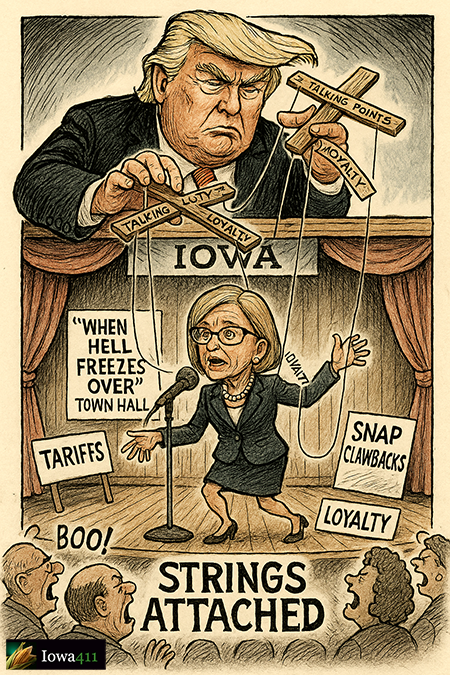
At a raucous Keosauqua forum – Rep. Mariannette Miller-Meeks’ first in-person town hall this year – constituents booed, heckled, and at times drowned out answers as security escorted several attendees out.
The event, meant to select questions from pre-submitted question cards, broke down amid accusations that tough topics were being filtered. Pressed on tariffs, Miller-Meeks called them a “negotiating tool,” drawing pushback from farmers who said they’re hurting now.
Questions about Medicaid focused on deep program cuts in the GOP’s omnibus law (CBO projects major coverage losses and reduced rural funding), while the congresswoman emphasized fraud/eligibility checks, rural-health grants, and HSAs.
Outside, supporters of Hills resident Daniel Ángel Meléndez urged her to intervene in his deportation case; she met briefly with his wife and said her office would inquire once releases are signed. The forum ended as it began – tense, with shouted interruptions and competing narratives about who’s being helped or harmed.
Our Take
The format choice (moderated cards) reinforced perceptions that Miller-Meeks prefers controlled settings. On substance, invoking future rural-health funds and cost-reduction platitudes didn’t answer the immediate math of Medicaid cuts, tariffs’ near-term pain, or SNAP turmoil during the shutdown. Politically, the night likely hardened views: critics saw a Trump-line megaphone; supporters saw an embattled lawmaker battling a hostile room.
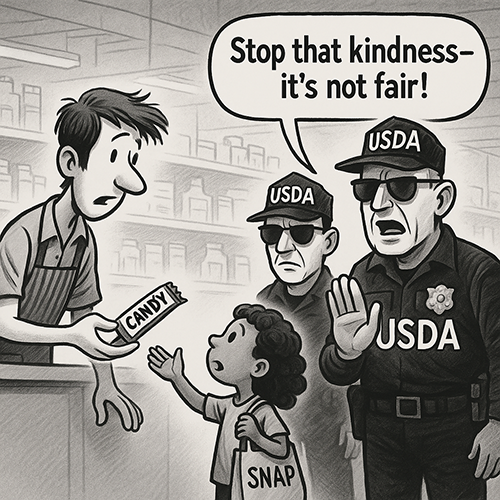
Judge blocks USDA “clawback” push; SNAP chaos called “of the agency’s own making”
After a whirlwind of conflicting memos and court orders, a federal judge states that full November SNAP benefits sent to recipients during a brief legal window don’t have to claw the money back.
The court criticized USDA’s mixed signals – one memo green-lighting full payments, another (after a Supreme Court stay) demanding states “undo” disbursements.
States warned the back-and-forth legal actions left stores and families exposed, with some reimbursements frozen.
The administration continues to argue courts shouldn’t dictate spending during a shutdown; the Senate has advanced a deal to reopen government and refill SNAP.
Our Take
The record shows USDA initially tried to execute a court order, then reversed under political pressure. Whatever one’s view of shutdown tactics, the practical effect was confusion cascading onto food-insecure families, retailers, and state systems – the worst place to inject brinkmanship.
Two Iowa federal cases: immigration detainees must get bond hearings
A federal judge ordered bond hearings for two people detained in Iowa jails after immigration courts, following a new Trump-era interpretation, denied them any hearing.
In both cases – a Mexican mother with a pending asylum claim and a Colombian asylum seeker whose local theft charge was dropped – the judge said due process requires individualized determinations.
The ruling doesn’t predetermine release; it restores the chance to argue for it.
Our Take
This is not “open borders;” it’s “open courtroom.” The decision reaffirms a core American value: the government must justify detention before a neutral arbiter, especially when asylum claims are pending and criminal histories are absent or minor.
Feenstra frames campaign as “Iowa values vs. liberal politics” and critics call it projection
Launching his gubernatorial ground game, Rep. Randy Feenstra cast the race as “work horse vs. show horse,” touting immigration enforcement, anti-abortion absolutism, and skepticism of gender-affirming identities as “truth, respectfully said.”
Rob Sand’s camp fired back: reopen the government, explain votes that boot Iowans from Medicaid, and where’s the farm bill?
Feenstra promised tax freezes, “world-class education,” and keeping grads in Iowa, but dodged whether he’d back extending ACA tax credits as premiums rise.
Our Take
The “Iowa values vs. liberals” trope works only if voters forget who’s advancing policies that cut health coverage, stall a farm bill, and inject culture-war litmus tests into governance. Calling oneself a “work horse” doesn’t move grain if policy carts are empty.
Layoffs climb: what it means for Iowans
October brought more employee cuts: Wells Fargo added to a multi-year downsizing at its West Des Moines campus; other Iowa firms reported reductions tied to mergers, inventory gluts, closures, rising costs, and interest rates. Nationally, layoffs hit a 20-year high, with cost-cutting and AI adoption cited.
What this affects:
Households: longer job searches; pressure on health coverage and local spending.
Communities: fewer high-wage anchors; ripple effects on small businesses.
Policy: workforce aging + out-migration + sector volatility = need for serious talent pipelines (apprenticeships, community-college reskilling), childcare support, and targeted industry diversification beyond cyclical ag-adjacent manufacturing.
Our Take
“Right-size and pray” isn’t an economic strategy. If leaders want “world-class,” they need to fund the unglamorous: training aligned to real job slots, regional industry clusters, and safety nets that help workers pivot fast.
“Marionette” Miller-Meeks