Summary
Today’s Iowa411 examines a political culture shift marked by religious absolutism and populist theater in the GOP governor’s race, growing volatility and opportunity in Iowa’s agricultural export focus, and the increasing criminalization of immigrants under new federal detention policies.
All raise critical questions about leadership, ethics, human rights and Iowa’s future direction.
GOP Gubernatorial Forum: The Empty Chair Speaks Loudest
Four Republican candidates running for Iowa governor – Adam Steen, Brad Sherman, Eddie Andrews and Zach Lahn – used a forum in Holstein to repeatedly criticize the absence of presumed frontrunner U.S. Rep. Randy Feenstra.
Feenstra skipped the event to attend a separate campaign stop, prompting both humorous jabs and pointed political criticism.
Key themes emerged during the forum, from eminent domain concerns to religious themes. The first thing that was apparent is that presence matters in Iowa political culture – Feenstra’s absence was noticed not just by opponents, but by voters.
A frustrated attendee cited disappointment in Feenstra and concern about the decline of Iowa schools and lack of mental health investment.
For the candidates at the forum, eminent domain & carbon pipeline resistance became a litmus test. All in attendance claimed opposition; some accused Feenstra of being weak or inconsistent on the issue.
Religious rhetoric took center stage among some candidates. Steen framed himself as fighting “evil” and emphasized anti-abortion absolutism, and Sherman openly called for putting the Ten Commandments in schools as he criticized the First Amendment’s application to religion in public institutions.
Lahn attacked corporate land purchases and hedge fund ownership of homes/farmland, and Andrews positioned himself as a “blue-area-winning conservative.”
What we learned about each candidate
After reviewing their comments, we summarized candidates’ messaging and what they signaled about their ideological learnings.
| Candidate | Messaging & Positioning | Signals / Leanings |
| Randy Feenstra | Skipped the forum – seen as entitled or distant | Business-first, cautious populism |
| Adam Steen | “Voice for morality,” anti-Satanic Temple, anti-abortion absolutist | Vertical morality, Christian Nationalism undertones |
| Brad Sherman | Wants Ten Commandments in schools, rejects church/state separation | Strong Christian Nationalism, Project 2025 alignment |
| Eddie Andrews | Claims general election viability in blue areas | Traditional conservative positioning |
| Zach Lahn | Anti-hedge fund, anti-corporate land grabs | Populist, anti-elite, rural-first rhetoric |
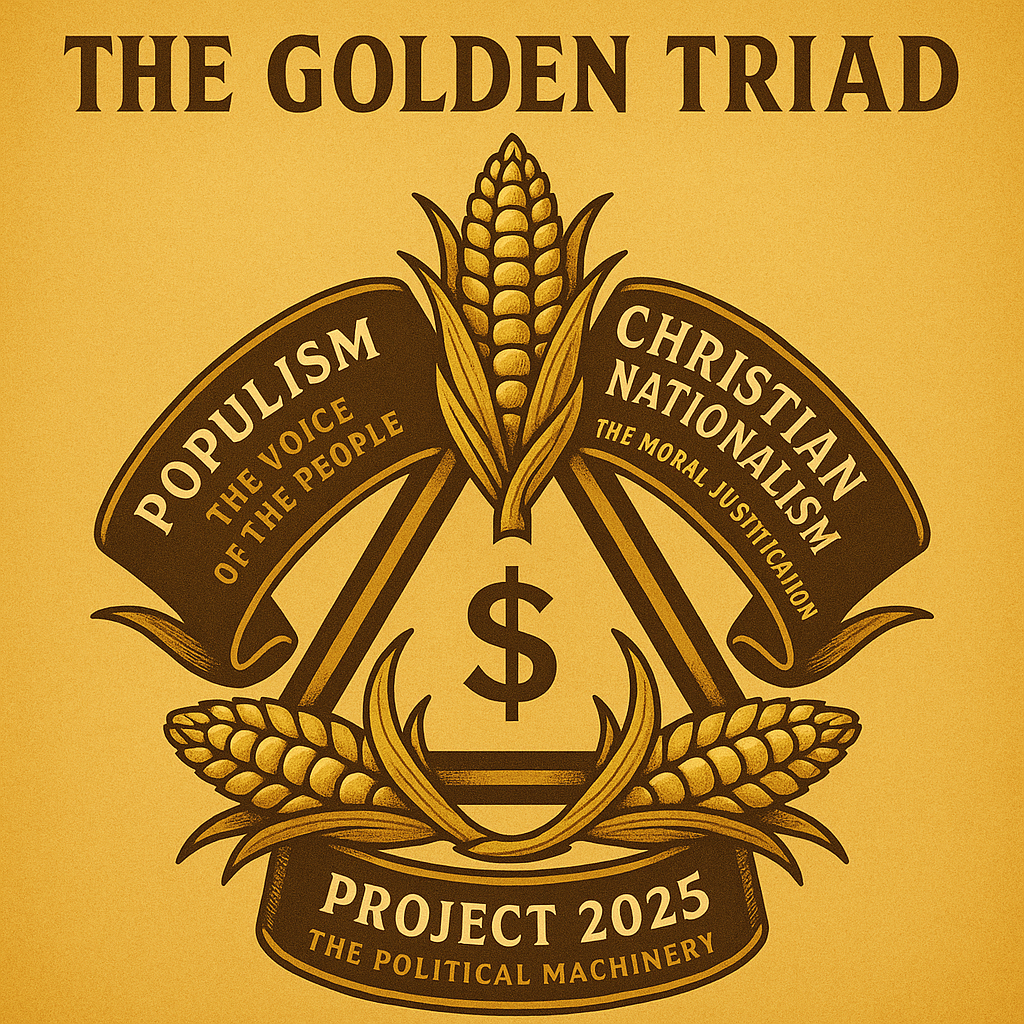
Our Take – Absence, Absolutism & the Golden Triad
In Iowa political culture, not showing up sends a message – and that message isn’t confidence, it’s distance. Feenstra’s choice to skip created a leadership vacuum that his opponents eagerly filled.
More concerning is the overt embrace of vertical morality and Christian nationalism by multiple candidates, there were calls to return God to schools, framing government as “good vs evil,” a rejection of constitutional separation of powers, and governance principles that follow Project 2025 tenets.
Just as telling, real issues raised by voters (public education decline, mental health, affordability) were secondary to ideological declarations. The loudest voices weren’t focused on solving Iowa problems – they were focused on defining who belongs in power.
That should concern people across the political spectrum.
Iowa’s Ag Trade Mission: More Than Just Corn and Soy
Iowa Secretary of Agriculture Mike Naig led a trade mission to Vietnam and Indonesia, emphasizing expanding markets for corn, soybeans, ethanol, beef and pork. Vietnam is ramping up ethanol blending; Indonesia’s trip was exploratory but promising.
Last year, Vietnam bought more than $4.5B in U.S. ag products; Iowa’s portion of that was $223M. And Indonesia bought more than $3.8B in U.S. ag goods, $297M from Iowa. Not to mention that, looking forward, both countries present strong economic and population growth.
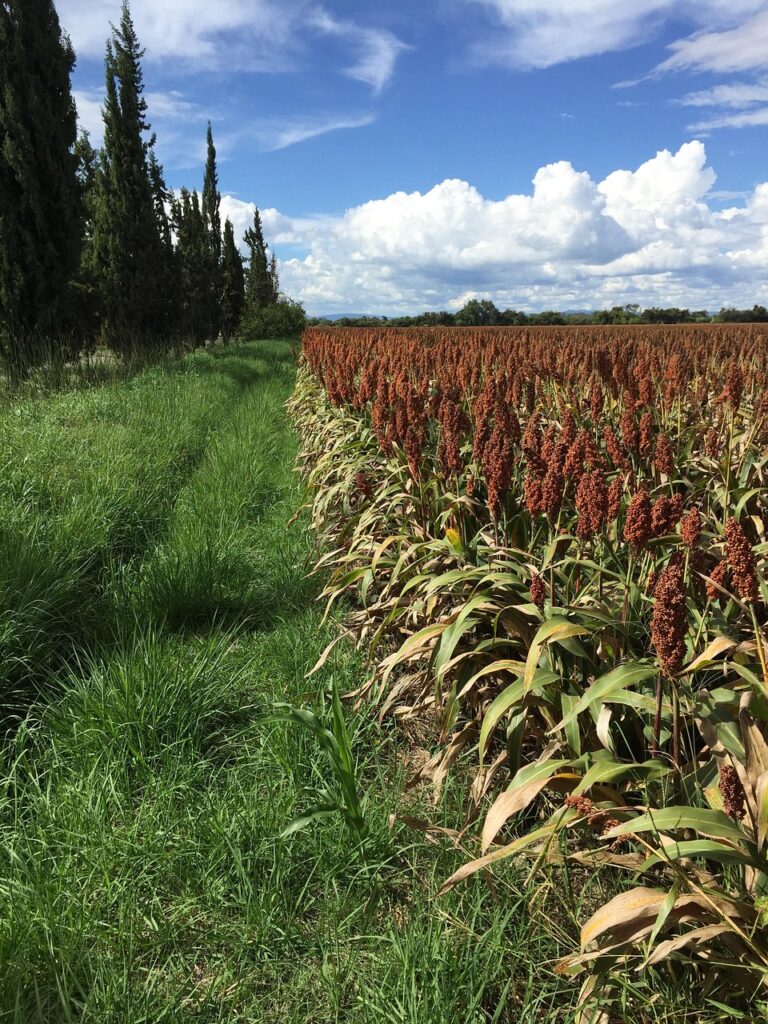
In addition to agricultural products Vietnam and Indonesia buy, increased trade with those nations could also open new opportunities for crops and other agricultural products. These include specialty grains (sorghum, pulses), alternative proteins, feedstock for biofuels beyond corn, value-added ag products (processed foods), controlled-environment ag tech exports, and sustainable ag / water-efficiency tools
Our Take – Iowa Must Stop Betting on One Crop
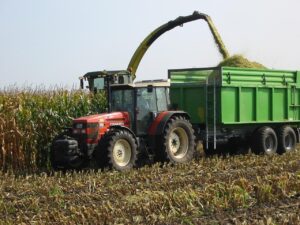
Corn and soy have built Iowa’s banana republic economy – but the future belongs to diversification and value-added agriculture. Southeast Asia is an opportunity not just for exports, but for reshaping what Iowa grows and produces.
True stability won’t come from increasing volume of the same crops – it will come from innovation, crop variety, sustainability and shifting from raw inputs to higher-margin outputs.
Trade missions are smart. But they need to lead to structural change, not just bigger shipments of the same commodities.
Another Iowa Jail Sued Over No-Bond Immigration Detention
A Hardin County Jail is facing federal lawsuit after detaining an Uzbekistan-born asylum seeker, Javokhir Rahimov-Akobirovich, who had legally been released on bond years ago.
Under new Trump-era DOJ/ICE policies, individuals who entered the U.S. without inspection now face mandatory detention without bond, even if they’ve lived in the country for years. The policies contradict decades of legal precedent
Rahimov-Akobirovich, who had lived in the U.S. more than five years legally, was apprehended while traveling through Iowa.
There are hundreds of similar cases nationwide, to where local county jails now function as arms of federal detention. Families are being separated, jobs are lost, and lives are destabilized
Our Take – Cruelty as Policy
This case is not about border security. It is about using bureaucracy to break people.
By removing the right to bond, regardless of background, socioeconomic contribution, or stability, the system has crossed into institutional cruelty.
Immigrants who are neighbors, workers, taxpayers, and parents are being disappeared into jails – not because they committed new crimes, but because a policy was rewritten to treat them more harshly.
This isn’t enforcing the law. It’s manufacturing fear. And Iowa is being turned into an unwilling participant.