Summary
Iowa farmers, transgender residents, and immigrant communities are all feeling the effects of shifting federal and state policies that introduce instability into daily life.
From inadequate farm aid and volatile fertilizer tariffs to the rollback of civil rights protections and aggressive immigration enforcement, Iowans are navigating a political landscape increasingly shaped by unpredictability and exclusion.
Yet local communities from Johnson County to Ottumwa continue to push back, demonstrating resilience and a commitment to fairness even as state and federal actions undermine economic security and civil rights.
These stories reveal a common thread: Iowa’s strength comes from stability, inclusion, and community‑driven problem‑solving, not from top‑down political disruption.
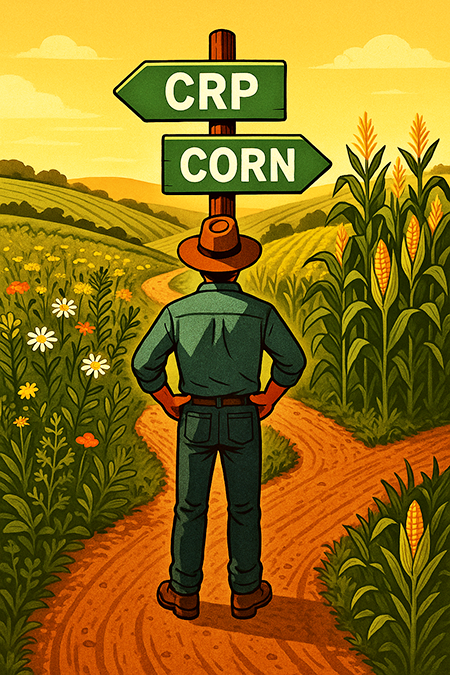
USDA Says No Additional Farm Aid Planned
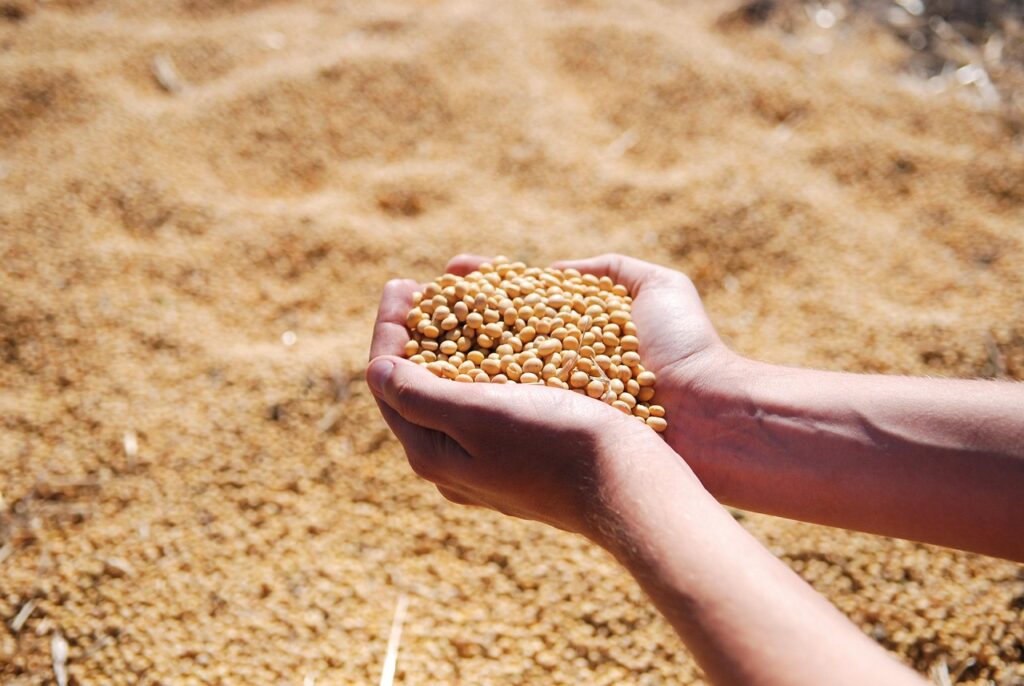
The U.S. Department of Agriculture has announced that it does not plan to extend farm aid beyond the previously approved $12 billion package intended to help farmers cope with low commodity prices, high input costs, and the economic fallout from ongoing trade disruptions.
Despite widespread acknowledgment that the aid falls far short of covering projected farm losses, estimated at $44 billion, USDA officials cite funding limitations and insist the agency has done all it can for now.
The Trump administration has framed the aid as a temporary bridge until new farm supports from recent tax and spending legislation take effect. Meanwhile, farmers continue to face uncertainty from shifting tariff policies and volatile fertilizer markets, with the U.S. heavily dependent on imports for key nutrients like potash.
Our Take
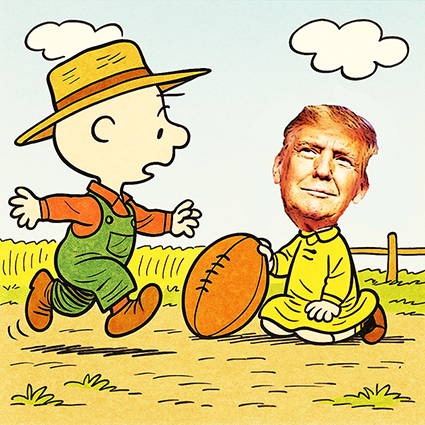
The administration’s approach reflects a pattern: bold promises, partial follow‑through, and a quick pivot away once political value is extracted. Farmers – long considered a core constituency – are left navigating unpredictable trade policies and insufficient support.
The instability created by tariff swings is itself a form of economic harm, and the refusal to consider additional aid underscores how transactional the relationship has become.
Iowa’s agricultural economy thrives on predictability; instead, it’s being asked to absorb the consequences of political improvisation.
Iowa Communities Uphold Trans Protections Despite State Rollback
After Iowa lawmakers removed gender identity from the Iowa Civil Rights Act – making Iowa the first state to strip existing protections – local governments in Johnson County, Iowa City, and Coralville moved quickly to reaffirm their own anti‑discrimination ordinances.
The local measures aim to preserve protections in housing, employment, and public accommodations for transgender and nonbinary residents, even as state law now excludes them.
Legal experts note that while local ordinances may face challenges, nothing in the new state law explicitly prohibits municipalities from maintaining broader protections. Many other Iowa cities, including Des Moines, Cedar Rapids, and Council Bluffs, have indicated they will keep their existing ordinances unchanged.
Our Take
Local governments are stepping into a moral and civic leadership vacuum created by the state’s decision to target an already vulnerable population.
The rollback of rights at the state level mirrors a broader national trend of using transgender people as political scapegoats – a tactic historically employed by authoritarian movements seeking to consolidate power by isolating minority groups.
Iowa’s cities are signaling that compassion and equal protection still matter, even if the state’s political leadership has chosen a different path.
Immigration Crackdowns Threaten Ottumwa’s Economic Revival
Reporter Maya Marchel Hoff of the Lee-Gazette Des Moines Bureau writes about Ottumwa’s 10-year transformation from economic decline to renewed vitality, a revival driven largely by immigration.
New residents from Mexico, Myanmar, Haiti, Cuba, and Venezuela revitalized the city’s workforce, stabilized population numbers, and helped reopen storefronts and rebuild the school district. Nearly half of Ottumwa’s students now come from diverse racial and ethnic backgrounds.
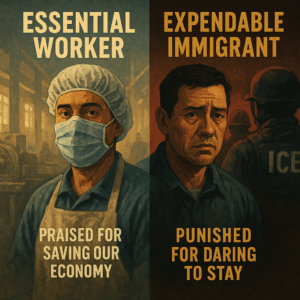
Progress is now at risk. Federal immigration actions during Trump’s second term – including the termination of the CHNV parole program and changes to Temporary Protected Status – have led to layoffs at major employers like JBS and Tyson. Hundreds of workers have lost authorization to work, prompting fear, economic strain, and in some cases, families leaving the community altogether.
Our Take
Ottumwa’s story illustrates a truth often ignored in political rhetoric: immigration is not a threat to rural America – it is its lifeline.
The federal crackdown jeopardizes not only individual families but the economic stability of entire towns. When workers disappear, so do customers, students, and taxpayers.
The fear that permeates immigrant communities is not an abstract policy debate; it is a direct assault on the social and economic fabric that has allowed towns like Ottumwa to survive.
Fertilizer Tariff Volatility Adds Pressure to Farmers
Frequent tariff announcements and executive orders related to fertilizer have created uncertainty for farmers already facing tight margins.
While the U.S. produces most of its anhydrous ammonia domestically, it relies heavily on imports – especially potash, more than 95% of which comes from abroad. Canada supplies the vast majority, with Russia contributing a smaller share.
The administration’s shifting trade posture has raised questions about whether the U.S. could or should expand domestic potash mining. For now, farmers must navigate unpredictable input costs layered on top of already unstable commodity markets.
Our Take
Tariff volatility functions like a hidden tax on farmers. Even when tariffs don’t materialize, the threat alone disrupts markets and planning cycles. The administration’s erratic approach to trade policy leaves farmers absorbing risks they did not create and cannot control. Iowa agriculture depends on long‑term stability, not policy whiplash.