There Is No Regulatory Framework to Prevent Harm to Iowa Taxpayers
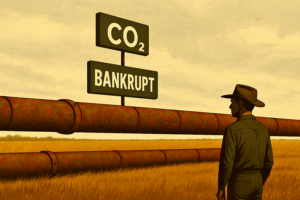
Carbon‑capture pipelines are being built by private, tax‑credit‑driven companies, not public utilities. That distinction matters, because it means they can go bankrupt, dissolve, sell assets to unknown buyers, or leave behind infrastructure with no responsible owner
And unlike oil or gas pipelines, CO₂ pipelines have no long‑standing regulatory framework for abandonment, remediation, or long‑term monitoring.
Let’s walk through the risks.
The Business Model Is Built on Tax Credits, Not Market Demand
The financial backbone of these pipelines is the federal 45Q tax credit, which pays companies for capturing and storing CO₂. This means if Congress changes the credit, if the credit expires, if the IRS tightens rules, or if ethanol production declines, the entire business model collapses.
The carbon-capture companies are not profitable without subsidies. That makes bankruptcy a very real possibility.
If a Company Fails, the Pipeline Becomes an Orphaned Asset
When a pipeline company goes bankrupt, its assets are sold to pay creditors. But CO₂ pipelines are expensive to maintain, dangerous if neglected, useless without a CO₂ source, and not easily repurposed
If no buyer wants them, they become orphaned infrastructure, like abandoned oil wells but on a much larger scale. And Iowa has no clear mechanism for handling orphaned CO₂ pipelines.
Landowners Could Be Stuck with Liability
This is the nightmare scenario.
If a pipeline is abandoned, the easement remains on the deed. So, the landowner cannot build on it or remove it. And may be liable for accidents on their property.
Easements do not automatically disappear when a company dissolves. They can remain for decades, clouding title and reducing land value.
CO₂ Pipelines Require Ongoing Monitoring – Forever
Unlike oil pipelines, CO₂ pipelines must be monitored for corrosion, maintain pressure, be checked for leaks, and protected from soil movement.
And if monitoring stops, the pipeline becomes a pressurized underground hazard.
A rupture can create a low‑oxygen plume capable of suffocating people and animals, as has been seen in Satartia, Mississippi.
If the company no longer exists, who monitors the line? Right now, the answer is: no one knows.
Cleanup Costs Could Fall to the Public
Removing a pipeline can cost millions of dollars per mile. If a company goes bankrupt the state and counties may have to foot the cost. And all landowners may have to pay indirectly through taxes.
This is exactly what happened with abandoned oil wells across the country. And taxpayers are now footing the bill.
Iowa could face the same fate with CO₂ pipelines.
Bankruptcy Could Allow Companies to Abandon Safety Obligations
In bankruptcy court, companies can ask to be released from monitoring requirements, maintenance obligations, environmental responsibilities, and easement terms.
Courts have allowed this in other industries.
There is no guarantee that CO₂ pipeline companies won’t do the same.
The Risk Is Magnified Because These Companies Are Shell Structures
Most pipeline developers are LLCs, subsidiaries, or special‑purpose entities. Legal structures designed to limit liability, shield parent companies, and allow easy dissolution.
If something goes wrong, the parent company can walk away as the shell company collapses.
States Like Iowa Have Not Required Adequate Financial Assurances
Some states require bonding, insurance, or decommissioning funds. Iowa has not required strong protections. Pipeline companies have fought aggressively against bonding requirements.
Without bonding, there is no guaranteed money to clean up or monitor abandoned pipelines.
The Risk Grows If Ethanol Declines
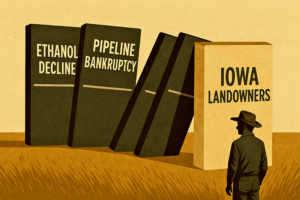
Because these pipelines depend on ethanol CO₂, if ethanol demand drops, EV adoption accelerates, or if federal fuel standards change, the CO₂ supply disappears.
A pipeline with no CO₂ source is a stranded asset. And stranded assets often end up abandoned.
The Bottom Line: Iowa Could Be Left Holding the Bag
If pipeline companies fail, Iowa could be left with abandoned pipelines, unmonitored CO₂ hazards, permanent easements on private land, cleanup costs, legal disputes, and safety risks.
This is why landowners are fighting so fiercely. It’s not just about property rights, it’s about long‑term liability.