Summary
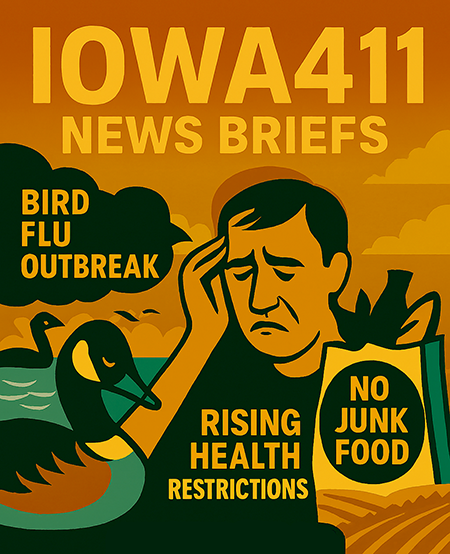
Central Iowa faces a concentrated bird flu outbreak that threatens wildlife but not drinking water, while millions of Americans begin 2026 with sharply higher health insurance premiums after Congress failed to extend ACA subsidies.
At the same time, Iowa launches the nation’s most restrictive SNAP junk‑food rules, sparking concerns about confusion, cost, and unintended consequences.
Across all three stories, a common theme emerges: systems under strain, from wildlife health to human health to food access, and the need for clear communication, thoughtful policy, and community resilience as the new year begins.
Bird Flu Outbreak Kills Hundreds of Geese at Maffitt Reservoir
Roughly 200 Canada geese have died from bird flu at Maffitt Reservoir, a major drinking water source for 600,000 central Iowans. Central Iowa Water Works says the water remains safe due to multi‑layered treatment systems that remove and inactivate viruses.
The reservoir park is temporarily closed while crews clean up and monitor the situation. Additional die‑offs have been reported in southwest Iowa, and wildlife officials urge residents to report large clusters of dead birds and avoid handling sick or dead wildlife.
The outbreak may subside by mid‑January as migration continues and waters freeze.
Our Take
This is a significant wildlife mortality event, but not a drinking‑water crisis. The real story is the geographic spread and persistence of H5N1 in Iowa’s wild bird populations, especially in a state with massive poultry operations. Continued monitoring is essential, and public communication will matter as anxiety rises.
Health Subsidies Expire, Triggering Steep Insurance Hikes for Millions
Enhanced Affordable Care Act (ACA) subsidies expired at midnight, causing premiums to spike for more than 20 million Americans.
Many ACA enrollees are seeing increases of 114% or more. Some families face premiums doubling or tripling, with many considering dropping coverage entirely.
Congress failed to extend the subsidies before the deadline despite a 43‑day shutdown and bipartisan pressure. A House vote in January may revive the credits, but passage is uncertain.
Analysts warn that millions may leave the ACA marketplace, destabilizing the risk pool and raising costs further.
Our Take
This is a major affordability shock hitting middle‑class families, farmers, gig workers, and small business owners, groups already squeezed by rising costs.
The political gridlock behind the lapse is likely to fuel voter frustration in a year when health care is already the top national concern. The downstream effects on enrollment and rural health systems could be severe.
SNAP Junk‑Food Restrictions Begin in Iowa
Iowa and four other states have launched new SNAP restrictions banning purchases of soda, candy, and other taxable or prepared foods. The policy is part of a national push to reduce chronic disease by limiting taxpayer‑funded purchases of unhealthy items.
Critics warn that the rollout is confusing, costly for retailers, and likely to cause checkout problems due to unclear product lists.
Research is mixed on whether such restrictions improve health outcomes. Iowa’s rules are the most restrictive so far, affecting a wide range of items beyond soda and candy.
Our Take
The intention of improving public health is understandable, but the execution appears to be a bit messy. Without clear product lists, consistent technology, or strong evidence of effectiveness, the policy risks punishing low‑income families while creating logistical headaches for retailers.
The broader question is whether restricting choices addresses root causes of poor nutrition or if it will simply shift burdens onto those with the least economic flexibility.