Summary
Today’s Iowa411 stories share a common theme: the gap between political messaging and material outcomes.
In healthcare, drug price “reforms” leave core pricing power untouched. In agriculture, headline-level farm aid obscures uneven and insufficient support once the fine print emerges.
And in environmental policy, systemic harm persists not because it is hidden, but because it is politically inconvenient to confront.
Through all three stories, entrenched industries (pharmaceuticals and industrial agriculture) demonstrate their ability to absorb pressure while preserving existing power structures.
Meanwhile, reform efforts tend to be incremental, symbolic, or narrowly targeted. The contrast is most striking in the water-quality story, where one individual’s refusal to accept normalized harm exposes just how much of today’s crisis exists not in secrecy, but in plain sight.
Drugmakers Set to Raise Prices on 350 Medicines
Despite public pressure from the Trump administration to reduce prescription drug costs, pharmaceutical companies are planning price increases on at least 350 branded medications in 2026, according to healthcare pricing data from 3 Axis Advisors.
The planned hikes exceed last year’s totals and carry a median increase of roughly 4%, consistent with recent inflation trends. Affected drugs include major cancer therapies, vaccines for COVID-19, RSV, and shingles, and widely used treatments for migraine, diabetes, and pain management.
While a small number of drugs will see list-price reductions, most notably a more than 40% cut for the diabetes drug Jardiance, these decreases are largely driven by Medicare price negotiations rather than voluntary industry reform.
Even as companies highlight discounts negotiated with insurers and government programs, those rebates are largely invisible to patients paying list or cash prices, who continue to face some of the highest drug costs in the developed world.
Industry executives maintain that average price increases remain below inflation and emphasize behind-the-scenes discounts. However, health policy experts argue that the multi-tiered pricing system allows drugmakers to preserve high list prices while selectively offering concessions that leave the underlying cost structure intact.
Our Take
This story reinforces a familiar pattern: headline-grabbing announcements about drug pricing reform obscure a reality in which pharmaceutical companies retain near-total control over list prices.
Negotiated discounts benefit select populations, but for many patients, especially those paying out of pocket, the system remains largely unchanged.
The administration’s pressure campaign appears to have produced symbolic wins rather than structural reform, highlighting the pharmaceutical industry’s enduring economic and political leverage.
“Hiding in Plain Sight”: A Story about Chris Jones and Iowa’s Water Crisis
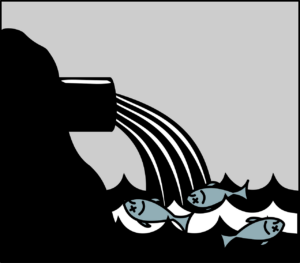
Chris Jones, a longtime environmental scientist and former University of Iowa researcher, has emerged as one of Iowa’s most persistent and influential voices on water quality. A profile article by Jessica Rish in the Iowa Capital Dispatch outlines how, through drawing on decades of scientific work and public-facing writing, Jones has documented how agricultural runoff, particularly nitrates, continues to degrade Iowa’s waterways, threaten public health, and strain municipal water systems.
The 2025 lawn-watering ban in central Iowa underscored what Jones calls “pollution-induced scarcity,” where utilities cannot treat contaminated water fast enough to meet demand.
Jones’ impact grew when he shifted from purely academic writing to direct, narrative-driven essays that connected scientific data with lived experience. His blog posts and subsequent book challenged the normalization of polluted water in an agriculture-dominated state and helped shape public understanding of the issue.
Though often labeled anti-farmer, Jones positions himself as anti-agribusiness, arguing that industrial-scale farming and policy capture, and not farmers themselves, are the core drivers of environmental decline.
After his retirement from the University of Iowa amid legislative pressure and funding threats, Jones has continued his advocacy through the Iowa Driftless Water Defenders and is now considering a run for Iowa secretary of agriculture.
His potential candidacy reflects growing frustration among Iowans who see water quality, cancer rates, and rural economic decline as interconnected outcomes of current agricultural policy.
Our Take
Jones’ story illustrates how deeply entrenched systems resist accountability, even when evidence is abundant and publicly accessible.
His experience highlights the political costs of speaking plainly about agricultural externalities in Iowa. Whether or not he runs for office, Jones has already reshaped the conversation by refusing to soften scientific conclusions for political convenience, a role increasingly vital in a state where environmental harms are often acknowledged privately but avoided publicly.
USDA Provides Details for the $12 Billion Farm Aid Package that Favors Rice and Cotton
New details from the U.S. Department of Agriculture reveal that the much-touted $12 billion farm aid package will provide one-time payments across 19 commodity crops, with the highest per-acre benefits flowing to rice and cotton producers.
While the program is intended to help farmers offset losses from low commodity prices and trade disruptions, soybean growers, among the hardest hit by lost exports to China, say the payments fall well short of what is needed to remain solvent.
Under the program, soybean farmers will receive just over $30 per acre, compared with more than $130 per acre for rice. Agricultural economists note that the payments represent only a fraction of recent losses and are unlikely to stabilize the broader farm economy.
Corn, wheat, and soybean producers continue to face depressed prices amid global oversupply, rising input costs, and lingering trade consequences.
Though the aid may provide short-term liquidity ahead of the next planting season, farm groups argue it does little to address the structural problems underlying the current crisis. The remaining $1 billion allocated to specialty and sugar crops has yet to be fully defined, adding further uncertainty.
Our Take
Once again, the details undermine the rhetoric. While the aid package was framed as a lifeline for farmers harmed by trade policy, its distribution reflects longstanding commodity hierarchies rather than proportional economic damage.
Like prior farm aid efforts, the program appears designed more to manage political fallout than to resolve the underlying vulnerabilities of U.S. agriculture.