
White Christian Nationalism
Un-Christian, nationalistic authoritarianismThe insidious growth of White Christian Nationalism in Iowa has been largely responsible for shifting political views, false cultural taboos, hate, division, and intolerance in the state. Will Iowa ever return to its reputation as an open, friendly, and kind place?
What is Christian Nationalism?
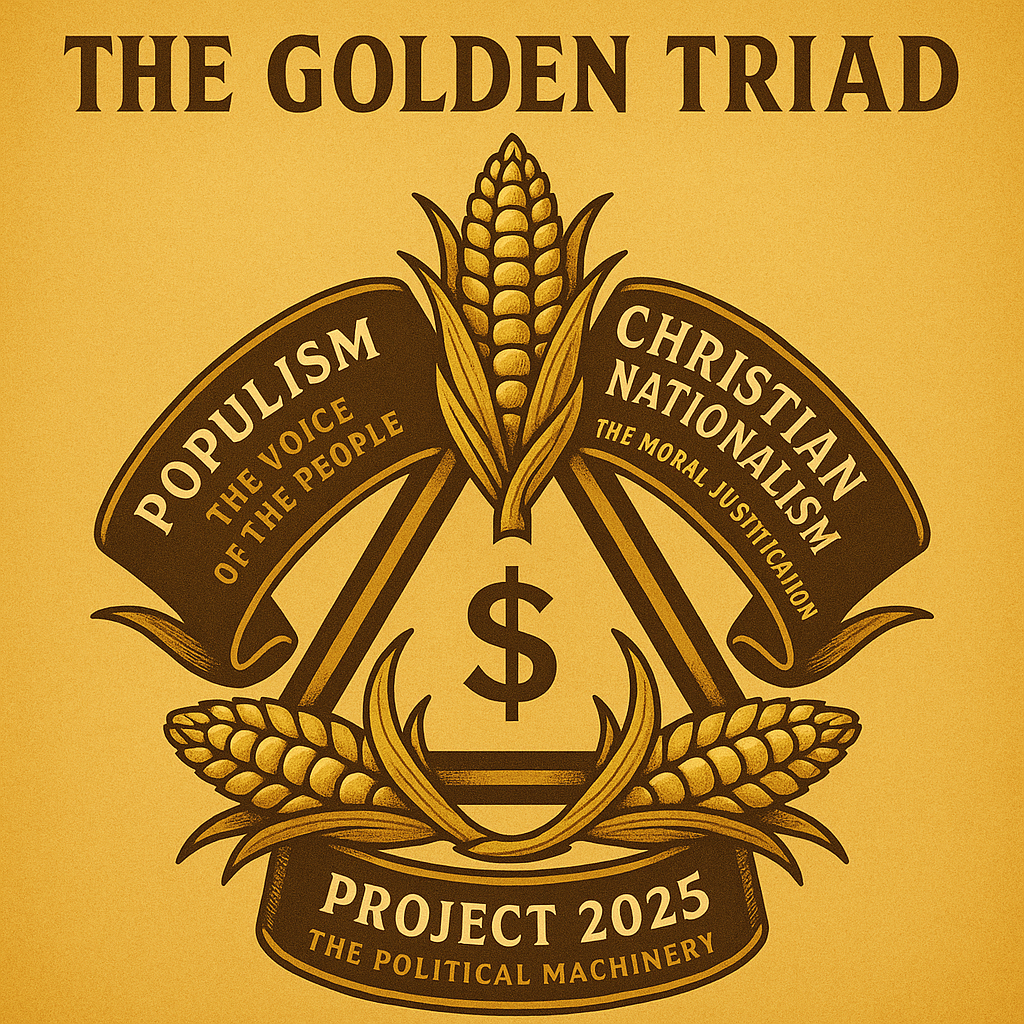
Christian Nationalism is a political and cultural ideology that merges Christian identity with national identity, often asserting that a nation’s laws, policies, and social norms should align with a specific interpretation of Christian values. It typically positions Christianity as a cornerstone of national identity, marginalizing or excluding other religious or secular perspectives.
Christian Nationalism is not simply about individual faith or religious expression—it promotes the idea that the government should actively enforce and promote a specific religious worldview, often to the exclusion of minority groups. In the United States, it often invokes the notion that the U.S. was founded as a “Christian nation” and that returning to this supposed heritage is essential to solving contemporary societal problems.
Key Characteristics of Christian Nationalism
Fusion of Religion and National Identity. Advocates often equate patriotism with adherence to Christian beliefs, framing dissent as unpatriotic or immoral.
Exclusivity. It marginalizes non-Christians, atheists, and even Christians who hold different theological or political views.
Authoritarian Tendencies. It frequently supports policies that enforce a particular moral code, limiting pluralism, religious freedom, and the separation of church and state.
Historical Revisionism. It often rewrites history to emphasize Christian influence on national development while ignoring contributions from diverse cultures and perspectives.



Why is Christian Nationalism Dangerous?
Erosion of Religious Freedom
Christian Nationalism threatens the foundational principle of religious freedom by privileging one religion over others. This marginalizes religious minorities, non-religious individuals, and Christians who hold differing views, creating an exclusionary society.
Undermining of Democracy
The ideology often relies on authoritarian governance to impose religious values, which can erode democratic institutions and civil liberties. Policies may be enacted that prioritize religious doctrine over constitutional principles, such as equality and justice for all.
Exacerbation of Social Divisions
By tying national identity to a specific religious group, Christian Nationalism deepens societal divides along religious, racial, and cultural lines. This can lead to discrimination, violence, and the alienation of marginalized communities.
Historical Distortions
Christian Nationalism frequently misrepresents history to bolster its claims, erasing the contributions of non-Christian groups and promoting a skewed narrative that stifles honest discussions about a nation’s past.
Global Implications
The rise of Christian Nationalism in one country can inspire similar movements globally, fostering intolerance and authoritarianism on an international scale.
Weaponization of Faith
It reduces a deeply personal and spiritual faith into a tool for political gain, undermining the credibility and moral authority of religion itself.
What Are Some Harms of the Beliefs?
Iowa has experienced many harms from White Christian Nationalism that have torn at the state’s traditional reputation of having open, friendly, and welcoming residents.
Policy Discrimination. Enactment of laws that restrict the rights of LGBTQ+ individuals, women, and non-Christian religious groups.
Social Polarization. Increased hate crimes and social alienation targeting religious minorities and dissenters.
Suppression of Education. Advocacy for religiously motivated curricula in public schools, which would distort science and history education.
The Need for Vigilance
Combatting Christian Nationalism requires vigilance in protecting the separation of church and state, promoting inclusive policies, and encouraging interfaith dialogue. It’s not about opposing Christianity but resisting its use as a political weapon that undermines the democratic and pluralistic fabric of society.
Recognizing and addressing the dangers of Christian Nationalism is vital for fostering a just, equitable, and inclusive society. Especially in places like Iowa.