Summary
Today’s Iowa411 stories highlight a deeply troubling pattern in Iowa governance. When vulnerable Iowans need protection, the Legislature repeatedly prioritizes industry concerns over public safety. That pattern is clearest in nursing home policy, where reforms aimed at staffing minimums, resident monitoring tools, and stronger inspection capacity are consistently delayed or blocked, even as evidence of harm to residents continues to mount.
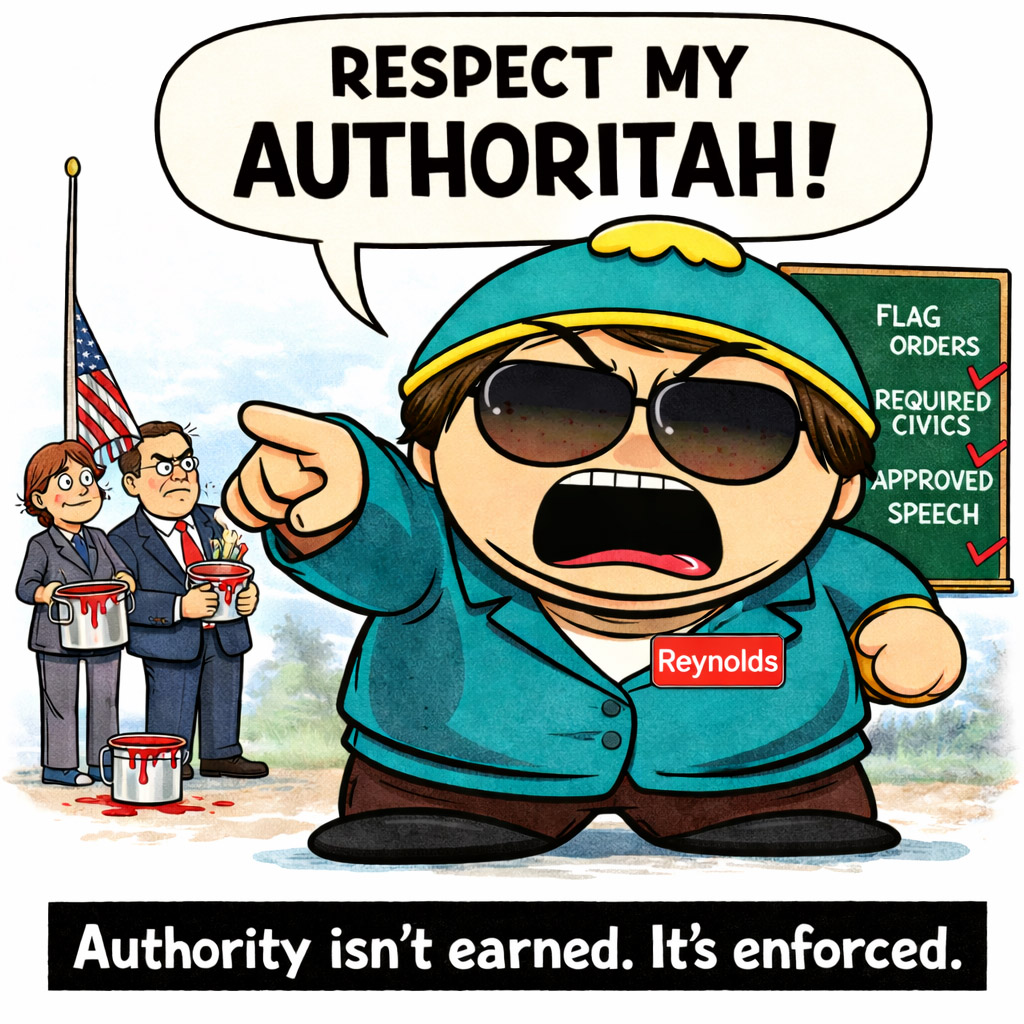
Across these stories, Iowa’s policy posture is not neutral, it is structurally tilted. Safeguards are treated as burdensome, transparency is framed as controversial, and oversight is weakened in the name of process or “flexibility.”
The result is a system where institutions are protected first, while residents and families are forced to carry the risk.
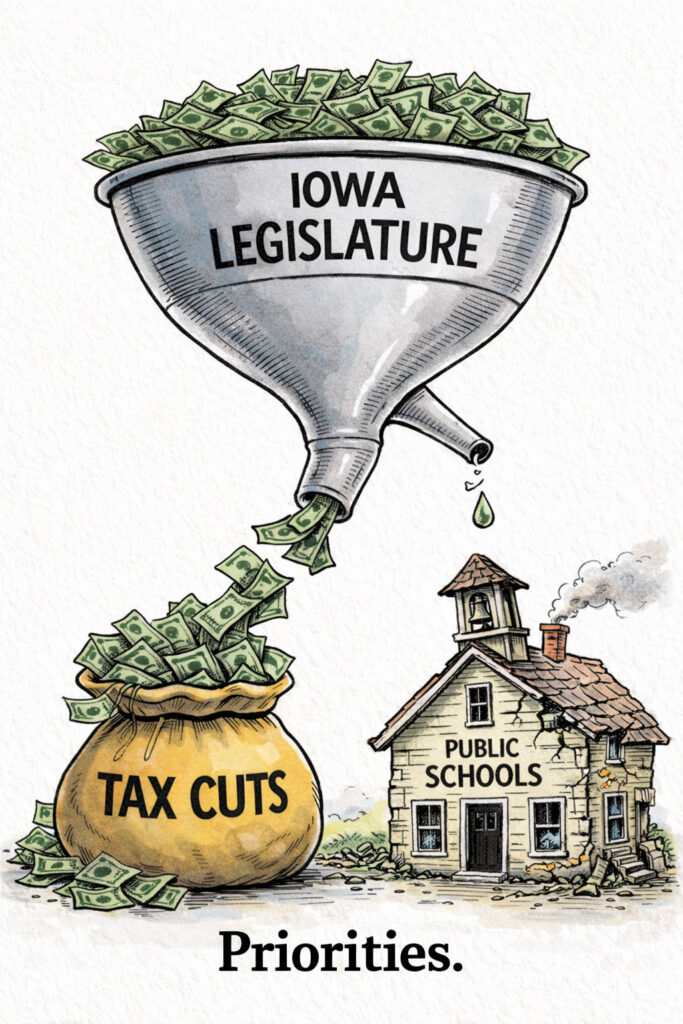
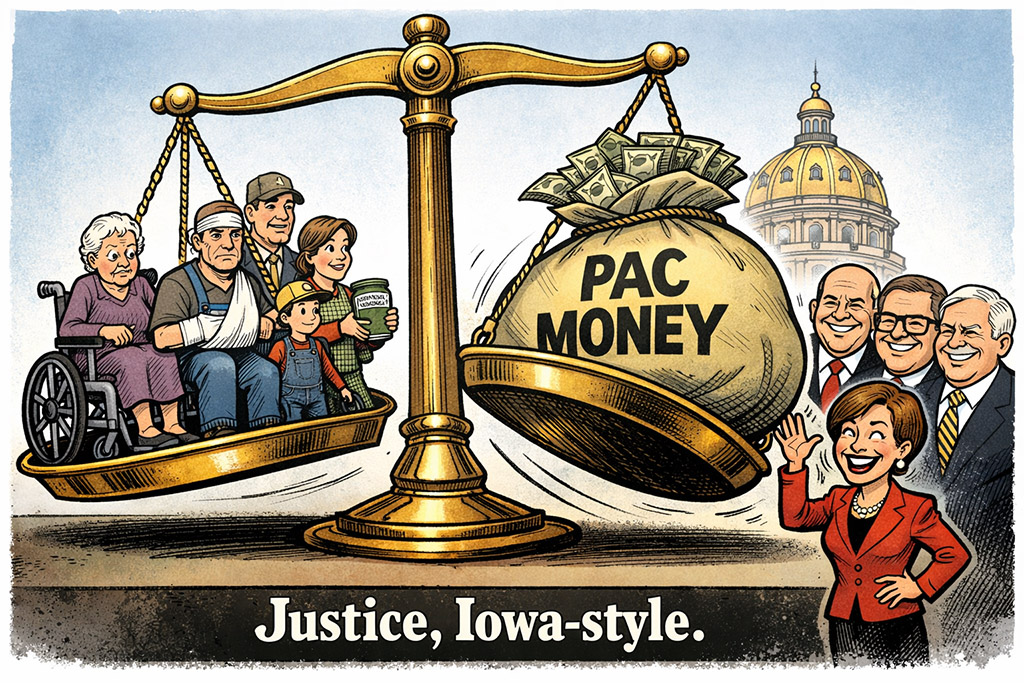
The larger warning is simple. This is not merely a nursing home story, it is an Iowa governance story; one where campaign money and special-interest pressure repeatedly outrank common-sense protections, even when the stakes are life, dignity, and basic human safety.
Guest Column: CMS staffing rule reversal shows how lobbying blocks protections for vulnerable residents
Esteemed legal expert Dean Lerner writes in a Des Moines Register guest editorial that the nursing home industry has successfully undermined federal minimum staffing standards, despite staffing being widely recognized as a primary driver of nursing home quality and safety. His column describes how the Centers for Medicare and Medicaid Services (CMS) finalized a 2024 Minimum Staffing Standards Rule after extensive study and public comment, but the rule was later sidelined through multi-front pressure, political and legal, culminating in a 10-year moratorium via the “One Big Beautiful Bill” and the Trump administration ceasing its defense of the rule in litigation.
Lerner points to Iowa’s role in opposing the rule, including Iowa Attorney General Brenna Bird leading a lawsuit against it and Gov. Kim Reynolds publicly opposing minimum staffing standards. And it suggests the reversal may be linked to industry influence as it highlights reporting about nursing home campaign contributions to elected officials. It closes by urging voters to treat the issue as urgent, warning that anyone could one day rely on nursing home care.
Our Take
This column underscores a basic truth policymakers try to dodge, that nursing home care is labor-intensive. If staffing is inadequate, bad outcomes rise, to include neglect, medication errors, missed checks, pressure injuries, dehydration, falls, and preventable hospitalizations. This is not a mystery and it’s not a “both sides” debate.
What makes the situation especially grim is how predictable the political playbook is: the industry frames staffing standards as “unworkable,” pushes legal and legislative delays, and then celebrates “flexibility” while residents and families carry the risk.
Iowa leaders have repeatedly aligned themselves with industry positions rather than adopting common-sense protections with teeth for accountability. When government won’t set enforceable minimums or meaningful oversight, the market incentive becomes obvious: cut labor costs first, explain later.
Senate panel rejects bill to ensure care facility residents can use ‘granny cams’
An Iowa Senate committee declined to advance legislation that would prevent nursing homes from banning residents’ use of in-room cameras (“granny cams”) to guard against abuse or neglect. Senate Study Bill 3080 would have allowed residents (or their representatives) to place video monitoring inside resident rooms with roommate consent, but the bill was pulled from the agenda after the chair said it lacked majority support.
Advocates, including a Glenwood woman whose mother suffered severe harm while in a facility that refused camera placement, say in-room monitoring is a practical safeguard and a step toward accountability. Industry lobbyists have argued cameras raise privacy concerns, even though many facilities already use surveillance in common areas and state inspectors have repeatedly relied on video evidence to document neglect and abuse.
The story notes that at least 22 states have laws addressing resident cameras, and at least 16 expressly protect residents’ right to use them regardless of facility policy. It also describes Iowa Health Care Association lobbying against similar legislation for years, including recorded comments about “killing” camera bills, alongside substantial political contributions by the industry PAC to Iowa political committees.
Our Take
The “privacy” objection does not hold up as a blanket veto. Not when the proposal already contemplates consent, and not when facilities themselves routinely record hallways and common spaces. The real issue is power, because cameras shift the evidence burden. They turn “he said/she said” into documentation, and they deter abuse, theft, and neglect because accountability becomes immediate.
If Iowa lawmakers were serious about protecting seniors and disabled residents, this would be an easy call: allow cameras with clear rules (posted notice, roommate consent, limits on streaming/sharing, secure storage, penalties for misuse). The repeated refusal to even advance these bills while the industry openly organizes to stop them looks less like careful governance and more like institutional protection of providers over residents.
Iowa Senate passes technical nursing home bill, rejects Democrats’ calls for more oversight
In April 2025, the Iowa Senate passed House File 309, described by supporters as a technical clarification to a 2024 law governing how the Iowa Department of Inspections, Appeals and Licensing (DIAL) reviews “immediate jeopardy” nursing home violations. The law requires DIAL to allow facilities to provide “context and evidence” during a review process before a citation is issued; HF 309 clarified that the process applies to each deficient practice that could lead to a citation, and only to nursing facilities (not all health facilities).
Democratic senators attempted to add broader oversight reforms through amendments, including additional funding to hire inspectors, higher penalties, faster complaint response times, a private equity acquisition ban, resident camera rights, and a process for residents/guardians to submit evidence to DIAL during reviews. These amendments were rejected or ruled out of order by the Republican majority. Critics argued the underlying review process could reduce legitimate citations and tilt the system toward facilities rather than residents, while supporters emphasized problem-solving and the importance of not treating all facilities as bad actors.
Our Take
This is the structural problem in one snapshot: Iowa’s oversight posture keeps drifting toward “provider protections” while families are told to trust the system. A review process that gives facilities earlier opportunities to shape the record may sound reasonable in isolation, until you remember the stakes of “immediate jeopardy” are serious injury or death, and the state already struggles with enforcement capacity.
The blocked amendments are revealing because they were not radical: more inspectors, faster complaint response, stronger deterrence, resident safeguards, and greater balance in the evidence record. When those ideas repeatedly fail while industry-friendly process changes survive, the pattern becomes hard to ignore. Iowa can praise front-line CNAs all day and should. But praising workers is not a substitute for rules that prevent understaffing, neglect, and repeat offenders.
Iowa411 Editorial: “Privatize Profit, Socialize Harm.” Iowa’s Corporate Protection Model
An Iowa411 editorial argues that a consistent pattern has emerged in Iowa politics: when ordinary Iowans are harmed in nursing homes, on highways, in rural communities, or through environmental exposure, state leadership repeatedly responds not by strengthening safeguards, but by weakening accountability. The editorial frames this as a governing model in which Iowa uses government power not to protect residents, but to protect industries from oversight, enforcement, transparency, and liability.
The editorial highlights nursing homes as the clearest example. It notes that staffing is widely recognized as the single most important factor in care quality, yet Iowa officials have repeatedly aligned with industry resistance to staffing safeguards. The piece also points to Iowa lawmakers’ repeated refusal to pass legislation guaranteeing residents the right to use in-room cameras (“granny cams”), even as real cases show how video evidence can document neglect, theft, abuse, and preventable deaths.
The editorial then broadens the scope, arguing the same “accountability is the enemy” mindset appears in other policy areas: efforts to shield farm chemical manufacturers from liability amid Iowa’s high cancer rates, “tort reform” moves that limit trucking crash victims’ legal recourse, and state policies that protect industrial hog confinement operators while restricting local control for rural communities dealing with pollution, odor, and quality-of-life damage.
Our Take
This editorial lands on a blunt but increasingly hard-to-ignore thesis: Iowa is drifting into a pro-corporate model rather than a truly pro-business one. And the difference matters. A pro-business state invests in safe roads, clean water, healthy communities, and dignified care for the elderly. A pro-corporate state shields powerful industries from consequences when their operations harm people.
The most effective part of the piece is its “pattern recognition” framing. It doesn’t ask readers to memorize every bill. It gives them a simple test. When lawmakers propose weakening oversight, limiting enforcement, restricting local control, blocking transparency tools, or capping liability, ask who benefits and who pays. If corporations benefit and Iowans absorb the risk, you are watching Iowa’s corporate protection model at work.