Summary
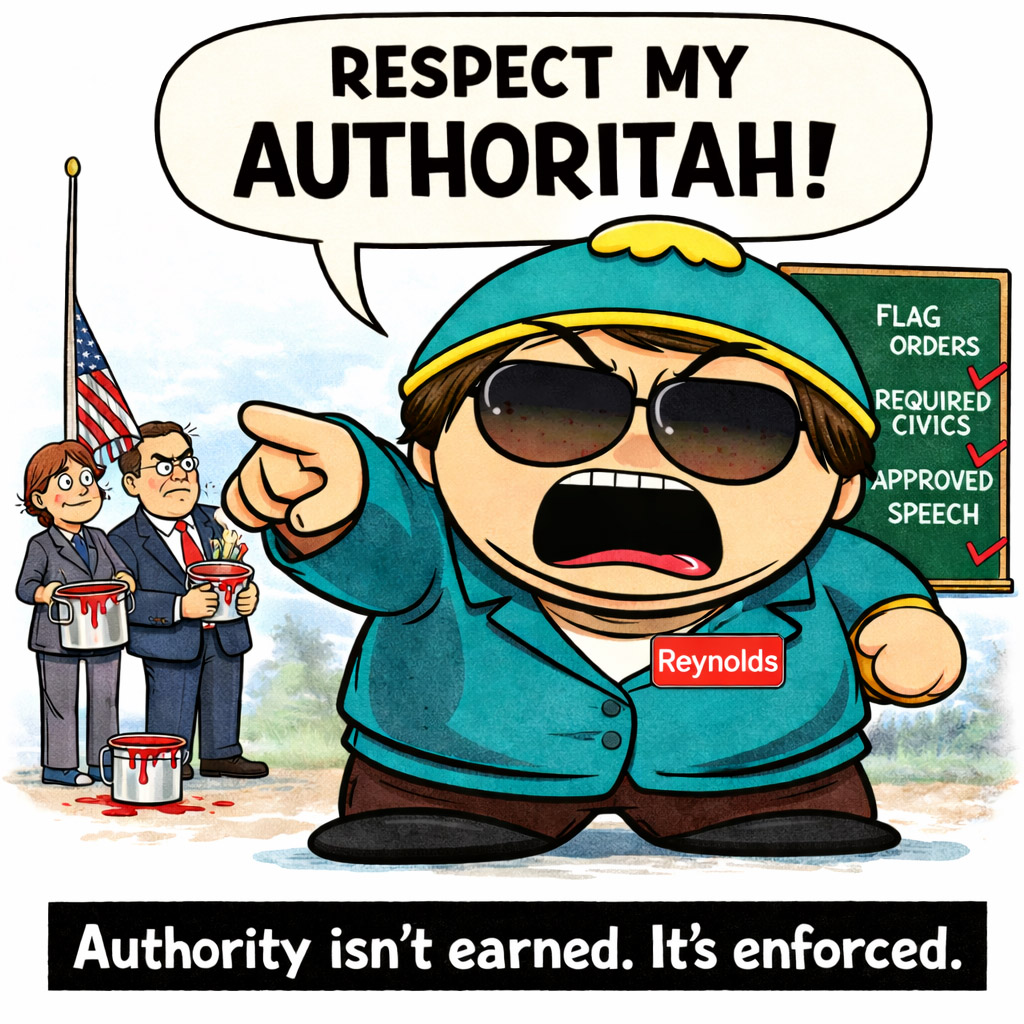
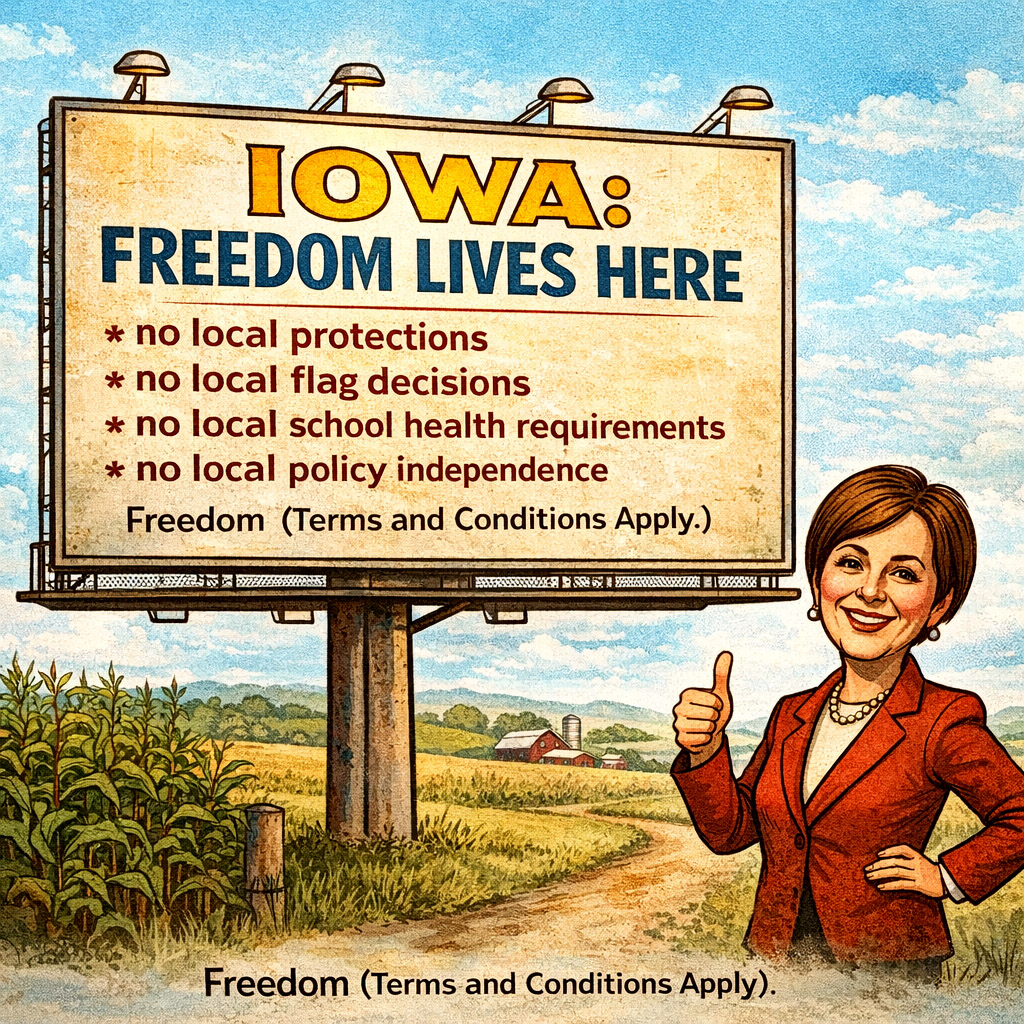
These four stories expose a consistent governing pattern in Iowa: major public risks are tolerated while local solutions are constrained, and public accountability is replaced with political messaging.
The nitrate story shows the long-term consequences of Iowa’s agricultural and environmental policy choices. Water treatment can keep Des Moines compliant, but it forces downstream residents to pay for cleanup while the upstream drivers remain politically protected.
The glyphosate bread story reinforces the same theme on a national scale. Chemical exposure is normalized, debated, and often left to consumers to “navigate,” even when the risks are uncertain and transparency is limited.
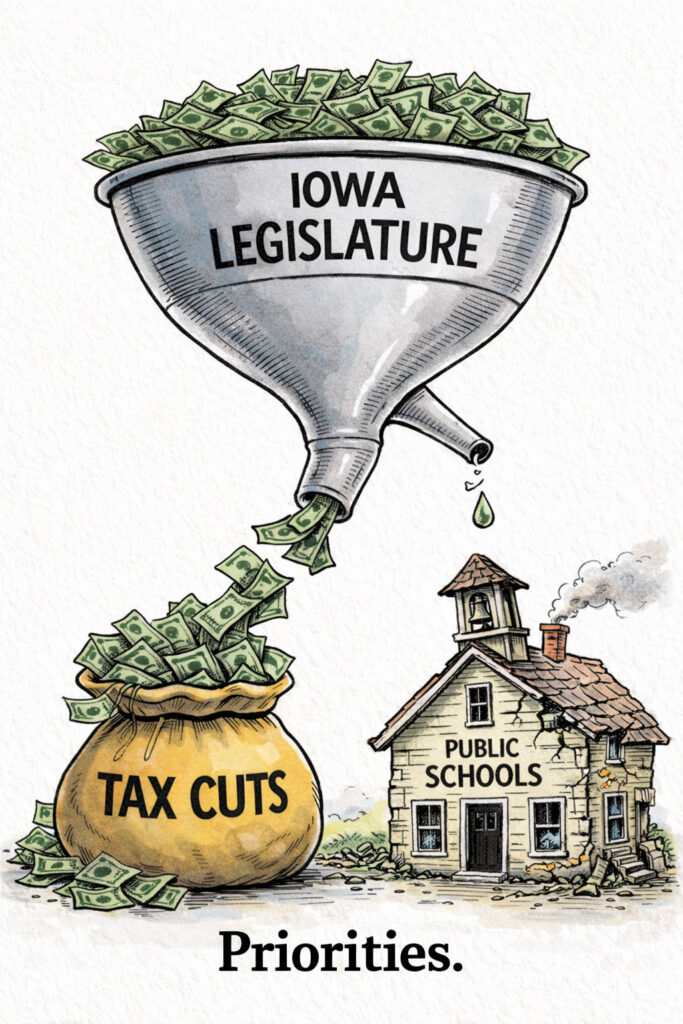
Meanwhile, the Reynolds education funding post illustrates how public discourse is increasingly shaped by selective statistics and rhetorical framing. It was not merely incomplete; it was designed to imply a conclusion without proving it. The fact that Iowans responded with detailed counter-analysis is not only encouraging, but also a reminder of how necessary critical thinking has become in the face of official messaging.
Finally, the local ID bill reflects the state’s accelerating hostility toward local problem-solving. Even when a program is narrow, practical, and non-threatening, the legislature’s instinct is to ban, preempt, and centralize. And especially when the people helped by the program are politically marginalized.
The common thread is governance that treats public harm as acceptable but treats local autonomy and public institutions as targets.
Nitrate levels in Des Moines rivers remain high, officials warn
Nitrate levels in Central Iowa’s major drinking-water sources are climbing again, prompting renewed concern from Des Moines water officials. At a Feb. 9 Des Moines City Council work session, Des Moines Water Works CEO Amy Kahler said nitrate readings in the Raccoon River were around 11 mg/L, with the Des Moines River approaching 12 mg/L.
These levels are notable because they are at or above the federal drinking water standard of 10 mg/L for finished water, and they come less than a year after nitrate spikes last summer triggered a first-ever lawn watering ban. In June 2025, the Raccoon River reached 20.55 mg/L, more than twice the federal limit, and officials reported exceedances in source waters on most days during the ban.
Central Iowa Water Works, the regional system formed in 2024, says it continues to rely on nitrate-removal treatment at the Fleur Drive plant, using a resin-based system similar to a water softener but designed specifically to remove nitrates.
Our Take
This is a reminder that Iowa’s water-quality problem is not “seasonal” or “rare.” It is structural, and tied to land use and upstream agricultural runoff. The fact that Central Iowa is seeing nitrate levels above the federal limit in February should alarm every Iowan, not just Des Moines residents.
Treatment can keep finished drinking water compliant, but treatment is not prevention. And the cost of cleaning up the water is being shifted downstream to taxpayers and ratepayers while the upstream pollution system continues largely unchanged.
Majority of breads in product toxin study contain glyphosate
Florida officials reported that testing conducted by the Florida Department of Health found glyphosate, the active ingredient in Roundup, in six of eight bread products tested. The results were publicized by Florida Gov. Ron DeSantis as part of a broader state effort to test food products for toxins and contaminants.
Among the tested products, glyphosate levels ranged widely, with several mainstream brands showing results in the 100–190 ppb range, while two Dave’s Killer Bread products showed much lower levels (around 10–12 ppb). Two breads tested showed “non-detected” results.
The report also highlights the ongoing dispute among institutions regarding health risks. The EPA has classified glyphosate as “not likely” carcinogenic to humans, while the International Agency for Research on Cancer (IARC) classifies it as “probably” carcinogenic.
Our Take
Even without panic, the takeaway is simple: glyphosate exposure through food is real, widespread, and poorly understood by most consumers. The scientific debate over cancer risk remains unresolved in the public mind because different agencies use different standards and frameworks.
For Iowa, this story matters because our state is one of the nation’s most chemically intensive agricultural states and we already have a public health conversation about rising cancer rates. Whether or not glyphosate is the driver, it is part of a larger reality that industrial agriculture externalizes risk, and consumers rarely get transparency until a government decides to test.
Reynolds posts a deceptive school funding post and Iowans call her on it
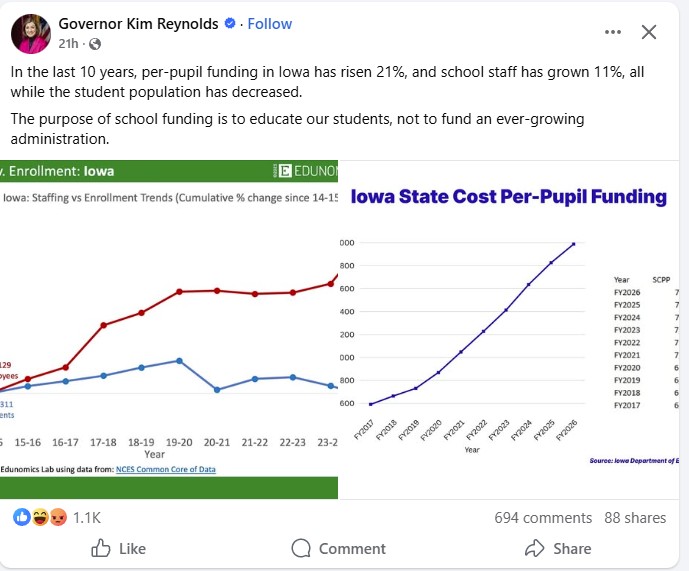
Gov. Kim Reynolds posted a claim on Facebook stating that Iowa per-pupil funding has risen 21% over the past decade, while school staffing has increased 11% and student enrollment has declined. Reynolds used the figures to argue that school funding is being diverted toward “ever-growing administration” rather than student education.
The public response was unusually detailed, and data driven. Many Iowans challenged the post as misleading because it did not account for inflation, which commenters repeatedly noted has been closer to 30–35% over the same period. Others pointed out that “staff” growth is not synonymous with administrative growth and may reflect increases in special education supports, paraeducators, behavior intervention staff, nurses, and mental health services.
Commenters also raised concerns about statewide averages masking the very different realities of shrinking rural districts versus rapidly growing suburban districts and questioned whether voucher/ESA spending was being included in the governor’s numbers.
Our Take
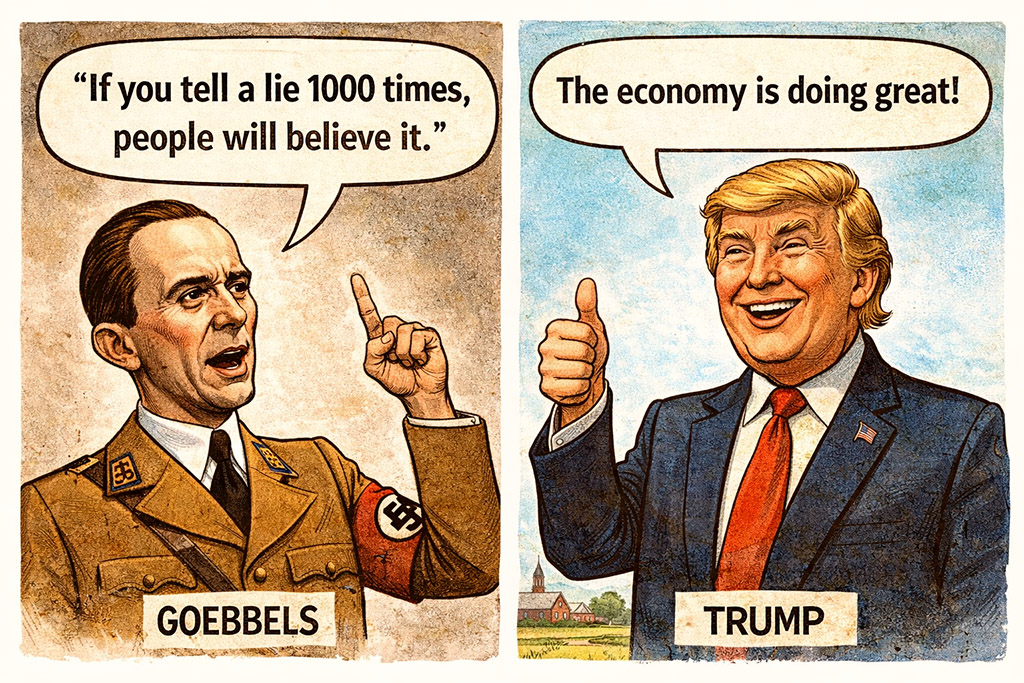
This post is a textbook example of modern political messaging: a small set of statistics used to steer anger toward a target (public schools) while leaving out the context that determines whether the numbers mean anything.
The most important part of the story is not Reynolds’ claim; it is the public reaction. Iowans demonstrated that critical thinking still exists by demonstrating that Reynolds failed to adjust for inflation, define terms, demand breakdowns, and ask what’s missing. That is the antidote to propaganda, and Iowa needs more of it.
Iowa House GOP pushes bill banning local ID cards
The Iowa House Public Safety Committee advanced a bill that would prohibit cities and counties from issuing local identification cards, sending it to the House floor on a party-line vote. Republicans supported the bill, citing concerns raised by law enforcement, while Democrats argued the measure would eliminate a practical tool for residents who cannot access state-issued IDs.
Democratic lawmakers noted that local IDs cannot be used to vote, board planes, purchase alcohol, or obtain a driver’s license. Instead, they are used for everyday civic needs: confirming identity with schools, interacting with police, obtaining library cards, and accessing local services. Supporters also argued local IDs can help vulnerable groups, including immigrants, domestic violence survivors, and people experiencing homelessness.
Republicans cited support from statewide law enforcement associations. Democrats countered that local officers in places like Johnson County have reported the programs as helpful and problem-free, and argued the bill represents an anti-local-control measure “in search of a problem.”
Our Take
This is Iowa’s “local control” rhetoric collapsing again in real time. If a community creates a local ID program to solve a local problem and that ID cannot be used for voting or immigration status fraud, then the burden of proof should be on the state to show real harm.
Instead, the pattern is familiar. Ban the tool, remove flexibility, and centralize control. Even when the policy primarily impacts the most vulnerable people who already struggle to access basic systems. That is not governance, it is ideological signaling.