Summary
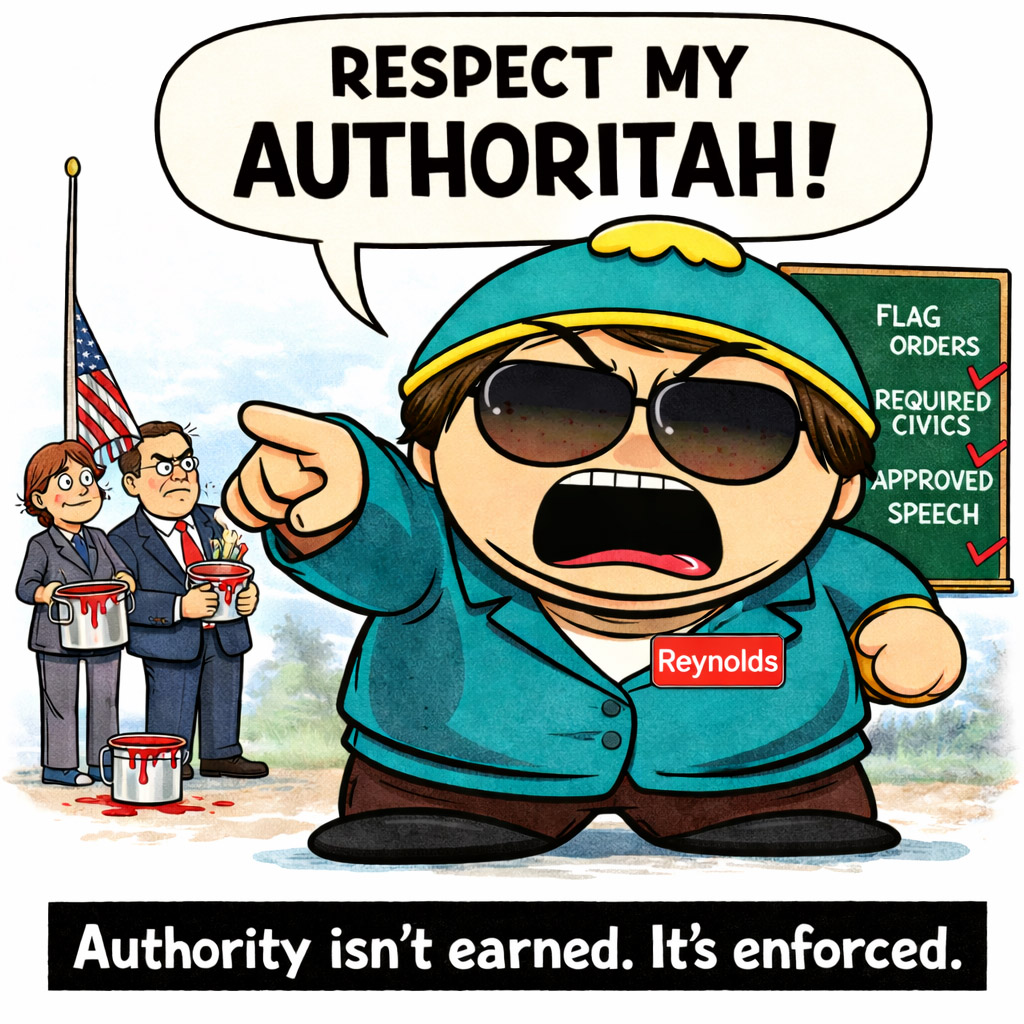
Today’s stories reveal a consistent theme: a governing culture increasingly focused on controlling information, controlling process, and controlling future outcomes rather than solving Iowa’s most immediate problems. Whether it’s a lawsuit aimed at punishing a pollster, delayed cooperation with an audit, or structural changes to weaken a future governor, the throughline is the same, that accountability is treated as an inconvenience.
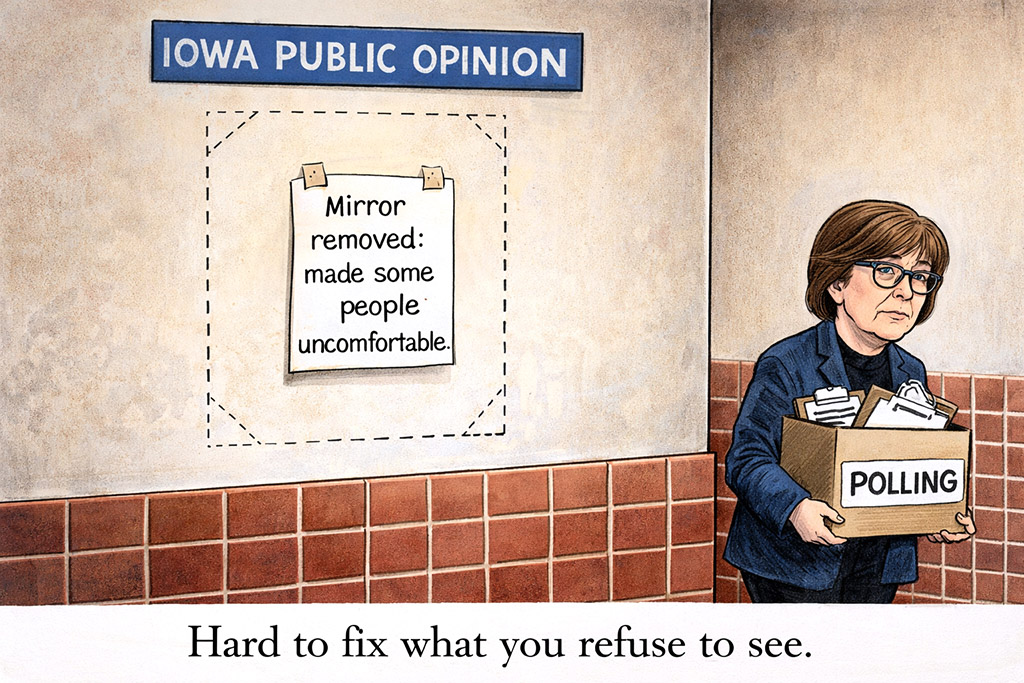
The Selzer editorial frames the deepest risk clearly. Democracy depends on independent “mirrors” like credible polling, journalism, audits, and public records that allow citizens to see reality rather than propaganda. When powerful actors retaliate against inconvenient measurement, the result is not better truth, but less truth. That is why the loss of Selzer polling matters far beyond one election.
The ESA audit dispute reinforces the same lesson. A clean audit does not automatically equal full transparency, especially when information is delayed until oversight becomes procedural rather than substantive. Iowa’s school choice program involves enormous public spending, and the public deserves oversight that is timely, complete, and routine, and not treated as optional.
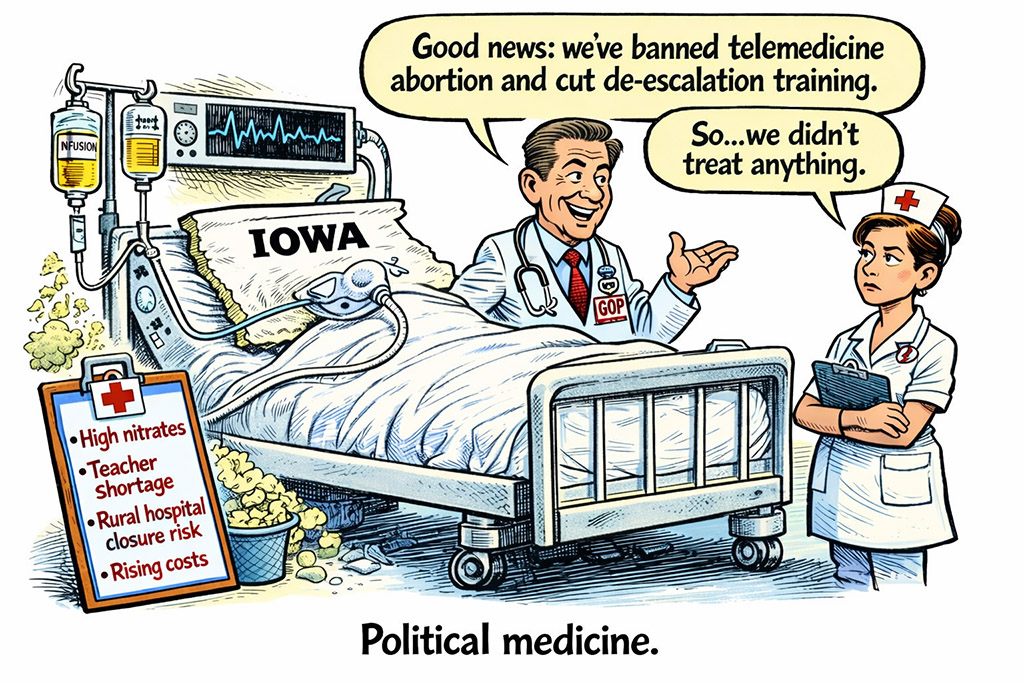
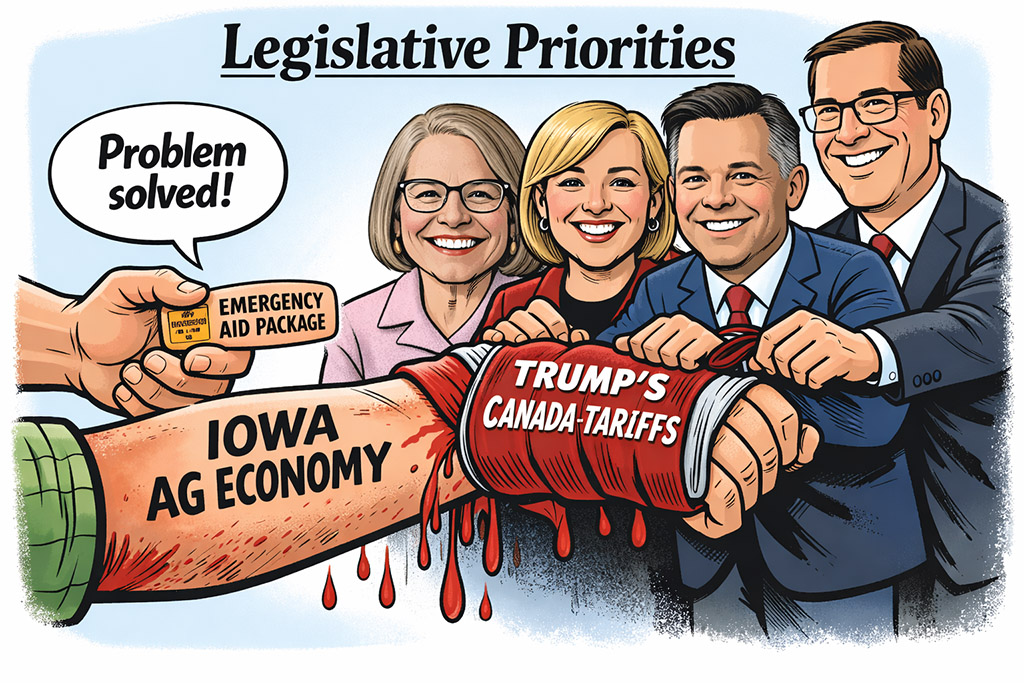
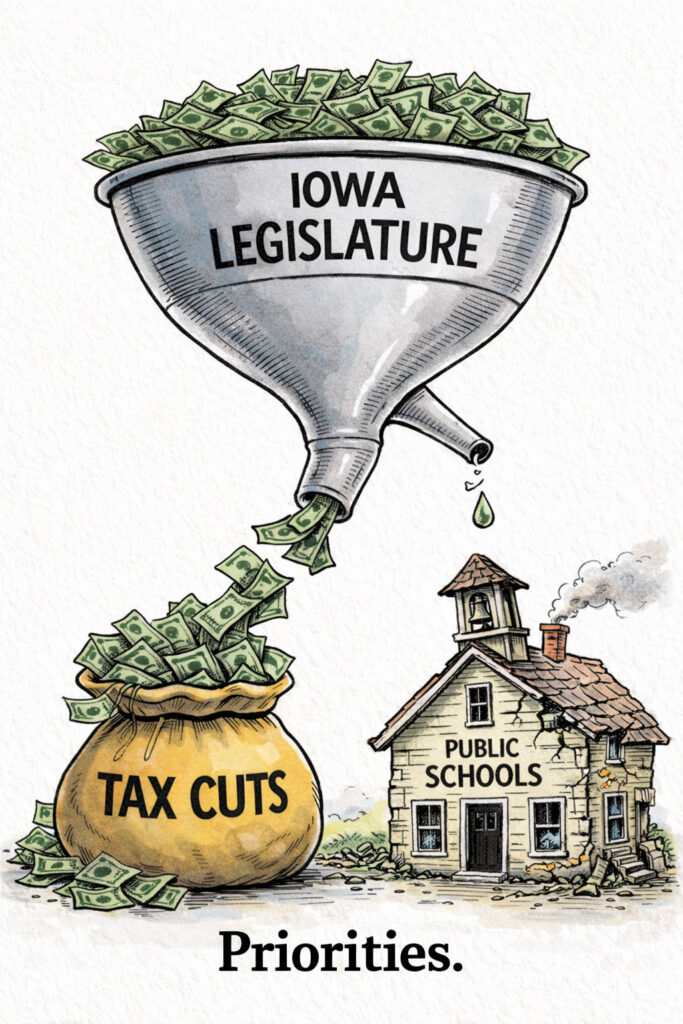
Meanwhile, the legislature’s agenda reflects both extremism and performance. The abortion ban bill may be paused, but the policy impulse remains. And the pay-cut/short-session proposal highlights a deeper dysfunction: lawmakers are spending time on culture-war bills and headline stunts, then claiming they need fewer days to govern. The most troubling item is the push to curb gubernatorial powers at the precise moment Reynolds is leaving office. That looks less like reform and more like preemptive power positioning.
Taken together, these stories suggest Iowa is entering a period where political actors are not only fighting over policy, but also fighting over the rules, the oversight mechanisms, and the public’s ability to know what is happening. That is a dangerous stage for any democracy, because when transparency collapses, corruption and extremism don’t just become possible. They become easier.
Iowa411 Editorial: The Poll That Wasn’t Just a Poll: Why Iowa Needs Ann Selzer Back
This Iowa411 editorial argues that Donald Trump’s lawsuit against pollster Ann Selzer and Gannett (publisher of the Des Moines Register) is not a normal dispute over polling accuracy, but an attempt to punish and intimidate an independent civic institution. The piece emphasizes that polls are snapshots in time, not guarantees, and that late-cycle polling is especially vulnerable to churn.
The editorial warns that the most serious impact is not legal, but cultural: even a meritless lawsuit can produce a chilling effect. The most visible consequence is that Iowa has lost the Selzer poll, a widely trusted public “mirror” that helped Iowans see their own political climate with clarity, even when the results were inconvenient.
Our Take
Iowa’s democracy depends on independent institutions that measure reality: journalism, auditing, public records access, and yes, credible polling. When political actors treat inconvenient information as an offense and weaponize lawsuits to punish it the long-term result is not “accountability,” but an information environment where only propaganda survives. Losing Selzer’s polling is a public loss, not a partisan one.
Rob Sand says Kim Reynolds delayed providing ESA information for audit
State Auditor Rob Sand says Gov. Kim Reynolds’ administration delayed providing information needed to audit Iowa’s Education Savings Account (ESA) program, limiting the scope of what his office could verify. Sand says his audit ultimately issued an opinion and found no misspending but argues that the six-month delay prevented meaningful testing beyond the minimum required before the year-end deadline.
Reynolds responded by calling Sand’s criticism politically motivated, saying he ultimately received what he asked for and that the audit contained no findings. Her administration claims the auditor did not initially explain why the ESA program was material to the statewide audit and that better communication would have changed the process.
Our Take
This is not a technical dispute, it’s a transparency dispute. A “clean audit” is not the same thing as full oversight, and delay is a classic way to weaken accountability while still claiming compliance. When a program involves nearly $200 million in public money, Iowa should want maximum transparency and timely cooperation regardless of whether the auditor is a Democrat or Republican. The public deserves oversight that is real, not procedural.
Iowa senator wants to give lawmakers a pay cut to shorten the session
Sen. Mike Bousselot (R-Ankeny) is advancing a bill that would reduce the number of per-diem days lawmakers receive during the session, effectively shortening the paid session from 100/110 days to 50/55 days. The bill would reduce per-diem pay by about $10,000 for most legislators (or $7,500 for Polk County lawmakers). Bousselot argues deadlines drive productivity and that modern technology should allow lawmakers to work more efficiently than in past decades.
Democrats argue the minority party is “hostage” to the majority party’s schedule and should not be punished. They also criticize Republicans for introducing time-wasting bills while claiming the session is too long.
Our Take
This proposal has one valuable feature: it highlights that Iowa’s legislature often behaves as if time is unlimited. If lawmakers truly want a shorter session, the real reform is not a pay cut, it’s cutting performative legislation and focusing on core governance: water quality, education staffing, health care access, housing, and economic stability. Iowa doesn’t need fewer days of politics; it needs fewer days wasted on political theater.
Iowa House GOP bill banning all abortions won’t advance this year
Iowa House Republicans canceled a hearing on a bill that would ban all abortions and classify abortion as homicide, making it a Class A felony punishable by life in prison without parole for doctors. The bill did not have enough support within the Republican caucus to advance this year, according to its sponsor Rep. Jon Dunwell (R-Newton).
Dunwell indicated the effort may return in the future and suggested Republicans will instead pursue additional restrictions on abortion medication. Iowa currently has a six-week abortion ban in effect, with limited exceptions.
Our Take
This story shows two realities at once: (1) there remains an aggressive faction pushing maximalist abortion policy, and (2) even within today’s supermajority, there are limits to what leadership believes it can pass without political consequences. The bill’s cancellation is not a sign the issue is “settled.” It is a tactical pause, and a reminder that the legislature’s culture-war agenda remains active even as Iowa’s practical needs go unmet.
Iowa GOP pushes bills curbing governor’s powers as Reynolds’ term ends
Iowa House Republicans advanced legislation that would require the General Assembly to approve major administrative rules and reduce terms for gubernatorial appointees from six years to four. Supporters say the changes increase accountability by shifting power toward elected lawmakers rather than agencies. Opponents argue the changes could slow disaster response and make Iowa less able to respond quickly to emergencies, regulatory deadlines, and federal compliance requirements.
The bills come as Gov. Kim Reynolds has announced she will not seek reelection, leaving the 2026 governor’s race open. Democrats and critics argue the timing suggests Republicans are limiting executive power as a hedge against a possible Democratic governor.
Our Take
If Republicans believe the governor has too much power, they should have pursued these reforms years ago and not now that the next officeholder’s partisan affiliation becomes politically uncertain. That timing matters. It makes the effort look less like neutral reform and more like strategic rule-setting: changing the game before voters choose the next referee. Iowa should be wary of any party rewriting institutional rules primarily to protect itself from future elections.