Ashley Hinson Praises DOGE as a Success. The Record Shows Chaos, False Savings and More Spending, Not Less.
U.S. Rep. Ashley Hinson is still publicly praising the Trump administration’s so-called Department of Government Efficiency, or DOGE, calling it “critical” that Congress continue its work cutting spending and reforming government. Speaking to the Westside Conservative Club in Urbandale, Hinson said DOGE-style “process improvements” are continuing across federal agencies and claimed the effort has produced major taxpayer savings by shutting off improper payments and reducing waste.
That is the sales pitch. The record tells a different story.
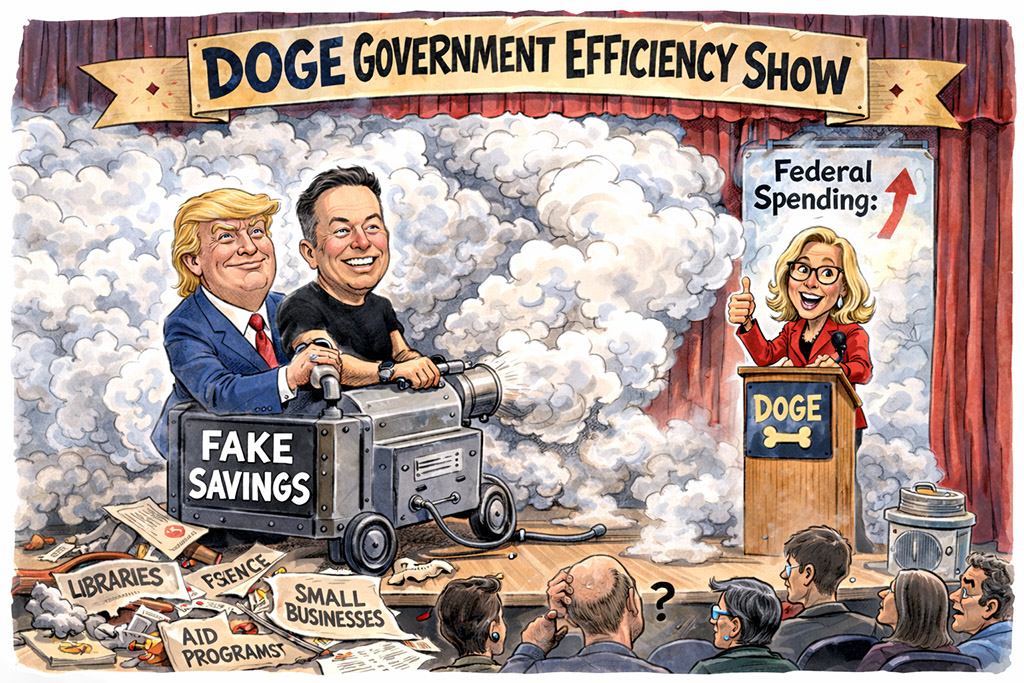
DOGE was supposed to slash federal spending by $1 trillion. It did not. According to a New York Times analysis, federal spending increased on DOGE’s watch. The group’s largest public claims of savings were riddled with errors, exaggerations and false entries.
Of the 40 biggest savings claims on DOGE’s public “Wall of Receipts,” the Times found only 12 that appeared accurate. The 13 largest entries were all wrong. In some cases, DOGE claimed to have “saved” billions by lowering theoretical contract ceiling amounts rather than reducing real spending. In others, it counted contracts that had already expired, programs that were not really canceled, or the same item more than once.
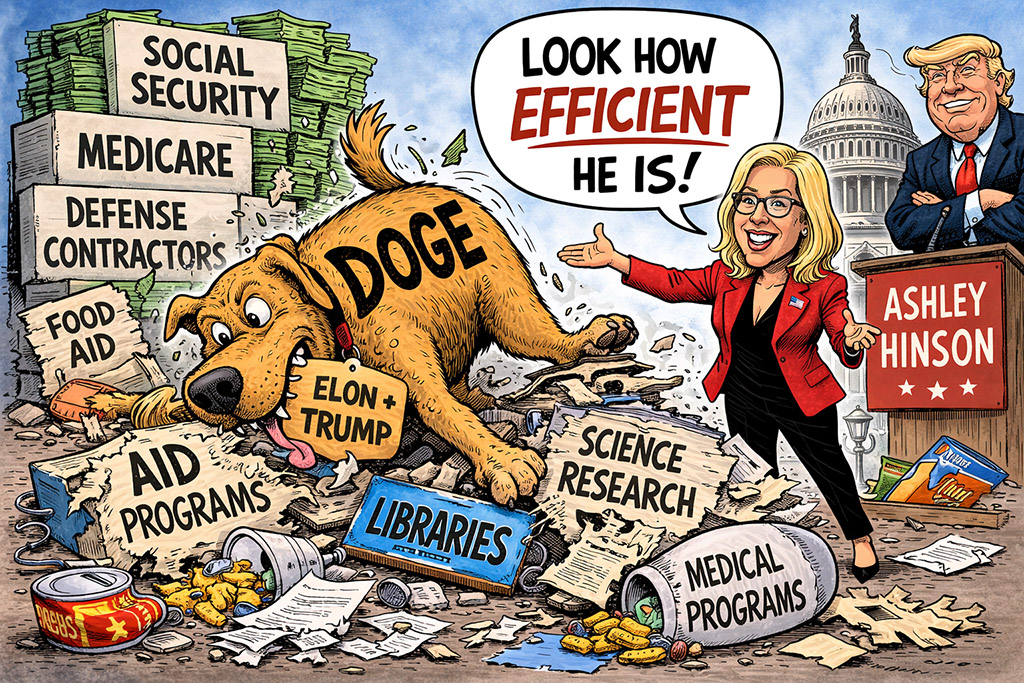
Meanwhile, DOGE’s real cuts were often small in budget terms but devastating in real life. Foreign aid programs were abruptly shut down. Community museums and libraries lost grants later restored by the courts. Antipoverty, education and victim-support programs were interrupted. Federal workers were fired or forced out. Contracts designed to study whether government programs worked were cut in the name of “efficiency.” The result was not precision reform. It was indiscriminate disruption, wrapped in branding and propped up by accounting tricks.
Hinson, a member of the House DOGE Caucus, is not an innocent bystander to this. She is not describing a genuine reform effort that fell short despite good-faith execution. She is defending a political spectacle that inflicted real harm while failing at its stated mission. She offers vague anecdotes about empty offices and “improper payments,” but no serious reckoning with the false savings claims, the legal reversals, the human damage from service cuts, or the basic fact that DOGE did not deliver the spending reductions it promised.
Our Take
Ashley Hinson’s continued praise of DOGE is not fiscal conservatism. It is propaganda maintenance.
She almost certainly knows by now that DOGE was not the disciplined, businesslike efficiency campaign it was marketed to be. It was a performative wrecking operation. The biggest savings claims were inflated, fabricated, or economically meaningless. The federal budget did not shrink. Yet Hinson still repeats the branding because the branding is the point. In the Trump era, the appearance of toughness matters more than competence, and the appearance of savings matters more than actual numbers.
What makes this especially ugly is that Hinson had a chance to behave like a real legislator. She could have demanded transparent accounting. She could have asked why bogus cuts stayed on the books. She could have questioned why small programs serving vulnerable people were destroyed while the largest drivers of federal spending were barely touched. She could have asked why a “most transparent organization ever” turned out to be opaque, error-ridden and evasive. Instead, she chose the easier path: protect the myth, flatter the base, and pretend the failure was success.
That choice says a great deal about what is broken in the federal government under Trump. Congress is supposed to oversee the executive branch, not serve as its marketing department. But too many Republicans stopped acting like legislators and started acting like brand ambassadors for whatever stunt the White House was selling that week. DOGE was a perfect example. It promised trillion-dollar savings, delivered confusion and false claims, and still won praise from politicians too timid or too complicit to tell the truth.
And that is the deeper disease. Trumpism does not just reward bad policy; it rewards the public defense of obvious failure. It teaches elected officials that loyalty to narrative matters more than loyalty to fact. Hinson’s comments fit that pattern exactly, because she is not leading. Instead, she is laundering dysfunction into talking points and hoping voters will not notice the difference between reform and vandalism.