Iowa and the Civil War: A Young State’s Defining Test
When the Civil War began in 1861, Iowa was still a young state. Admitted to the Union just fifteen years earlier, it was largely rural, sparsely populated, and still in the process of defining itself. Yet when the call came, Iowa responded with a level of commitment that far exceeded its size. The civil war would become one of the first defining tests of the state’s identity, and one of the most consequential.
A Disproportionate Contribution
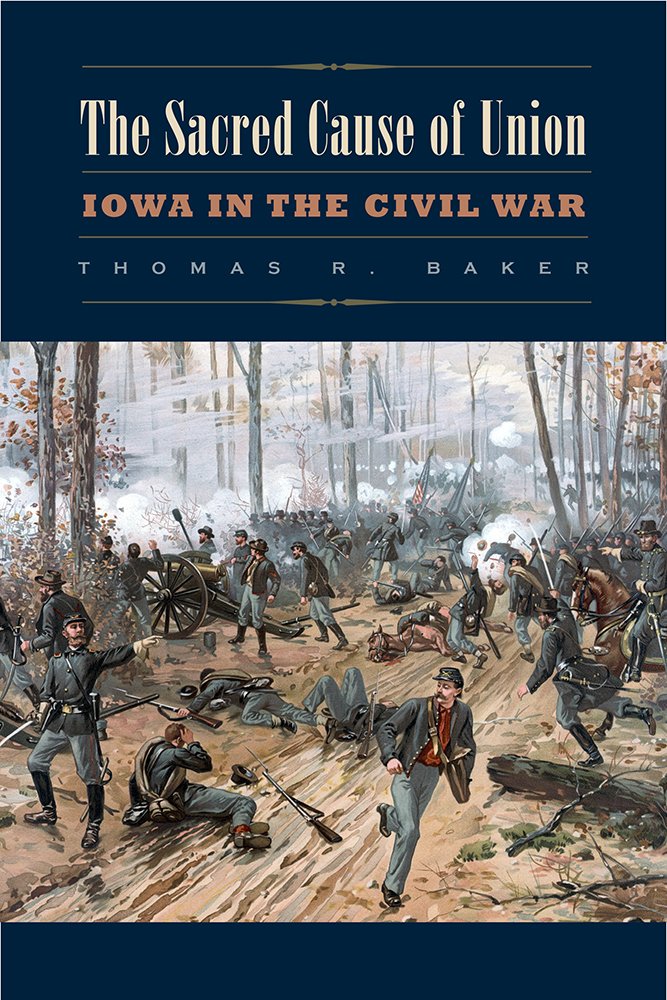
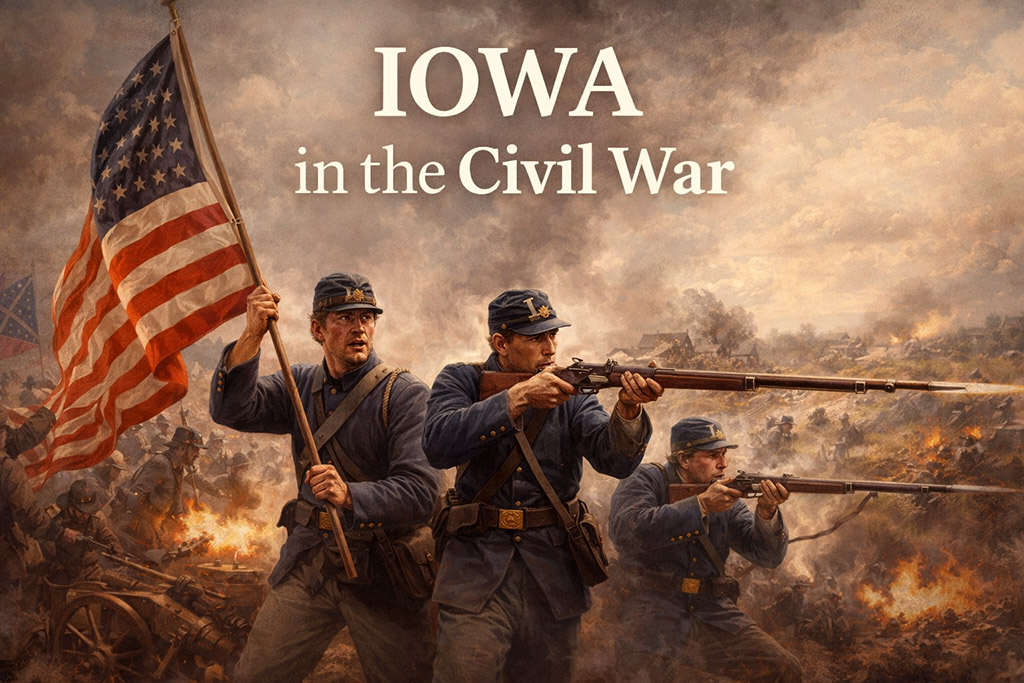
Iowa sent more than 75,000 men to serve in the Union Army. An extraordinary number for a state with a relatively small population at the time. Entire communities were affected. Farms were left without their primary labor. Families faced long periods of uncertainty. Letters became the only connection between home and battlefield. And for many, there was no return.
Far From Home
Iowa soldiers did not fight on local ground. They served in campaigns across the South and West, like Shiloh, Vicksburg, and Atlanta. Places far removed from the prairies they had left behind. Their experience was one of distance as much as danger. The war was not something that passed through Iowa, it was something Iowans carried with them.
Purpose and Belief
For many Iowans, the war was not only about preserving the Union, it was also about defining it. The state’s strong support for the Union cause reflected a broader belief in national unity and, increasingly, opposition to slavery. This moral framing would leave a lasting imprint as it helped shape Iowa’s political culture to be one grounded not only in practicality, but in principle.
The Home Front
While soldiers fought elsewhere, life in Iowa continued under strain. Women took on expanded roles in managing farms, raising families, maintaining communities. Local economies adjusted, and resources were redirected toward the war effort. The absence of so many men was not just personal, it was structural. The war reshaped daily life, even far from the battlefield.
The Cost
The cost was real and lasting. Thousands of Iowa soldiers were killed or wounded. Others returned with injuries, physical and emotional, that would affect them for the rest of their lives. Communities changed. Loss was not abstract. It was visible in empty chairs, altered families, and fields worked by fewer hands.
A Lasting Identity
The Civil War helped define Iowa’s place in the nation. It established a reputation for commitment, discipline, and sacrifice. It reinforced a sense that even a young, developing state could play a significant role in shaping national outcomes. And it left behind a legacy that continues to echo in how Iowa understands itself.
Then and Now
The questions raised during the Civil War about unity, principle, and national purpose have not disappeared. They reemerge in different forms, in different times. And in Iowa, they still carry weight.
The Story Within the Story
The Civil War is not separate from Iowa’s broader history. It is part of the same pattern. A moment where uncertainty demanded response and individuals stepped into something larger than themselves. Where the outcome would shape not just the present, but the future.
It was one chapter. But it was a defining one.
Return to The Iowa Story