
Republicans Celebrate Changes to SNAP as Democrats Sound Alarm
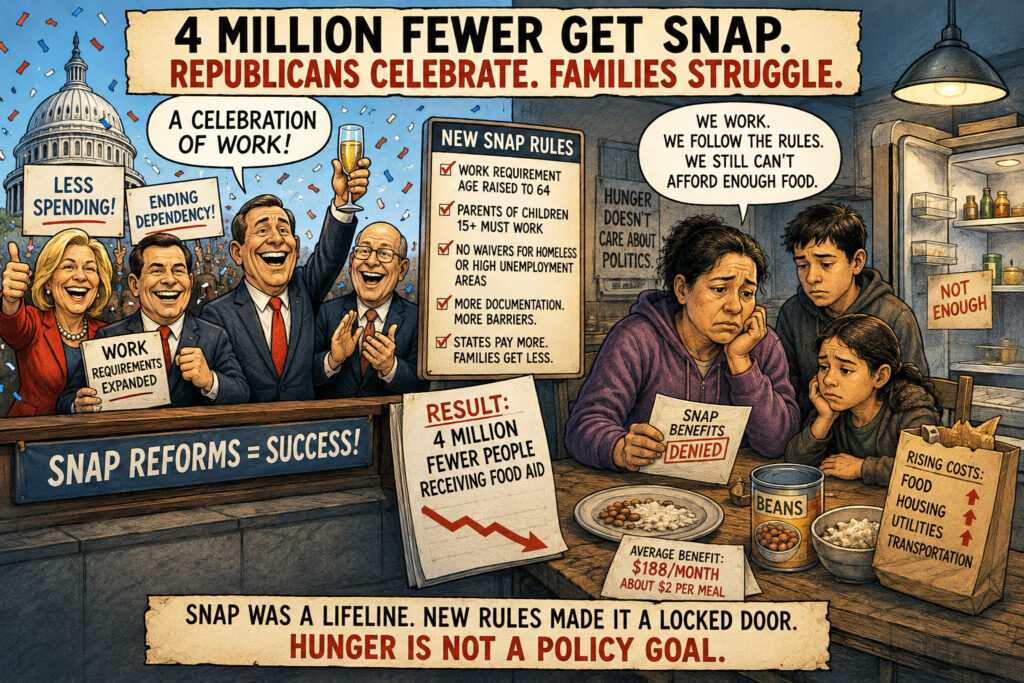
Millions Lose SNAP Benefits as Republicans Celebrate Food Assistance Cuts
Nearly 4 million Americans have lost access to SNAP food assistance since Congress and President Trump enacted stricter eligibility requirements in 2025, reducing enrollment by about 10 percent nationwide.
Republicans have hailed the changes as a success, arguing that expanded work requirements encourage employment and reduce fraud. Agriculture Secretary Brooke Rollins called the policy shift “a celebration of work,” while GOP lawmakers have pointed to improper payments and eligibility concerns as justification for the reforms.
Democrats, anti-hunger advocates, and food security organizations see a different reality. They argue that the new rules have made an already complex system harder to navigate, pushing seniors, working families, caregivers, homeless individuals, and others off the program because of paperwork burdens and stricter eligibility standards rather than increased financial stability.
Among the biggest changes, the work requirement age increased from 55 to 64, parents with children older than 14 are now subject to work requirements, states can no longer broadly waive requirements for homeless individuals or residents of high-unemployment areas, and participants must provide additional documentation proving work, income, and eligibility.
Advocates report that many recipients are losing benefits because they cannot satisfy growing paperwork demands, even when they qualify. In some states, applications can exceed 30 pages and hundreds of questions.
The changes come as many families continue struggling with high grocery, housing, and utility costs. The average SNAP benefit is about $188 per month, or roughly $2 per meal.
Critics warn that the decline in enrollment does not necessarily mean fewer people need help. Instead, they argue it reflects a system that has become more difficult to access.
Supporters counter that the reforms are restoring accountability and encouraging workforce participation.
The debate is expected to continue as states assume a larger share of SNAP administrative costs and future funding changes take effect over the next several years.
The Bottom Line
Republicans are celebrating that millions fewer Americans are receiving food assistance. Critics say the same numbers represent millions of people, including seniors, working families, and children, who are now struggling to put food on the table.
This follows growing concerns raised by recent reports showing that changes to SNAP eligibility are also affecting children in low-income households, increasing pressure on families already facing rising living costs.
Breaking With Trump, or Just His Poll Numbers?
Candidates show some dissent over the Iran war, as Grassley and Ernst vote against limiting Trump’s war powersIowa Republican candidates are changing their positions on the Iran war as Election Day approaches. That is news. Calling it a “break with Trump” may be...
Has the UI Center Lost Its Academic Legitimacy?
How Much Academic Legitimacy Does Iowa's Center for Intellectual Freedom Have Left?Eleven scholars recruited to help establish the Center have resigned. Their departure raises a bigger question about what made this politically created institution academic in the first...
Trump Lost His Lawsuit. But Did the Lawsuit Fail?
An Iowa judge threw out Donald Trump’s lawsuit against Gannett and pollster J. Ann Selzer. But after nearly two years of litigation, the case raises a larger question about what it means to “win.”President Donald Trump lost his lawsuit against Gannett (owner of the...
As Iowans Suffer, Grassley Turns His Focus to Transgender Sports
Iowa already prohibits transgender girls from competing in girls' sports. With farmers struggling with diesel prices and families confronting inflation and housing costs, why is Chuck Grassley making the issue a national priority now?Should we be concerned about his...
Would a Ban of Diesel Exports Actually Lower Prices? Likely Not.
It’s More Complicated Than Grassley BelievesSen. Chuck Grassley says the U.S. should stop exporting diesel to bring down prices for farmers and truckers. The oil industry says that could backfire. Its explanation deserves a closer look.Iowa farmers are heading into...