
DOJ Drops Reflecting Pool Felony Charge After Admitting Damage Was Construction Failure
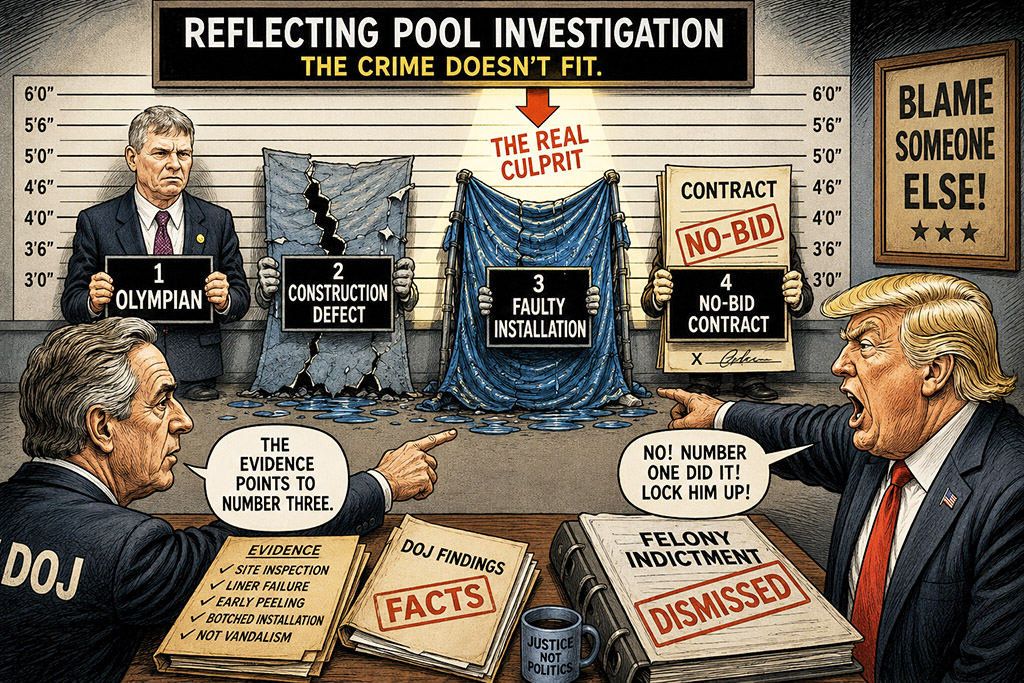
Prosecutors say Interior Department withheld key information as government abandons high-profile vandalism case
Federal prosecutors have asked a court to dismiss a felony vandalism charge against former Olympic canoeist David Hearn after concluding that widespread damage to the Lincoln Memorial Reflecting Pool resulted from faulty construction and not vandalism as the Trump administration had repeatedly claimed.
The Justice Department filed the motion Friday, acknowledging that the Reflecting Pool’s deteriorating liner was “the result of a botched installation and not vandalism.”
The reversal marks a dramatic shift from earlier public statements by President Donald Trump and U.S. Attorney Jeanine Pirro, who had announced Hearn’s indictment in July and said prosecutors possessed strong evidence supporting a felony charge carrying a potential sentence of up to 10 years in prison.
Prosecutors Changed Course
According to the Justice Department’s filing, prosecutors initially relied on information provided by the Department of the Interior indicating that nearly all the damage had been caused by vandals.
After visiting the Reflecting Pool themselves, however, prosecutors observed that the liner was peeling in numerous locations, including areas far removed from where Hearn allegedly pulled up a small section of material.
The filing states that prosecutors then sought additional information from Interior officials, learning that the newly installed liner had begun failing shortly after construction was completed.
Based on that information, DOJ concluded it could no longer attribute the widespread damage to vandalism and moved to dismiss the felony charge.
Questions Remain
The dismissal resolves one criminal case but leaves several unanswered questions regarding why felony charges were announced before an examination of the Reflecting Pool, whether the other pending vandalism cases will be dismissed, and what scrutiny Interior will face for the allegedly false information it provided to prosecutors.
Reflecting Pool Project Faces New Scrutiny
The Reflecting Pool renovation has drawn increasing attention in recent months.
The project was awarded through a no-bid contract to Atlantic Industrial Coatings, and President Trump initially promoted the renovation as an approximately $2 million project after the contract had been signed for $14.7 million.
The project also experienced installation failures shortly after completion, leading to renewed repairs and renewed questions about the procurement process. DOJ now says those construction failures, not widespread vandalism, were responsible for much of the damage previously attributed to criminal activity.
Our Take
The dismissal of the felony charge is the right outcome if the evidence no longer supports the government’s original allegations.
Equally important, however, is understanding how the case reached that point.
Government officials have an obligation to verify facts before publicly accusing citizens of serious crimes. According to DOJ’s own filing, prosecutors changed course only after visiting the Reflecting Pool themselves and obtaining additional information about the failed construction.
The case also highlights the importance of transparency in public contracting. Competitive bidding exists to help governments compare qualifications, document contractor selection, and strengthen public confidence in how taxpayer dollars are spent. When projects awarded without competition later experience significant failures, questions about oversight and accountability are both inevitable and appropriate.
As this story continues to unfold, Iowans deserve clear answers. Not only about what happened at the Reflecting Pool, but also about how decisions were made, how information was communicated, and what lessons government officials will take from the experience.
At a Glance
What happened?
The Justice Department moved to dismiss a felony vandalism charge after concluding the Reflecting Pool’s widespread damage resulted from faulty construction rather than vandalism.
What changed?
Prosecutors say they later discovered the liner had begun failing shortly after installation and that the damage could not reasonably be attributed to widespread vandalism.
Why does it matter?
The case raises questions about government transparency, criminal prosecutions, public contracting, and accountability.
What’s next?
The court must approve dismissal of the felony charge, while questions remain about other pending cases and the government’s handling of the renovation project.
Judge Strikes Down Trump’s Anti-DEI Teacher Grant Policy
Court says Education Department failed to adequately explain why it canceled more than $600 million in teacher-training grants The Trump administration can change federal education policy. But it still has to explain what it is doing and follow the law. That is the...
The “Give Us Another Chance” Tour Comes to Iowa
JD Vance to Voters – Please Give Us Another Chance Vice President J.D. Vance is coming to western Iowa Friday with a message for voters that may require a little work from the marketing department. “Give us another chance.” No, really. That was part of the vice...
Trumpapalooza Starts Today – Will Iowa Republicans Present?
Iowa411 SatireTrumpapalooza: Suggested Speaking Topics for Iowa Republicans The Republican Party’s first-ever national midterm convention, also known as “Trumpapalooza” because of its unswerving focus on President Trump, opens today in Dallas. The two-day production...
Diesel Prices Hit An All-Time High, Again
Record Diesel Prices Will Reach Far Beyond the Pump in IowaAn Iowa411 News BriefDiesel has set national records on consecutive days, increasing costs for Iowa agriculture, transportation, businesses, public services, and eventually, consumers.Record Diesel Prices...
Vandals Strike the National Mall – AGAIN!
Investigators Question July 4 Crews About Mysterious Grass Vandals Satire President Donald Trump has identified what he claims to be another act of vandalism on the National Mall. And this time, the victim is grass. Trump posted a photograph showing large patches of...

Iowa Values in Focus
Truth
Public officials have a duty to ensure that their statements accurately reflect the evidence, especially when criminal accusations are involved.
Accountability
Leadership requires accepting responsibility when government projects fail and explaining those failures honestly to the public.
Fiscal Responsibility
Taxpayers deserve transparent procurement, competitive contracting whenever practical, and a full accounting of how public funds are spent.
Ethical Leadership
The greater the power entrusted to public officials, the greater their obligation to exercise that power with humility, fairness, and respect for the rule of law.