
Vylor Launches in Iowa Despite $39 Billion PFAS Legal Challenge
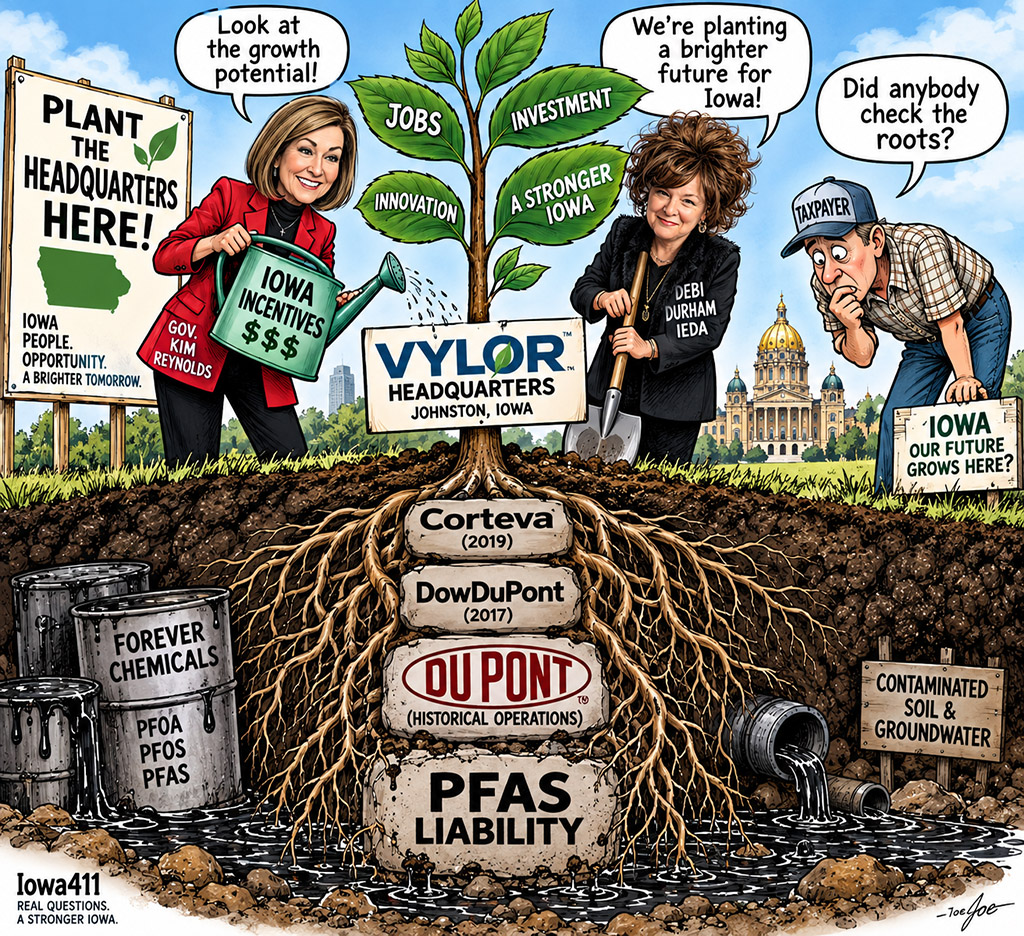
The Corteva spinoff is complete, but a coalition of state attorneys general continues to challenge the separation of valuable assets from historical environmental liabilities.
How We Got Here
Where does DuPont enter the picture?
Dow Chemical and DuPont merged in 2017 to form DowDuPont, combining their businesses and historical liabilities.
How did Corteva emerge?
In 2019, DowDuPont separated into three companies. Its agricultural businesses became Corteva Agriscience, which also assumed certain obligations associated with historical DuPont environmental claims.
Where do PFAS come in?
DuPont and related companies have faced extensive litigation over PFAS, commonly called “forever chemicals.” Governments and water systems have sought compensation for contamination and cleanup.
What changed on October 1?
Corteva completed its separation. Its seed business, including Pioneer, became Vylor, an independent company headquartered in Johnston. The remaining Corteva operates the crop-protection business.
Why was the separation challenged?
A coalition of attorneys general and municipalities alleges that the transaction transfers approximately $39 billion in assets and value to Vylor while leaving historical PFAS liabilities with other corporate entities. Corteva disputes the allegations.
Didn’t a court stop the deal?
No. A federal court declined to block the separation, allowing Vylor to launch October 1. The decision did not resolve the underlying dispute over PFAS liabilities.
Why does this matter to Iowa?
Iowa recruited Vylor’s headquarters and offered economic-development incentives. The legal challenge raises questions about the company’s financial structure, Iowa’s due diligence and whether the separation could leave fewer resources available for future PFAS settlements and cleanup.
Iowa’s newest corporate headquarters officially opened for business today. Vylor, the seed and genetics company spun off from Corteva Agriscience, completed its separation October 1 and launched as an independent, publicly traded company headquartered in Johnston. Its shares are trading on the New York Stock Exchange under the symbol VYLR.
But the transaction comes amid a major legal dispute over the company’s financial separation from Corteva’s historical PFAS liabilities.
On September 14, California Attorney General Rob Bonta, supported by a bipartisan coalition of 20 attorneys general and nine municipalities, sought an emergency court order to block the transaction. They alleged that the separation would move approximately $39 billion in assets and value into Vylor while leaving legacy PFAS liabilities with the remaining Corteva crop-protection business.
The court declined to block the separation. That decision allowed the transaction to proceed; it does not establish that the underlying PFAS allegations are resolved.
The $39 billion question
PFAS, commonly called forever chemicals, have been the subject of extensive litigation involving historical DuPont operations. Governments and communities are seeking compensation for contamination, water treatment and environmental cleanup.
Corteva traces part of its corporate history to DuPont, which separated into several companies following its merger with Dow Chemical.
The attorneys general contend that Corteva’s latest restructuring follows a broader pattern of transferring valuable assets away from companies facing environmental claims. They argue that the separation could reduce the resources available to satisfy future PFAS judgments and remediation obligations.
Corteva disputes those allegations. It maintains that the separation creates two financially sound businesses and that the remaining crop-protection company will be capable of meeting its obligations.
The underlying dispute over responsibility for historical PFAS liabilities remains unresolved.
Iowa’s headquarters victory
Iowa officials mounted an extensive campaign to persuade Corteva to locate Vylor’s headquarters in Johnston, where Pioneer has deep historical roots.
Gov. Kim Reynolds and Iowa Economic Development Authority (IEDA) Director Debi Durham celebrated the decision in May. The state’s Plant the Headquarters Here campaign collected more than 700 signatures and nearly 300 personal stories supporting the recruitment effort.
The headquarters decision is official
Vylor’s launch makes that headquarters decision official. It also makes Iowa’s due diligence an important public question.
PFAS litigation involving the DuPont corporate family was well known before Iowa began recruiting Vylor. The proposed separation was also public. There is no evidence that Iowa officials participated in any effort to avoid environmental liabilities or knew the transaction would face this particular legal challenge.
Nevertheless, Iowans have reason to ask what state officials examined before negotiating economic-development incentives.

What Did Iowa Officials Know?
Four questions remain relevant now that the separation is complete:
- Did Iowa officials review Corteva’s outstanding PFAS litigation and potential environmental liabilities?
- Did they examine how assets and liabilities would be divided between Vylor and the remaining Corteva?
- What financial and legal disclosures did Corteva provide during the headquarters negotiations?
- What protections are included in Iowa’s incentive agreements if the litigation or other financial developments materially affect Vylor?
The financial stakes extend beyond Iowa. The attorneys general argue that the restructuring could leave fewer corporate resources available to pay for PFAS contamination and cleanup. Corteva maintains that the remaining company has sufficient financial resources to meet its obligations.
Those competing claims have not been resolved by the decision allowing the separation to proceed.
Iowa successfully recruited Vylor’s headquarters, and the company is now operating independently. The question is whether the state examined the financial and environmental risks associated with the transaction as thoroughly as it pursued the economic benefits.
Vylor’s separation is complete. Iowa’s questions about the deal shouldn’t be.
Sources
California Attorney General’s September 14 announcement

Questions for Iowa’s Economic Development Officials
Iowa worked aggressively to bring Vylor’s headquarters to Johnston. Now that the corporate separation is complete despite a legal challenge from 20 attorneys general, Iowans deserve to understand what the state knew before offering incentives, and what it intends to do now.
What due diligence did IEDA conduct?
Did the agency examine Corteva’s pending PFAS litigation, potential environmental liabilities and the financial structure of the proposed separation?
What did Corteva disclose?
Were Iowa officials informed about the division of assets and liabilities between Vylor, Corteva and related companies?
Were taxpayers adequately protected?
What safeguards allow Iowa to modify, suspend or recover incentives if material financial or legal information was not disclosed or the company fails to meet its commitments?
Has Iowa reassessed the transaction?
Following the attorneys general’s allegations and the court’s decision allowing the separation to proceed, has IEDA conducted any additional review of Vylor’s financial and legal exposure?
Will the state disclose its findings?
Will IEDA explain what it examined, what Corteva disclosed and whether the legal challenge affects the state’s incentive commitments?