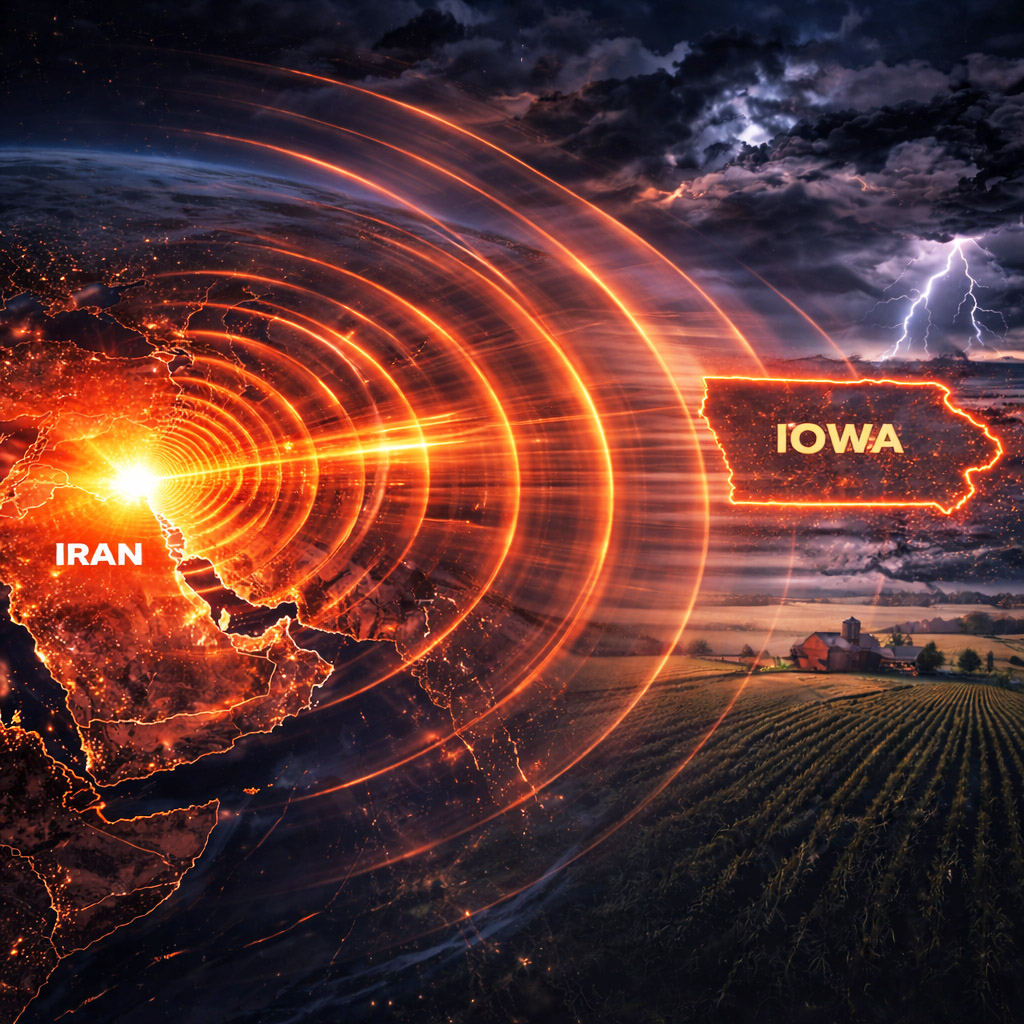
Economic Shockwaves Likely to Reach Iowa
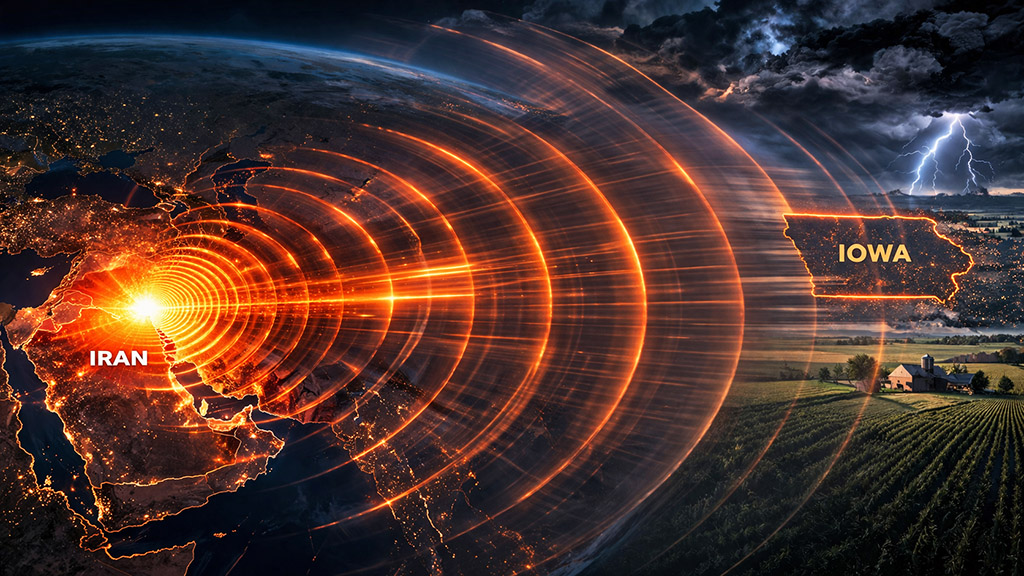
Escalation in Iran conflict targets global oil corridor, raising stakes for fuel, fertilizer, and food prices
A major escalation in the Iran conflict is now underway. President Donald Trump has ordered the U.S. Navy to begin a blockade of vessels in and around the Strait of Hormuz, following the collapse of high-level ceasefire talks between the United States and Iran. The move targets one of the most critical chokepoints in the global economy—and one that directly affects costs for Iowa farmers and families.
From Negotiation to Escalation
The decision came after 21 hours of negotiations in Pakistan ended without agreement or a path forward. According to reports, the U.S. will seek to interdict vessels in international waters with a goal to prevent ships from paying transit tolls to Iran. Additional nations may be involved, though none were named.
Iran responded by warning that military vessels could face a “forceful response,” signaling the risk of further escalation.
Why the Strait of Hormuz Matters
The Strait of Hormuz is not just another waterway; it is one of the most important energy corridors in the world. Roughly 20% of global oil supply passes through it, the strait is a key route for natural gas and fertilizer inputs. Because of this, disruptions affect global markets almost immediately.
When the Strait is threatened, the global economy feels it.
Immediate Market Risk
Even the announcement of a blockade can increase oil prices, disrupt shipping routes, and raise insurance and transportation costs. And those effects do not stay overseas. They move quickly into the U.S. economy.
What This Means for Iowa
Iowa sits downstream from global supply chains. That means this decision has real consequences here at home.
Higher Fuel Costs
As oil markets react, gasoline prices are likely to rise, diesel costs for farming operations increase, and transportation costs climb. Fuel is a foundational cost across Iowa’s economy.
Fertilizer Price Pressure
The region affected by the conflict is critical to fertilizer supply. Disruptions to energy and shipping increase production costs, limit availability, and drive price volatility. And fertilizer is already one of the largest expenses for Iowa farmers.
Food Price Impact
The chain reaction is already in motion from energy to fertilizer to farming and food prices. Higher input costs eventually lead to increased grocery prices and inflationary pressure on households.
A Conflict Expanding Beyond the Battlefield
The blockade also signals a broader shift in the conflict, from targeted strikes to economic and maritime pressure. This increases the risk of wider regional involvement, disruption of global trade, and prolonged instability.
Uncertain Path Forward
Neither side has indicated what comes next after the ceasefire expires. Diplomatic efforts may continue, but so far no agreement has been reached, key issues remain unresolved, and both sides have hardened positions.
Iowa411 Perspective
This is not just a military development; it is an economic one. A decision made in the Middle East about shipping lanes can affect fuel prices in Iowa, raise costs for farmers, and increase grocery bills for families.
The Bottom Line
The Strait of Hormuz blockade represents a significant escalation in the Iran conflict. And while it may be aimed at weakening Iran’s position, the economic impact will not be limited to the region. It will be felt in places like Iowa, where global events translate into everyday costs.
Breaking With Trump, or Just His Poll Numbers?
Candidates show some dissent over the Iran war, as Grassley and Ernst vote against limiting Trump’s war powersIowa Republican candidates are changing their positions on the Iran war as Election Day approaches. That is news. Calling it a “break with Trump” may be...
Trump Lost His Lawsuit. But Did the Lawsuit Fail?
An Iowa judge threw out Donald Trump’s lawsuit against Gannett and pollster J. Ann Selzer. But after nearly two years of litigation, the case raises a larger question about what it means to “win.”President Donald Trump lost his lawsuit against Gannett (owner of the...
Iowa Corn Growers Ask for Diesel Price Relief as Harvest Begins
Iowa Corn Growers Association asks for diesel relief as harvest kicks offBy Cami KoonsIowa Capital Dispatch As Iowa farmers begin harvesting their crops, corn growers in the state are asking Iowa congressional delegates to help lower the cost of diesel fuel, which has...
Mortgage Rates Hit 7% as War Increases Housing Market Pressure
Higher energy prices, persistent inflation, and rising borrowing costs are making an already difficult housing market even harder for buyers.The New York Times reports that mortgage rates have climbed above 7% for the first time since January 2025, another economic...
The “Give Us Another Chance” Tour Comes to Iowa
JD Vance to Voters – Please Give Us Another Chance Vice President J.D. Vance is coming to western Iowa Friday with a message for voters that may require a little work from the marketing department. “Give us another chance.” No, really. That was part of the vice...
Trumpapalooza Starts Today – Will Iowa Republicans Present?
Iowa411 SatireTrumpapalooza: Suggested Speaking Topics for Iowa Republicans The Republican Party’s first-ever national midterm convention, also known as “Trumpapalooza” because of its unswerving focus on President Trump, opens today in Dallas. The two-day production...
Diesel Prices Hit An All-Time High, Again
Record Diesel Prices Will Reach Far Beyond the Pump in IowaAn Iowa411 News BriefDiesel has set national records on consecutive days, increasing costs for Iowa agriculture, transportation, businesses, public services, and eventually, consumers.Record Diesel Prices...