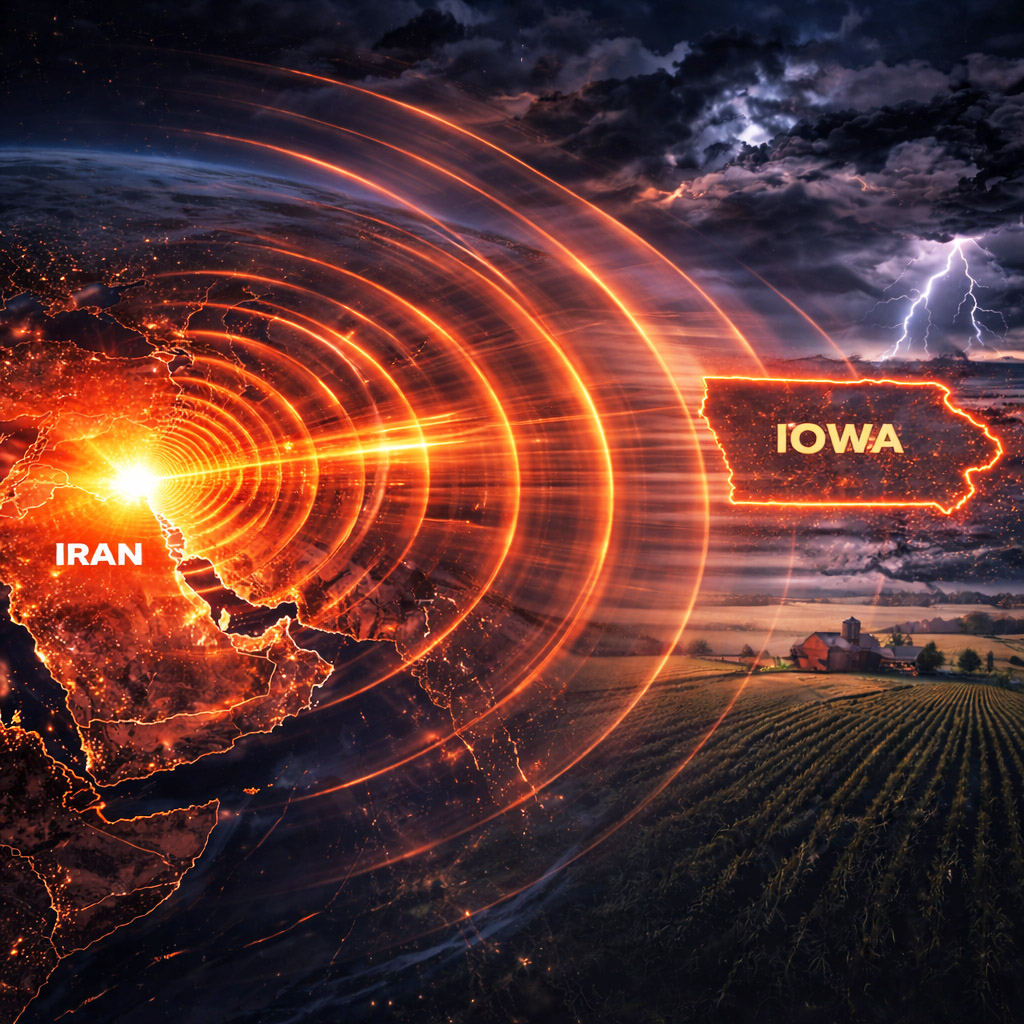
False Claims about Iran Negotiations, Ceasefire, and the Strait of Hormuz
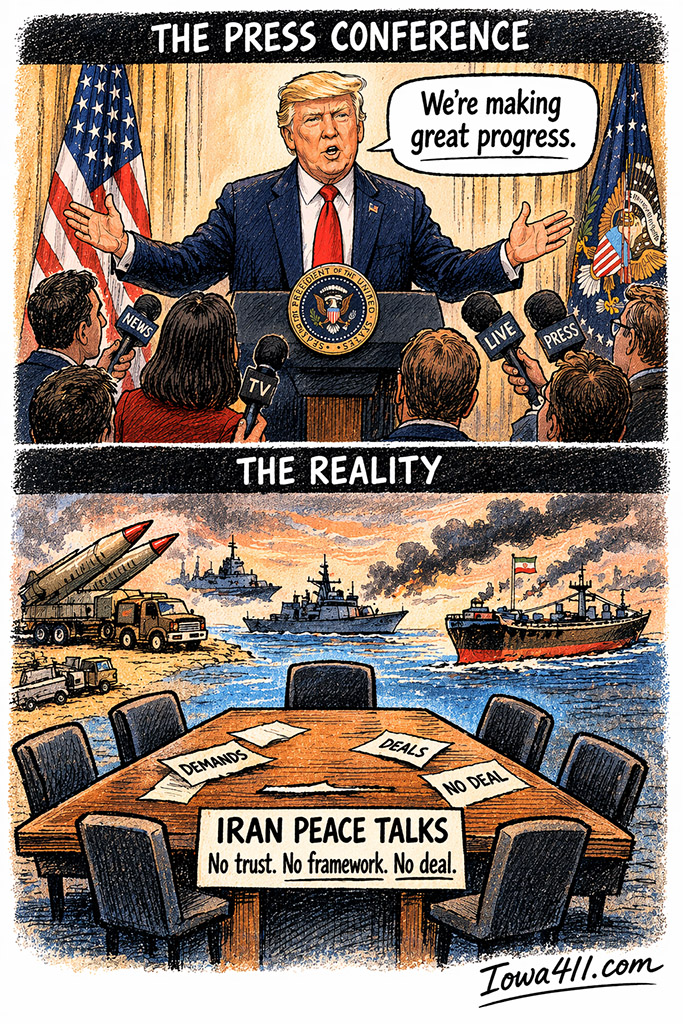
The Illusion of “Iran Ceasefire Talks” and the Cost of Pretending
The phrase “Iran ceasefire talks” is back in the headlines. It sounds reassuring. It suggests progress.
It is also almost entirely disconnected from reality.
As it has been since the start of the war, there are no meaningful talks underway. There is no shared framework for negotiation. There is no trust between the parties. And there is no credible path, at present, from where things stand to anything resembling a negotiated agreement.
Calling this a peace process is not analysis. It is political theater.
You Cannot Negotiate Without Common Ground
Diplomacy is not a press release. It is not a talking point. It is not a performance. Real negotiations begin with overlapping interests, however narrow. Without that, there is no process, just competing demands delivered through microphones.
Right now, the United States and Iran are operating from positions that are not just far apart, but structurally incompatible. Each side’s stated objectives would require the other to fundamentally reverse course in ways that are politically and strategically untenable.
That is not a starting point for talks. That is a stalemate.
From Progress to Breakdown, and Pretend Reset
There was a period when diplomatic engagement, however fragile, showed signs of forward movement. That effort involved intermediaries, structured dialogue, and incremental progress. Then it ended.
What followed was a shift away from diplomacy toward escalation. And now, after that escalation, we are being told that “talks” are back on the table as if the underlying conditions had not changed, as if trust had not been damaged, as if continuity still existed. It does not.
You do not dismantle a negotiating track, escalate tensions, and then simply declare diplomacy restored. That is not how international negotiations work. That is how narratives are constructed.
What Was Lost and What Was Gained
Before escalation, conditions in the region, while far from perfect, were comparatively stable. Commercial shipping through the Strait of Hormuz continued without major disruption, global oil markets were functioning within expected ranges, U.S. fuel prices were not under acute geopolitical pressure, and diplomatic channels, however fragile, still existed.
That baseline mattered. Escalation didn’t occur in a vacuum. It disrupted an environment that, at minimum, was manageable.
In its place, a new dynamic has emerged with increased uncertainty around one of the world’s most critical energy chokepoints. The Strait of Hormuz carries a significant share of global oil supply.
Even the perception of instability there can move markets. The more that risk is normalized or demonstrated, the more it becomes a strategic lever; not just for one country, but for the broader conflict environment. That is a shift with global implications.
Trust Was the Casualty, and It Has Not Returned
Diplomacy runs on credibility. Not goodwill. Not messaging. Credibility. When positions shift abruptly, when signals conflict, when actions undercut prior engagement, the result is not flexibility, it is distrust. And distrust is not a minor obstacle. It is the central barrier.
Right now, there is no indication that the trust required for serious negotiation has been rebuilt. Without it, “talks” are not talks. They are placeholders.
The Sales Pitch Problem
There is a pattern here that should concern anyone paying attention. Statements about negotiations appear, disappear, and reappear, often untethered from observable diplomatic activity. They create the impression of movement, of control, of progress.
But diplomacy is not a sales process.
Complex geopolitical conflicts are not closed through positioning or projection. They are managed through consistency, discipline, and alignment between words and actions. When messaging outruns reality, it does not strengthen a position, it very much weakens it.
Why This Matters More Than It Seems
This is not just about semantics. It is about consequences. When the public is told that “talks” are happening expectations shift, markets react, allies recalibrate, and adversaries adjust.
If those signals do not reflect reality, the result is not strategic advantage; it is confusion and erosion of credibility. Over time, that erosion becomes its own risk.
A Complex Problem Being Treated Like a Simple One
The U.S.–Iran dynamic is one of the most complex geopolitical relationships in the world. It involves nuclear policy, regional security, competing alliances, and decades of historical grievance.
It cannot be reduced to a narrative of “we’re talking” versus “we’re not.” And it cannot be managed through improvisation.
The Bottom Line
Peace does not emerge from declarations. It emerges from alignment, trust, and sustained effort. None of those conditions are currently in place.
Until they are, talk of “Iran peace talks” is not a sign of progress. It is a sign that narrative has replaced reality, and that is a dangerous place for foreign policy to be.
Summary
What we are seeing is not diplomacy. It is the false appearance of diplomacy.
There is no evidence of a viable negotiating framework. There is no indication of restored trust. There is no clear pathway from current positions to a workable agreement.
What exists is messaging that is repeated, amplified, and presented as progress. That is not a strategy.
Breaking With Trump, or Just His Poll Numbers?
Candidates show some dissent over the Iran war, as Grassley and Ernst vote against limiting Trump’s war powersIowa Republican candidates are changing their positions on the Iran war as Election Day approaches. That is news. Calling it a “break with Trump” may be...
Trump Lost His Lawsuit. But Did the Lawsuit Fail?
An Iowa judge threw out Donald Trump’s lawsuit against Gannett and pollster J. Ann Selzer. But after nearly two years of litigation, the case raises a larger question about what it means to “win.”President Donald Trump lost his lawsuit against Gannett (owner of the...
Iowa Corn Growers Ask for Diesel Price Relief as Harvest Begins
Iowa Corn Growers Association asks for diesel relief as harvest kicks offBy Cami KoonsIowa Capital Dispatch As Iowa farmers begin harvesting their crops, corn growers in the state are asking Iowa congressional delegates to help lower the cost of diesel fuel, which has...
Mortgage Rates Hit 7% as War Increases Housing Market Pressure
Higher energy prices, persistent inflation, and rising borrowing costs are making an already difficult housing market even harder for buyers.The New York Times reports that mortgage rates have climbed above 7% for the first time since January 2025, another economic...
The “Give Us Another Chance” Tour Comes to Iowa
JD Vance to Voters – Please Give Us Another Chance Vice President J.D. Vance is coming to western Iowa Friday with a message for voters that may require a little work from the marketing department. “Give us another chance.” No, really. That was part of the vice...
Trumpapalooza Starts Today – Will Iowa Republicans Present?
Iowa411 SatireTrumpapalooza: Suggested Speaking Topics for Iowa Republicans The Republican Party’s first-ever national midterm convention, also known as “Trumpapalooza” because of its unswerving focus on President Trump, opens today in Dallas. The two-day production...
Diesel Prices Hit An All-Time High, Again
Record Diesel Prices Will Reach Far Beyond the Pump in IowaAn Iowa411 News BriefDiesel has set national records on consecutive days, increasing costs for Iowa agriculture, transportation, businesses, public services, and eventually, consumers.Record Diesel Prices...