Rising Fuel Prices Push U.S. Inflation Higher, Squeeze Household Budgets
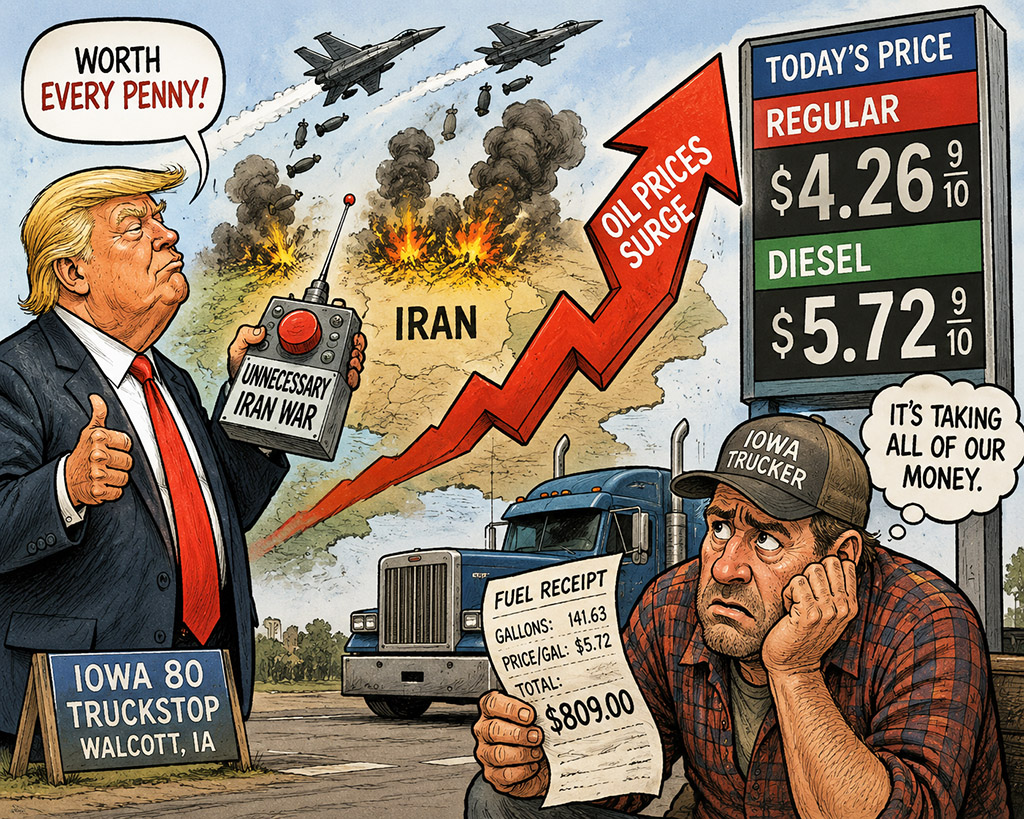
Iowans continue to suffer as Trump confusion worsens the global economy.
Inflation spikes in U.S. as war drives up prices
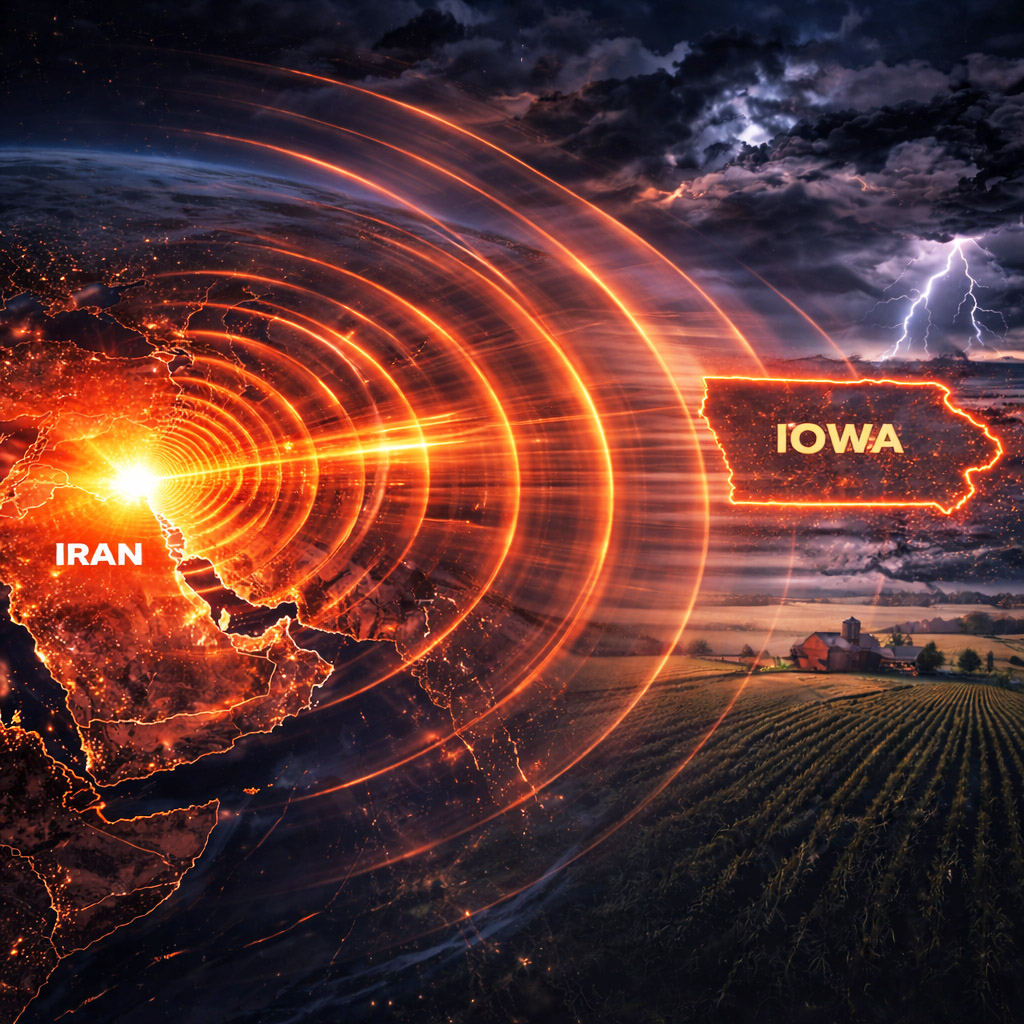
Inflation accelerated sharply in April, reaching its fastest annual pace in nearly three years as higher energy prices linked to the war with Iran pushed up the cost of living for American families.
According to new data from the Commerce Department, the Personal Consumption Expenditures (PCE) price index, the Federal Reserve’s preferred inflation measure, rose 3.8% compared to a year earlier, up from 3.5% in March and marking the largest increase since May 2023.
The increase was driven largely by rising energy costs. Disruptions to shipping through the Strait of Hormuz and broader supply chain impacts from the Middle East conflict have contributed to higher prices for fuel, fertilizers, aluminum, and consumer goods.
Gasoline prices jumped 12.3% in April alone and have increased more than 50% since the conflict began in late February. Food prices also rose during the month, adding further pressure to household budgets.
The effects are being felt across the economy. Inflation-adjusted disposable income fell for the third consecutive month in April, meaning many Americans are seeing their purchasing power decline even as wages and incomes increase.
Economists warn that persistent inflation could slow consumer spending and economic growth in the months ahead.
The report also presents a political challenge for President Donald Trump, who campaigned heavily on promises to reduce inflation and lower costs for American families. Recent polling has shown declining public approval of the president’s handling of the economy as consumers continue to face rising prices.
The Federal Reserve faces a difficult balancing act. While central bankers cannot directly address supply disruptions caused by international conflicts, they remain responsible for keeping inflation under control. Some policymakers have indicated they may need to keep interest rates elevated longer than previously expected.
Financial markets now anticipate that the Federal Reserve could leave interest rates largely unchanged well into 2027, while some officials have even raised the possibility of future rate increases if inflation remains stubbornly high.
For consumers, the immediate impact is clear: higher prices at the gas pump, increased costs for everyday goods, and continued pressure on household budgets at a time when many Americans were hoping inflation would finally begin to ease.
Our Take
Inflation is one of those issues that most Americans don’t need economists to explain. People see it every time they fill up their gas tank, buy groceries, pay utility bills, or review their monthly budget.
What makes this report noteworthy is that it combines two separate inflation pressures. The war with Iran has increased energy costs and disrupted global supply chains, while economists note that inflation was already running above the Federal Reserve’s target before the conflict intensified.
For Iowa families, farmers, and businesses, higher fuel prices can have ripple effects throughout the economy. Transportation costs affect everything from groceries and farm inputs to retail prices and household expenses.
The bigger concern is that inflation-adjusted income is now falling. When prices rise faster than purchasing power, families have less money available for savings, investments, discretionary spending, and long-term financial goals.
Whether inflation proves temporary or becomes a longer-term challenge will be one of the most important economic questions facing the country heading into 2027.
Iowa Layoffs Hit One-Year High, Most Are Manufacturing Jobs
Iowa Layoffs Reach One-Year High as Manufacturing Sector Leads June Job LossesIowa Economy Brief Iowa employers announced 656 layoffs in June, the highest monthly total in a year, with manufacturing accounting for most of the job losses, according to Iowa's Worker...
Iowa Religious Leaders Gather to Support Voting Rights
Iowa Faith Leaders Gather to Support the Moral Issue of Our Time - Voting RightsFaith Gathering to Support Voting Rights Des Moines Register writer Isabelle Foland reported that religious leaders from across Iowa gathered in downtown Des Moines earlier this month to...
Reynolds’ Medicaid Task Force to Examine a Miniscule Problem
Reynolds Creates Medicaid Fraud Task Force as Iowa Reports One of Nation's Lowest Improper Payment RatesNew panel aims to eliminate fraud, waste and abuse while state already performs well below national average Gov. Kim Reynolds has created a new task force to combat...
As Opposition Grows, Iowa Continues to Recruit Data Centers
State actively markets Iowa to technology companies as communities debate costs and benefitsState actively markets Iowa to technology companies as communities debate costs and benefits As several proposed data center projects encounter growing local opposition, Iowa...
Hinson’s Save Our Bacon Act Explained
Hinson's "Save Our Bacon Act": What the Bill Really DoesAnd Why Both Sides Are Talking Past Each Other When Rep. Ashley Hinson talks about the Save Our Bacon Act, she describes it as legislation to protect Iowa pork producers from burdensome regulations imposed by...
The Difference Between an Investigation and an Accusation
The Difference Between an Investigation and an AccusationAn Iowa411 EditorialWhy Evidence Must Come First The Justice Department's recent antitrust case against Iowa-based Versova Holdings offers an important civics lesson that extends far beyond allegations of egg...
Drain the Pool. Then Follow the Evidence.
What the Lincoln Memorial Reflecting Pool Controversy Says About Government AccountabilityAn Iowa411 EditorialTruth is revealed by evidenceAppearances can be manufacturedGovernment Vandalism Charges Are Questioned When governments make extraordinary claims, they...