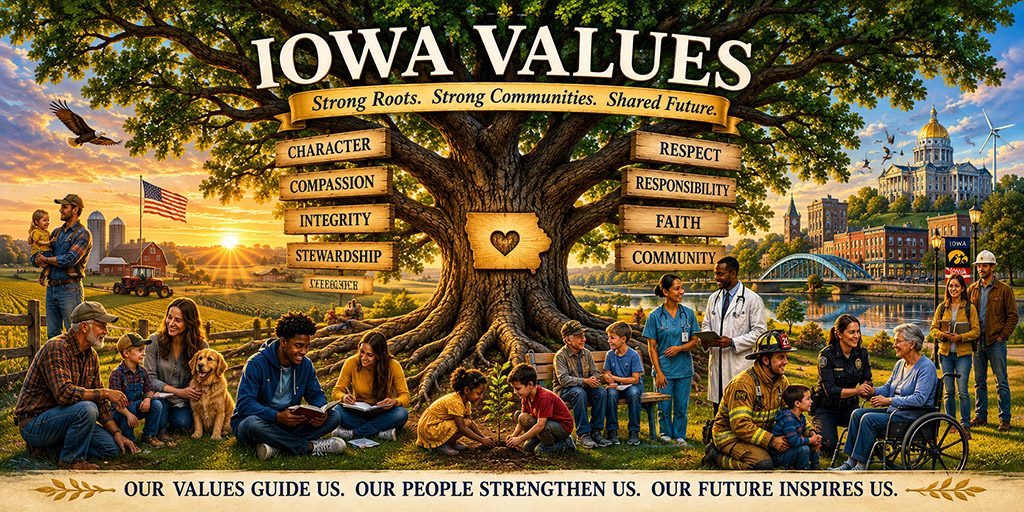
Treating Others with Decency, Fairness, and Humanity
Respect is one of the most important foundations of a healthy community. In Iowa, people are raised to believe that every person deserves to be treated with basic dignity, fairness, and decency regardless of background, status, beliefs, income, age, or circumstance.
Respect does not require agreement. People can disagree strongly while still treating one another with civility and humanity. That understanding has long helped Iowa communities remain stable, cooperative, and connected even during difficult times and disagreements.
Respect begins with recognizing the value of other people. It means listening before judging, speaking honestly without cruelty, treating others fairly, honoring commitments, and understanding that every person carries struggles, experiences, and burdens that may not always be visible.
Human dignity means that people should never be treated as disposable, worthless, or less deserving of compassion and fairness. Because every person matters.
That principle shapes how communities thrive. How children are taught, how seniors are treated, how neighbors interact, how disagreements are handled, and how leaders conduct themselves in public life.
Decency is often expressed through small everyday actions like holding a door open, helping someone carry groceries, speaking respectfully to others, or checking on an elderly neighbor. These actions may seem simple, but together they create communities where people feel safe, valued, and respected.
Respect also means recognizing the humanity of people whose experiences may differ from our own. Strong communities are built when people treat one another with fairness and dignity rather than suspicion, hostility, or contempt.
Iowans have traditionally valued civility. Civility does not mean avoiding disagreement or pretending everyone shares the same opinions. Healthy debate and honest discussion are important parts of community life. But civility means disagreements should not destroy basic human respect.
People should not be mocked, degraded, threatened, or dehumanized because of political differences, economic struggles, personal hardships, disabilities, race, religion, or other characteristics. Communities weaken when cruelty becomes entertainment or when anger replaces empathy.
Respect helps preserve trust. It allows neighbors, coworkers, classmates, families, and communities to work together despite differences. It strengthens schools, workplaces, churches, civic organizations, and local government.
Respect also requires fairness. People expect to be treated honestly and equally. Rules should apply consistently. Opportunities should be available fairly. People should be judged by their character, conduct, and actions rather than stereotypes, fear, or prejudice.
Protecting the vulnerable is another important expression of human dignity. Strong societies are measured not only by wealth or power, but by how they treat children, seniors, veterans, people with disabilities, struggling families, and those facing hardship or discrimination.
Respect means refusing to ignore suffering or humiliation when it affects others. It also means understanding that words and actions carry consequences. Public discourse matters. Leadership matters. And the tone communities set matters.
When people treat one another with dignity and decency, communities become healthier, safer, and stronger. Respect and human dignity are not signs of weakness; they are signs of maturity, character, and moral strength.
They reflect the understanding that every person deserves fairness, compassion, and the opportunity to be treated as a fellow human being.
These principles have helped shape Iowa communities for generations. And they remain essential to building a society rooted in trust, humanity, and common decency.