Andrews Blasts Steen Over Ballot Dispute, Questions Campaign Integrity
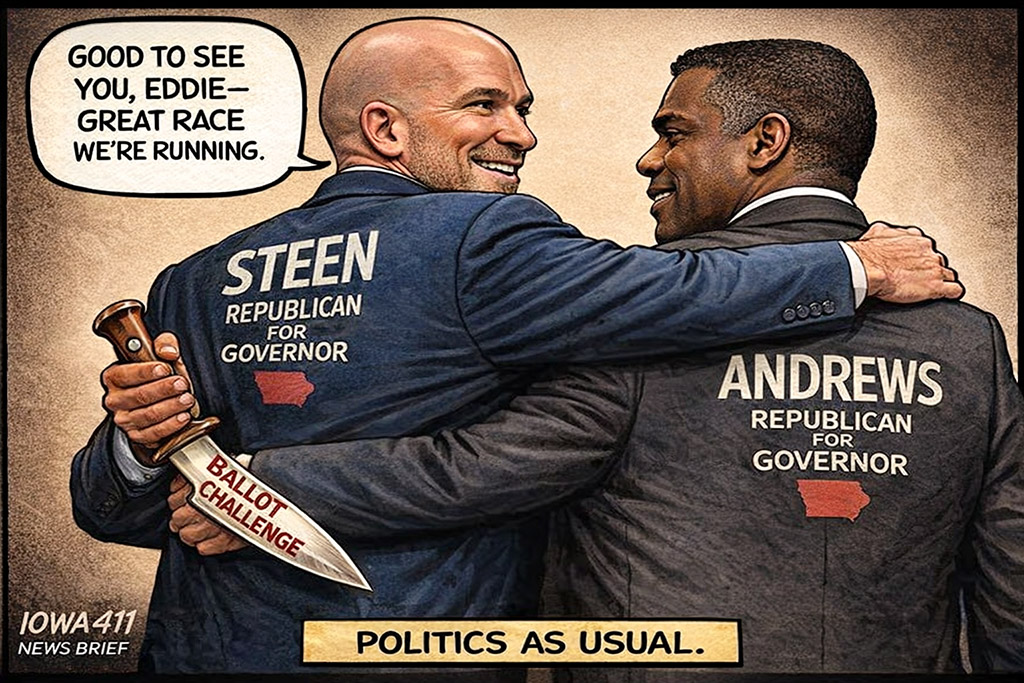
Republican gubernatorial candidate Eddie Andrews publicly criticized rival Adam Steen at the Polk County GOP’s Lincoln Dinner on March 26, escalating tensions over a recent ballot challenge tied to Steen’s campaign.
The dispute centers on a formal challenge filed against Andrews’ candidacy by a Steen campaign donor, who alleged Andrews failed to meet signature requirements to qualify for the ballot. The State Objection Panel ultimately rejected the challenge, allowing Andrews to remain in the race.
Initially, Steen’s campaign denied involvement in the challenge. However, subsequent confirmation revealed that campaign officials had reviewed Andrews’ petition signatures and provided them to the individual who filed the complaint. Steen later acknowledged that earlier statements from his campaign were “misleading,” though he maintained the challenge itself was initiated independently.
Andrews, speaking to a supportive audience, framed the issue as a matter of character rather than procedural politics, stating that repeated contradictory statements reflected a deeper integrity concern.
Other candidates and party leaders largely avoided direct engagement with the controversy, focusing instead on broader campaign messaging ahead of the June primary. Governor Kim Reynolds used the event to emphasize party unity and warn against Democratic gains in the upcoming election.
Our Take
Let’s be clear about what this is, and what it isn’t. Ballot challenges are not unusual in Iowa politics. Campaigns routinely scrutinize each other’s paperwork. That’s part of the process.
What matters here is not the challenge itself, it’s the sequence of involvement, denial, confirmation, then partial admission. That pattern is not procedural; it’s credibility erosion.
This is not about ideology. It’s about trust in the system. When campaigns operate through intermediaries, deny involvement, and then revise their story after they are exposed, they introduce a different kind of risk; one that goes beyond a single race.
This is a Governance & Power Integrity issue. And more specifically, it aligns with electoral Integrity concerns and institutional trust erosion. Because elections don’t just depend on rules, they depend on confidence that those rules are being followed in good faith.
If voters begin to believe that processes are being manipulated behind the scenes, or transparency only comes after exposure, then trust in outcomes starts to weaken. And once that happens, the damage extends far beyond one candidate or one election cycle.
This is how systems degrade. Not through dramatic collapse, but through incremental normalization of questionable conduct.
Breaking With Trump, or Just His Poll Numbers?
Candidates show some dissent over the Iran war, as Grassley and Ernst vote against limiting Trump’s war powersIowa Republican candidates are changing their positions on the Iran war as Election Day approaches. That is news. Calling it a “break with Trump” may be...
Has the UI Center Lost Its Academic Legitimacy?
How Much Academic Legitimacy Does Iowa's Center for Intellectual Freedom Have Left?Eleven scholars recruited to help establish the Center have resigned. Their departure raises a bigger question about what made this politically created institution academic in the first...
Trump Lost His Lawsuit. But Did the Lawsuit Fail?
An Iowa judge threw out Donald Trump’s lawsuit against Gannett and pollster J. Ann Selzer. But after nearly two years of litigation, the case raises a larger question about what it means to “win.”President Donald Trump lost his lawsuit against Gannett (owner of the...
As Iowans Suffer, Grassley Turns His Focus to Transgender Sports
Iowa already prohibits transgender girls from competing in girls' sports. With farmers struggling with diesel prices and families confronting inflation and housing costs, why is Chuck Grassley making the issue a national priority now?Should we be concerned about his...
Would a Ban of Diesel Exports Actually Lower Prices? Likely Not.
It’s More Complicated Than Grassley BelievesSen. Chuck Grassley says the U.S. should stop exporting diesel to bring down prices for farmers and truckers. The oil industry says that could backfire. Its explanation deserves a closer look.Iowa farmers are heading into...
Iowa Corn Growers Ask for Diesel Price Relief as Harvest Begins
Iowa Corn Growers Association asks for diesel relief as harvest kicks offBy Cami KoonsIowa Capital Dispatch As Iowa farmers begin harvesting their crops, corn growers in the state are asking Iowa congressional delegates to help lower the cost of diesel fuel, which has...
Mortgage Rates Hit 7% as War Increases Housing Market Pressure
Higher energy prices, persistent inflation, and rising borrowing costs are making an already difficult housing market even harder for buyers.The New York Times reports that mortgage rates have climbed above 7% for the first time since January 2025, another economic...