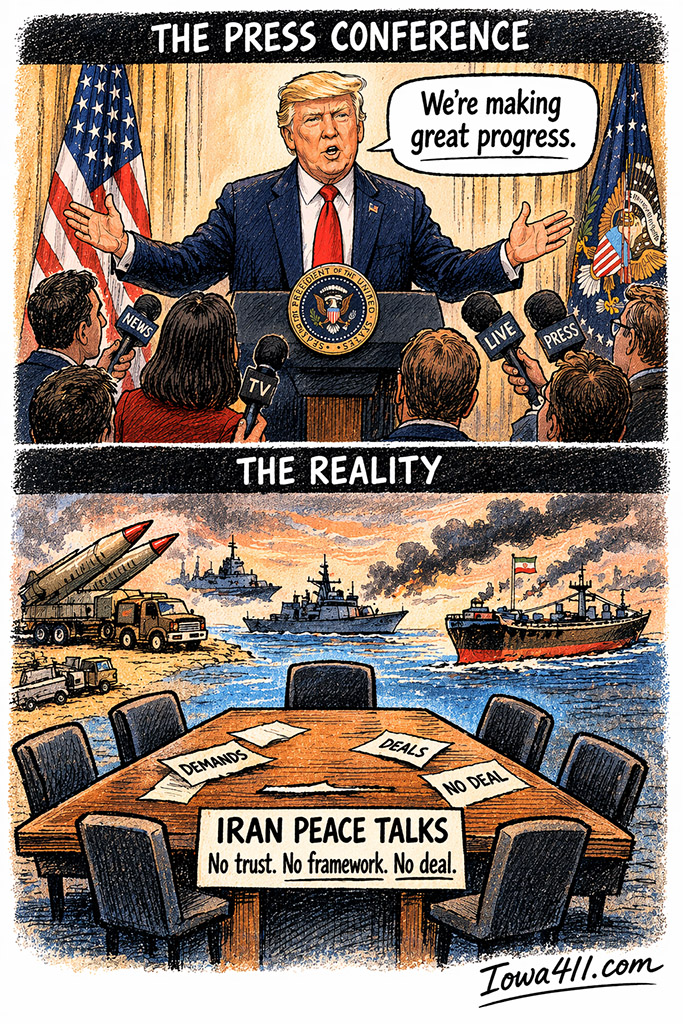
Iran Taco Tuesday: Threats, Contradictions, Ceasefire, and Delusions of Control
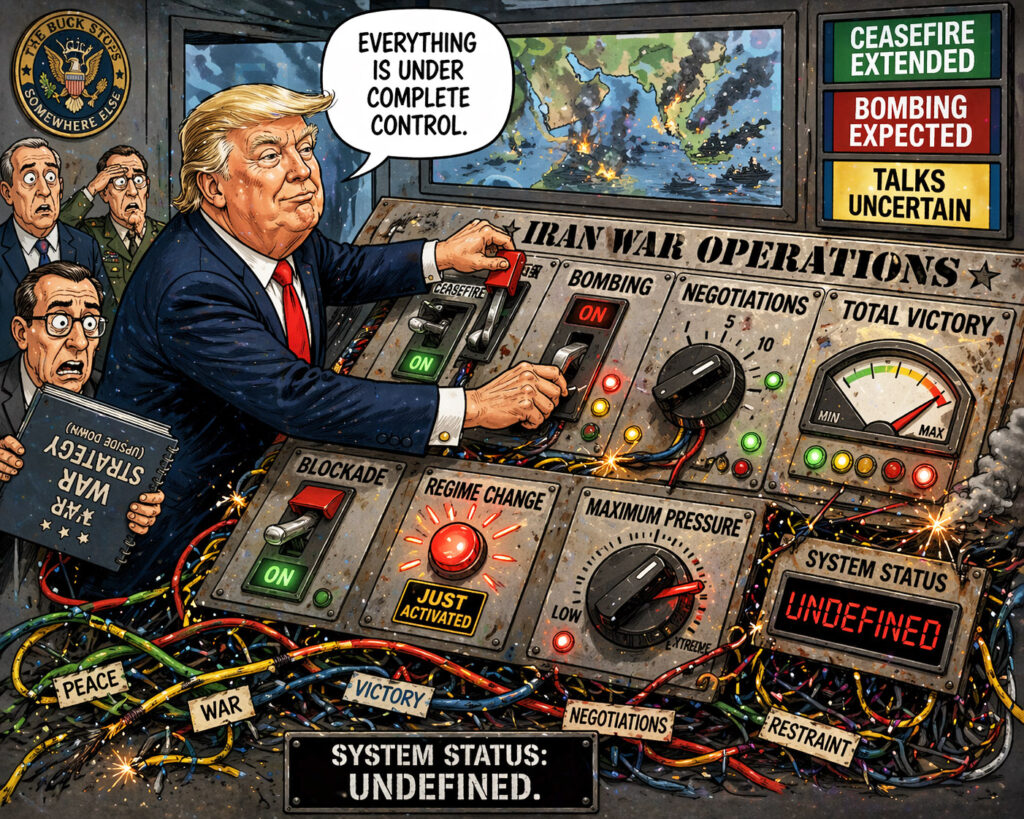
More claims without substantiation, facts, or details.
Ceasefires, Contradictions, and the Illusion of Control
Yesterday, the Iran War narrative shifted again. Or more precisely, it fractured.
Within the span of a few hours, President Trump moved from signaling imminent escalation to announcing an indefinite extension of a ceasefire that neither Iran nor key stakeholders appeared to recognize.
The result is not strategy. It is contradiction presented as strength.
A Ceasefire Without Agreement
On its face, the announcement sounds like progress. The United States will “indefinitely extend” the ceasefire, talks are expected to continue in Islamabad, and diplomacy, at least rhetorically, is back on the table.
But the underlying reality is far less coherent.
There is no clear indication that Iran requested the extension or agreed to the extension, or that Israel agreed to the extension. In fact, Iranian-linked sources reportedly dismissed the announcement outright, suggesting it carried little weight and may be little more than a negotiating tactic.
This is not a mutual ceasefire. It is a unilateral declaration of restraint that is paired with continued acts of war.
War Paused… But Is Still Being Fought
Even as Trump announced the extension, key military actions remain in place. A U.S. naval blockade of Iranian trade continues, commercial vessels are being intercepted and seized, and Iran has labeled these actions “piracy” and “state terrorism.”
This creates a fundamental contradiction where a ceasefire that includes ongoing economic warfare and naval enforcement is not a ceasefire, it is a rebranded continuation of conflict.
From “Raring to Go” to “Let’s Talk”
The inconsistency becomes more pronounced when compared to Trump’s own statements just hours earlier. In a CNBC interview the same day, Trump stated that the military was “raring to go” as he expected bombing to resume. He preferred to negotiate from a position of imminent force.
At the same time, he claimed that the United States has “totally won the war” because Iran’s military capabilities have been effectively destroyed, and that the U.S. controls the Strait of Hormuz.
These claims are presented as settled fact. But they exist alongside continued military operations, ongoing negotiations, and a fragile and uncertain ceasefire.
If the war is “won,” why is it still being fought? And if negotiations are necessary, what exactly has been “won?”
Regime Change Admitted, then Reframed
Perhaps the most revealing moment came in Trump’s own words. “It is regime change… I’ve done it indirectly.” This is significant.
Because for weeks, the administration has oscillated between denying regime change as an objective to suggesting that new leadership is more “rational,” and now openly claiming it has already occurred.
But the reality described elsewhere is far more unstable. Iran’s leadership structure has been violently disrupted, and power appears to be shifting toward military control. The new leadership has direct personal and political grievances.
This is not a stabilized outcome. It is a destabilized regime with fewer constraints and greater incentive to resist.
The Narrative of Total Victory
Throughout Tuesday’s messaging, one theme dominates: Total victory.
Trump repeatedly asserted that Iran’s navy, air force, and leadership are “gone,” the war has been decisively won, and the U.S. holds overwhelming dominance.
And yet the war continues, oil markets remain volatile, the Strait of Hormuz remains constrained, and thousands of civilians have been killed and displaced.
This is not the profile of a concluded conflict. It is the profile of an ongoing one.
Negotiations Under Pressure
At the same time, diplomatic efforts are proceeding under deeply unstable conditions. Talks in Pakistan are described as fragile, Iran has signaled willingness to engage (but not under coercion), and the U.S. continues to combine negotiation with threats.
Trump’s position is that Iran “has no choice” but to negotiate, but negotiations framed as inevitability are not negotiations. They are ultimatums. And ultimatums rarely produce durable agreements.
Tuesday’s Reality
By the end of the day, the situation can be summarized as follows. A ceasefire has been declared but not agreed upon. Military pressure continues despite claims of restraint. Victory has been declared, but conflict persists. Regime change has been claimed, but instability deepens. And negotiations are underway, but under threat.
This is not clarity. It is narrative construction.
The Pattern Emerging
Monday established the pattern of claims of dominance without evidence, assertions of control without verification, and blame directed outward.
Tuesday reinforced the pattern with contradictory positions presented simultaneously, strategic ambiguity framed as strength, and outcomes declared before they are achieved.
Final Thought
A consistent strategy produces consistent messaging. What we are seeing instead is something else. A shifting narrative that adapts to the moment by declaring victory, threatening escalation, and offering peace. And sometimes all in the same day.
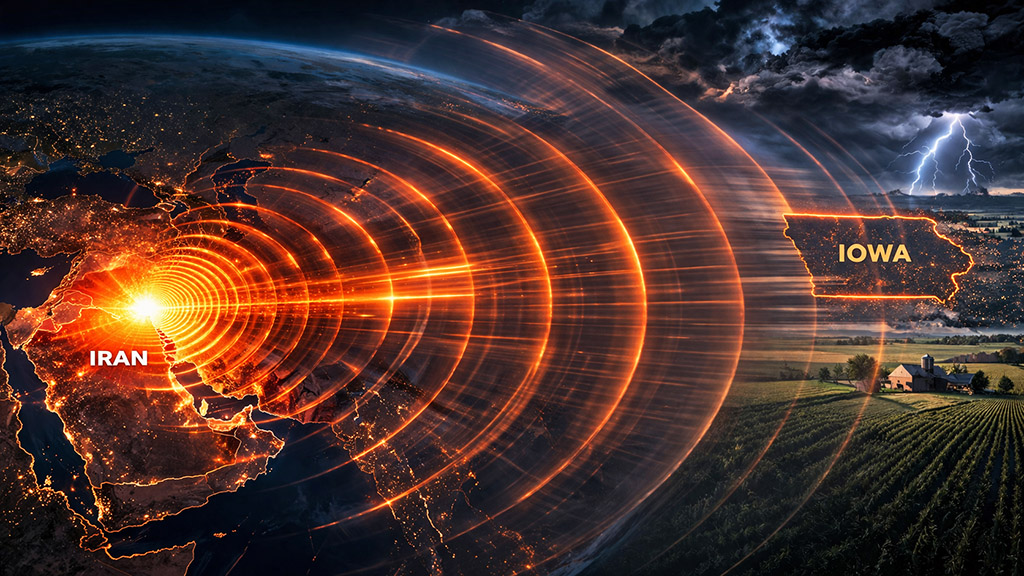
Accurate Historical Records and the Danger of Erasing History
Why Honest History Is Essential to DemocracyAn Iowa411 EditorialProtecting the Historical Record Protects Our Future The recent controversy surrounding the removal of dozens of exhibits from National Park Service sites raises an important question. Not who controls or...
Millions Lose SNAP Benefits as New Rules Take Effect
Republicans Celebrate Changes to SNAP as Democrats Sound AlarmMillions Lose SNAP Benefits as Republicans Celebrate Food Assistance Cuts Nearly 4 million Americans have lost access to SNAP food assistance since Congress and President Trump enacted stricter eligibility...
Dozens of Historical Exhibits Removed from National Parks
Federal Judge Orders Restoration of National Park American History ExhibitsTrump Administration Ordered to Restore Historical Exhibits It Removed from National Parks The Trump administration removed at least 51 exhibits from 37 National Park Service sites as part of...
Trump Declares Victory. Iran Collects the Prize.
Peace Deal or Capitulation? Critics Question Trump's Iran AgreementDid Trump Just Hand Iran a Strategic Victory? President Donald Trump is calling his new agreement with Iran a historic peace achievement. According to the president, he succeeded where previous...
Trump Declares Victory in Iran. Again.
Trump's Iran Agreement: Historic Achievement or Premature Victory Lap?Trump's Latest Peace Claim Follows a Familiar Pattern President Donald Trump has announced what he describes as a historic peace achievement in the Middle East. And after making a similar...
From Bombing Threats to Peace Deal in One Day
In Latest Pivot, Trump Threatens to Strike Iran Again, and then Announces a Peace DealFrom Bombs to Peace Deal in One Day President Donald Trump spent today moving between two dramatically different messages about the war with Iran. Early in the day, Trump threatened...
When Did Affordability Stop Mattering?
Trump Seems to Lose Interest in Affordability and Higher InflationIs Trump Losing Interest, or Showing His True Colors? One of Donald Trump's most effective arguments during the 2024 campaign was not immigration, foreign policy, or even crime. It was affordability....