Facing Medicaid shortfall, Iowa GOP offers temporary tax patch while costs shift to families
Republicans acknowledge pain from the Big Beautiful Bill
An Iowa House panel has advanced legislation aimed at addressing a growing Medicaid funding shortfall by temporarily increasing taxes on certain health insurers and transferring hundreds of millions of dollars from the state’s Taxpayer Relief Fund.
House File 2739 would raise the premium tax on health maintenance organizations (HMOs) from 0.925% to 3.5% retroactively for the period between January 1 and September 30, 2026, before lowering it slightly to 0.95% thereafter. The bill also proposes transferring $296.2 million from the Taxpayer Relief Fund and moving $70.3 million from the state general fund to the Iowa Department of Health and Human Services to help stabilize Medicaid funding.
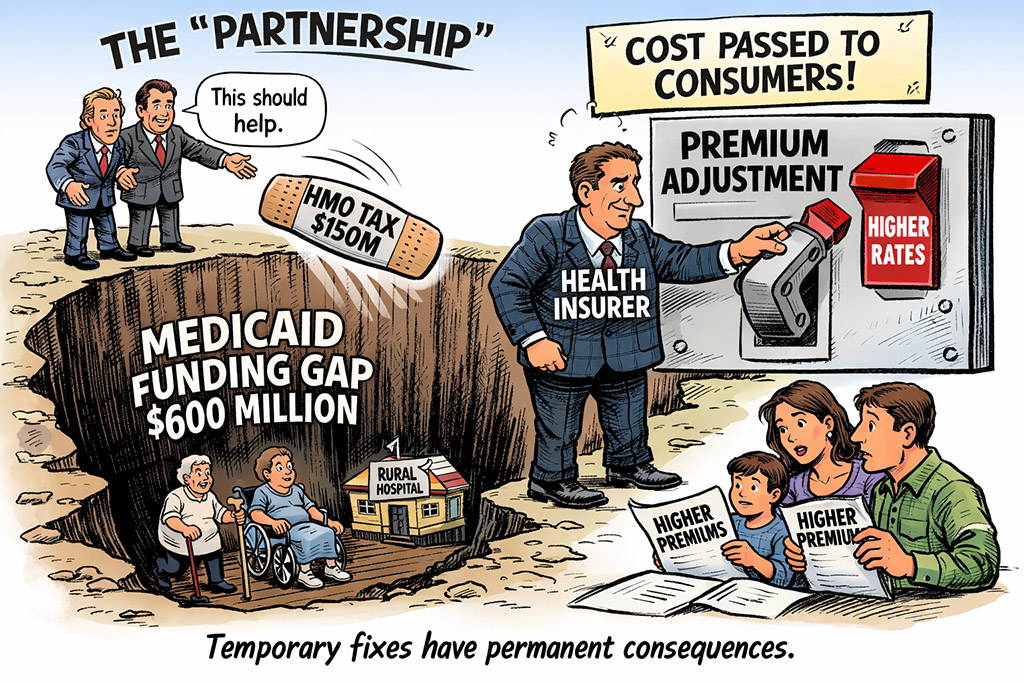
Republican lawmakers say the proposal is necessary to offset revenue declines associated with the federal “One Big Beautiful Bill” Act, which they say will leave Iowa with a growing Medicaid funding gap projected to reach $600 million over the next several years.
Rep. Gary Mohr, R-Bettendorf, said the temporary tax increase would generate roughly $140–$150 million, arguing that insurers should share responsibility with taxpayers for helping fund Medicaid.
Insurance industry representatives warned that the increase would likely raise costs for consumers. Matt McKinney of the Federation of Iowa Insurers said the measure represents a 278% increase in taxes on HMOs, and insurers would likely recover those costs through higher premiums.
Democrats and health policy advocates raised similar concerns. Rep. Megan Srinivas, D-Des Moines, said estimates suggest the tax increase could raise health insurance costs by about $500 per year for a family of four.
Supporters say similar taxes are used in most other states and that the bill allows Iowa to maintain Medicaid services without reducing provider payments or increasing provider taxes. A public hearing on the legislation is scheduled for March 18.
Our Take
The proposal illustrates the difficult policy choices states face when federal fiscal changes collide with existing health care commitments. Iowa lawmakers are effectively acknowledging that the new federal tax and spending law will create significant pressure on the state’s Medicaid budget.
At the same time, the current proposal addresses only a fraction of the projected shortfall. The temporary insurer tax is expected to generate around $150 million toward a potential $600 million funding gap, meaning future legislatures will likely face additional budget decisions.
The debate also highlights a familiar dynamic in health policy: when governments increase taxes on insurers, those costs are often passed along through higher premiums for businesses and families. As a result, efforts intended to stabilize Medicaid funding can ultimately ripple through the broader health insurance market.
Breaking With Trump, or Just His Poll Numbers?
Candidates show some dissent over the Iran war, as Grassley and Ernst vote against limiting Trump’s war powersIowa Republican candidates are changing their positions on the Iran war as Election Day approaches. That is news. Calling it a “break with Trump” may be...
Has the UI Center Lost Its Academic Legitimacy?
How Much Academic Legitimacy Does Iowa's Center for Intellectual Freedom Have Left?Eleven scholars recruited to help establish the Center have resigned. Their departure raises a bigger question about what made this politically created institution academic in the first...
Trump Lost His Lawsuit. But Did the Lawsuit Fail?
An Iowa judge threw out Donald Trump’s lawsuit against Gannett and pollster J. Ann Selzer. But after nearly two years of litigation, the case raises a larger question about what it means to “win.”President Donald Trump lost his lawsuit against Gannett (owner of the...
As Iowans Suffer, Grassley Turns His Focus to Transgender Sports
Iowa already prohibits transgender girls from competing in girls' sports. With farmers struggling with diesel prices and families confronting inflation and housing costs, why is Chuck Grassley making the issue a national priority now?Should we be concerned about his...
Would a Ban of Diesel Exports Actually Lower Prices? Likely Not.
It’s More Complicated Than Grassley BelievesSen. Chuck Grassley says the U.S. should stop exporting diesel to bring down prices for farmers and truckers. The oil industry says that could backfire. Its explanation deserves a closer look.Iowa farmers are heading into...
Iowa Corn Growers Ask for Diesel Price Relief as Harvest Begins
Iowa Corn Growers Association asks for diesel relief as harvest kicks offBy Cami KoonsIowa Capital Dispatch As Iowa farmers begin harvesting their crops, corn growers in the state are asking Iowa congressional delegates to help lower the cost of diesel fuel, which has...
Mortgage Rates Hit 7% as War Increases Housing Market Pressure
Higher energy prices, persistent inflation, and rising borrowing costs are making an already difficult housing market even harder for buyers.The New York Times reports that mortgage rates have climbed above 7% for the first time since January 2025, another economic...