
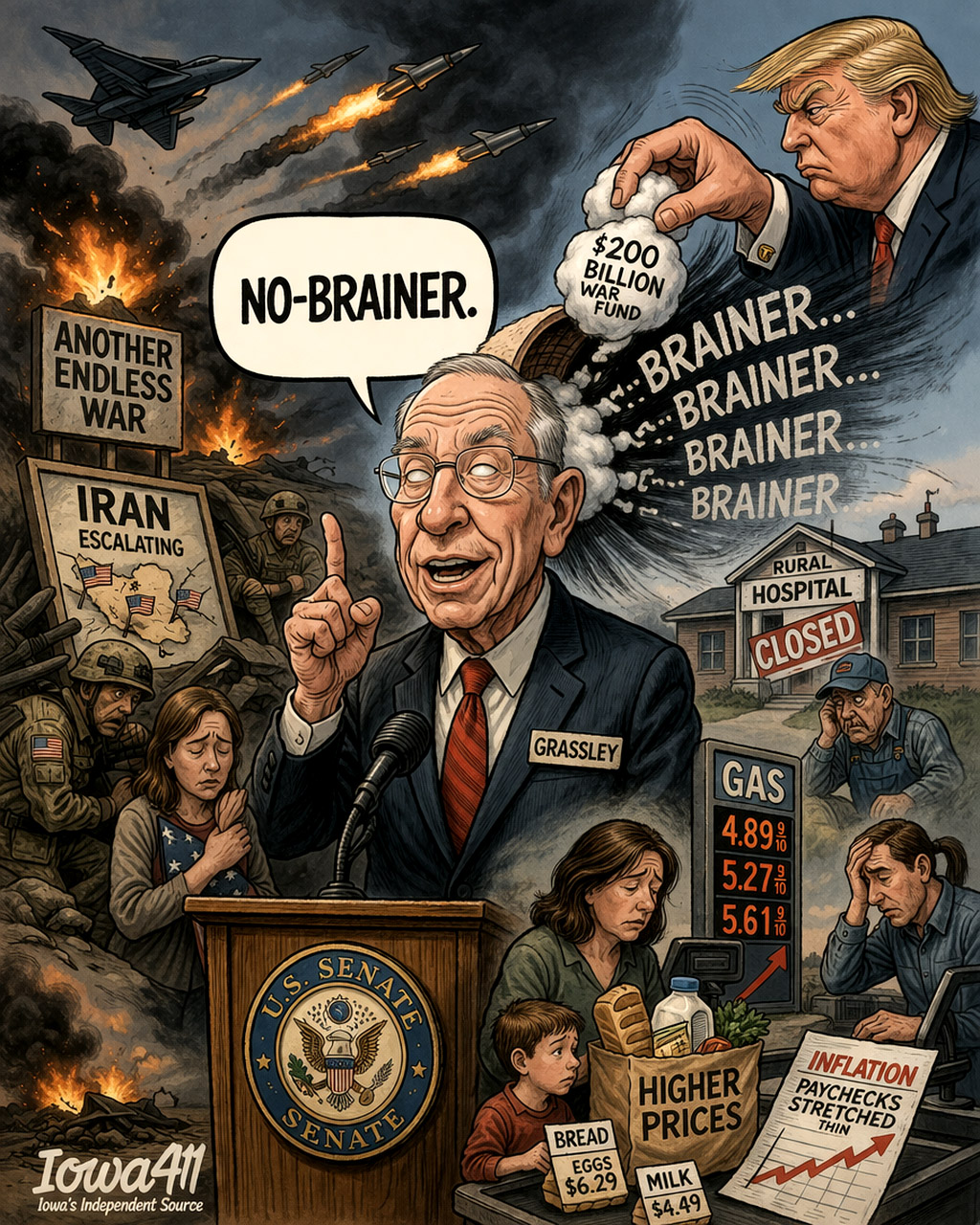
Grassley Backs $200B Iran War Funding as ‘No-Brainer’
Republican U.S. Sen. Chuck Grassley said he supports an expected $200 billion supplemental funding request tied to the ongoing U.S. conflict with Iran, calling the expenditure a “no-brainer” despite concerns raised by some lawmakers over the cost.
Grassley said the funding is necessary to replenish U.S. military supplies, noting that current operations are depleting ammunition and equipment. “You’ve got to replenish that,” he said, emphasizing that the request should cover what has already been used and nothing more.
Reports from major national outlets indicate the Pentagon is preparing a request for approximately $200 billion in additional appropriations, though the proposal has not yet formally reached Congress. Defense Secretary Pete Hegseth said the final amount could change but defended the need for increased funding, stating that resources are required both to sustain current operations and prepare for potential future actions.
President Donald Trump has also supported the funding concept, calling it “a small price to pay” to maintain U.S. military strength. The White House said negotiations with Iran are ongoing but warned of significant escalation if talks fail. Officials stated that additional U.S. troops are being deployed to the region amid heightened tensions.
Iran has rejected an initial U.S. ceasefire proposal and issued a counteroffer through intermediaries. Regional leaders, including Egypt’s foreign minister, have called for continued negotiations and offered to host peace talks.
U.S. Rep. Ashley Hinson said she will review any formal funding request as part of her role on the Appropriations Committee. Hinson expressed support for ensuring the military is properly equipped while also voicing hope for a swift resolution to the conflict.
Our Take
Senator Grassley’s position reflects a long-standing argument in Washington, that maintaining military readiness requires immediate reinvestment when resources are expended. That view is widely shared among defense policymakers, particularly during active conflicts.
However, the scale of the proposed funding, $200 billion, raises broader questions that extend beyond replenishment. With the national debt already at historic levels, lawmakers will likely face increasing pressure to balance defense spending with domestic priorities, including healthcare, infrastructure, and economic stability.
The situation also highlights a familiar tension in U.S. policy between responding decisively to international threats while avoiding prolonged or open-ended military commitments. As negotiations with Iran continue, the ultimate cost, both financial and strategic, will depend heavily on whether diplomacy or escalation defines the next phase of the conflict.
For Iowans, the debate is not only about national security, but also about how federal spending decisions may shape economic conditions at home in the months and years ahead.
Read more about the impact of Grassley’s no-brainer decision.
Breaking With Trump, or Just His Poll Numbers?
Candidates show some dissent over the Iran war, as Grassley and Ernst vote against limiting Trump’s war powersIowa Republican candidates are changing their positions on the Iran war as Election Day approaches. That is news. Calling it a “break with Trump” may be...
Has the UI Center Lost Its Academic Legitimacy?
How Much Academic Legitimacy Does Iowa's Center for Intellectual Freedom Have Left?Eleven scholars recruited to help establish the Center have resigned. Their departure raises a bigger question about what made this politically created institution academic in the first...
Trump Lost His Lawsuit. But Did the Lawsuit Fail?
An Iowa judge threw out Donald Trump’s lawsuit against Gannett and pollster J. Ann Selzer. But after nearly two years of litigation, the case raises a larger question about what it means to “win.”President Donald Trump lost his lawsuit against Gannett (owner of the...
As Iowans Suffer, Grassley Turns His Focus to Transgender Sports
Iowa already prohibits transgender girls from competing in girls' sports. With farmers struggling with diesel prices and families confronting inflation and housing costs, why is Chuck Grassley making the issue a national priority now?Should we be concerned about his...
Would a Ban of Diesel Exports Actually Lower Prices? Likely Not.
It’s More Complicated Than Grassley BelievesSen. Chuck Grassley says the U.S. should stop exporting diesel to bring down prices for farmers and truckers. The oil industry says that could backfire. Its explanation deserves a closer look.Iowa farmers are heading into...
Iowa Corn Growers Ask for Diesel Price Relief as Harvest Begins
Iowa Corn Growers Association asks for diesel relief as harvest kicks offBy Cami KoonsIowa Capital Dispatch As Iowa farmers begin harvesting their crops, corn growers in the state are asking Iowa congressional delegates to help lower the cost of diesel fuel, which has...
Mortgage Rates Hit 7% as War Increases Housing Market Pressure
Higher energy prices, persistent inflation, and rising borrowing costs are making an already difficult housing market even harder for buyers.The New York Times reports that mortgage rates have climbed above 7% for the first time since January 2025, another economic...