A Keystone Guide to Origins, Impacts, and What Comes Next
Why a conflict half a world away is already reshaping Iowa’s economy and could define the next decade
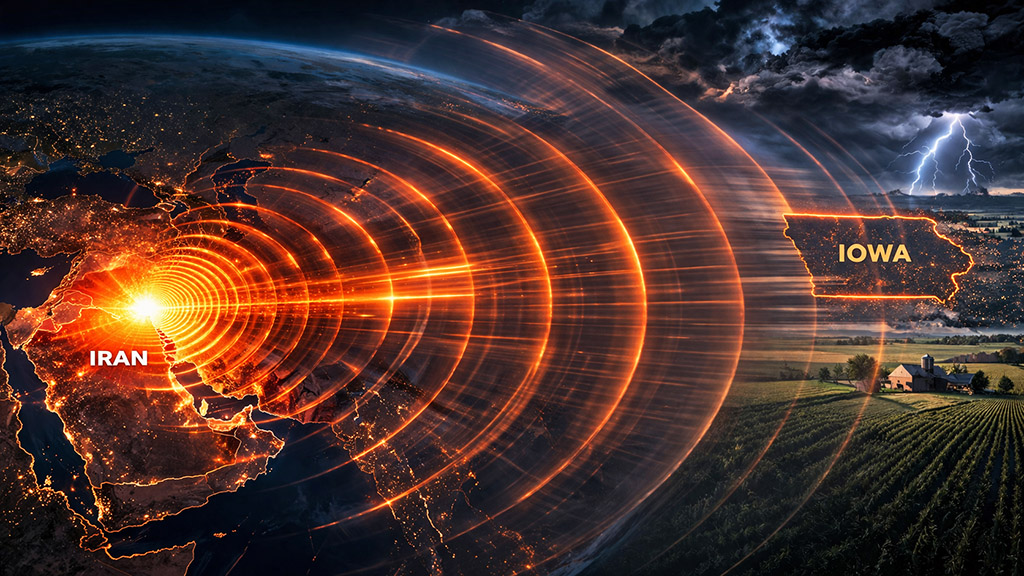
The war with Iran may seem distant. But for Iowans, especially farmers, small businesses, and working families, the effects are already here. Rising fuel prices. Surging fertilizer costs. Market instability. Government spending pressures.
And the reality is that what we are experiencing now may only be the beginning. This page is Iowa411’s central hub for coverage of the Iran War. To not only track daily developments, but the deeper forces shaping its economic, political, and long-term consequences.
How the Iran War Started (And Why It Matters)
The current conflict began in early 2026 following escalating tensions between the United States, Israel, and Iran, culminating in direct military strikes on Iranian targets and rapid regional escalation. It quickly expanded beyond airstrikes into missile exchanges, naval conflict, and economic warfare. Iran responded by restricting access to the Strait of Hormuz, one of the most critical shipping routes in the world. The U.S. has since considered or implemented a naval blockade, raising the risk of further escalation
This is not a contained conflict. It is a global economic event.
Why Iowa Is Feeling the Impact
Iowa sits at the center of one of the most exposed sectors to global disruption.
Agriculture
And the Iran War is hitting agriculture from multiple directions at once.
Fuel Prices: Immediate and Visible
Oil prices have surged above $100 per barrel, and U.S. gasoline prices have climbed above $4 per gallon. For Iowa, this means higher diesel costs for planting and harvest, increased transportation costs, and pressure across the entire supply chain.
Fertilizer Shock: The Hidden Crisis
The Strait of Hormuz is a choke point for natural gas (used to make fertilizer) and nitrogen, phosphorus, and urea inputs. As a result, fertilizer prices have risen 30–40% leading farmers to shift planting decisions away from corn and toward soybeans, which require less fertilizer. This matters because fertilizer is not optional – it is a key determinant of yields.
Farm Income Pressure
Midwestern farmers are already under strain from the impacts of tariffs, global competition, and high land costs. Now, they are joined by rising input costs and uncertain export markets. The result is shrinking margins and rising financial stress.
Inflation and Consumer Impact
The war is feeding directly into inflation. Energy costs are rising, food prices are expected to follow, and consumer confidence is falling. For Iowa families, higher grocery bills and higher cost of living are likely ahead.
The Global Chain Reaction
What makes this conflict different is its reach. The war is disrupting energy markets (oil, gas, diesel), fertilizer supply chains, and global food production. Nearly 50% of key fertilizer exports and 20% of global LNG supply move through the affected region, which causes a cascading effect from energy to fertilizer to farming to food prices, to rising household costs.
What Comes Next: Escalation Risks
This conflict has several potential paths forward. The best case is a short-Term Conflict (Best Case) in the form of a ceasefire or negotiated settlement and a partial reopening of shipping routes to stabilize prices. The next potential path would be a prolonged conflict that would lead to a continued disruption of oil and fertilizer supply, sustained inflation, and ongoing pressure on farmers and consumers.
And the most serious potential path is an expansion of the conflict into a “Forever War” that would involve long-term U.S. military involvement, continued exorbitant levels of defense spending, and structural changes to the global economy. This is the scenario many are quietly concerned about.
Why This Could Become Another “Forever War”
Several factors increase that risk. Among them are the strategic importance of the region, global energy dependence on Middle East supply, a lack of clear resolution pathway, and escalating military and economic measures. History suggests that conflicts like this are easier to start than to end.
What Iowa411 Will Cover Going Forward
This page will serve as a central resource for Iowans, with ongoing coverage of its economic impact, energy and fuel trends, food and agriculture, policy and government response, and war developments.
Focus areas will be the economic Impact on Iowa, particularly on farm input costs and income; local business effects caused by energy and fuel trends, and in particular gasoline and diesel prices; supply disruptions and their impacts on food and agriculture; government policy responses related to federal spending, trade policy, and farm aid programs; and war developments that include diplomatic efforts, escalation risks, and global consequences.
The Bottom Line
The Iran War is not just a foreign policy issue. It is an economic event, an agricultural event, an impactful event on Iowans. Its long-term impact will depend not just on what happens overseas, but on how long it lasts, how far it spreads, and how deeply it reshapes the global economy.
Iowa411 Perspective
We will cover this story not just as news, but also as context. Because understanding this war means understanding why your fuel costs more, why your groceries cost more, why farmers are under pressure, and why the economic outlook is changing.
Energy Prices Push Inflation to 3.7% in September
Gasoline prices surge 34% over the past year as higher living costs continue to squeeze American householdsThe Federal Reserve is considering additional interest rate increases as American households face growing affordability challenges ahead of the midterm...
Putin Calls, and Trump Obeys
After Trump's Call With Putin, Russia Gets Diesel Deal and Ukraine Gets DemandsAfter the call, Trump announced Russian fuel purchases, called for new Ukrainian leadership, and declared a ceasefire neither country had confirmed.Following an October 9 phone conversation...
Trump Says He Cut Diesel Taxes. Read the Fine Print.
What Trump's Red-Dye Diesel Executive Order Actually DoesTrump promised “tax-free” diesel for farmers and truckers. His executive order actually directs Treasury to determine whether it can defer the tax while the forces driving record diesel prices remain largely...
Iowa Legislators at Odds Over the Iran War
Hinson Calls for End to Iran War as Grassley and Ernst Vote to Continue ItIowa Republican Rep. Ashley Hinson is now calling for an “immediate end” to the nearly seven-month Iran war, even as Iowa Republican Sens. Chuck Grassley and Joni Ernst voted Thursday against a...
Breaking With Trump, or Just His Poll Numbers?
Candidates show some dissent over the Iran war, as Grassley and Ernst vote against limiting Trump’s war powersIowa Republican candidates are changing their positions on the Iran war as Election Day approaches. That is news. Calling it a “break with Trump” may be...
Iowa Corn Growers Ask for Diesel Price Relief as Harvest Begins
Iowa Corn Growers Association asks for diesel relief as harvest kicks offBy Cami KoonsIowa Capital Dispatch As Iowa farmers begin harvesting their crops, corn growers in the state are asking Iowa congressional delegates to help lower the cost of diesel fuel, which has...
Mortgage Rates Hit 7% as War Increases Housing Market Pressure
Higher energy prices, persistent inflation, and rising borrowing costs are making an already difficult housing market even harder for buyers.The New York Times reports that mortgage rates have climbed above 7% for the first time since January 2025, another economic...