
How the Iran War Began: A Decision Made Alone, and a Pattern That Continues
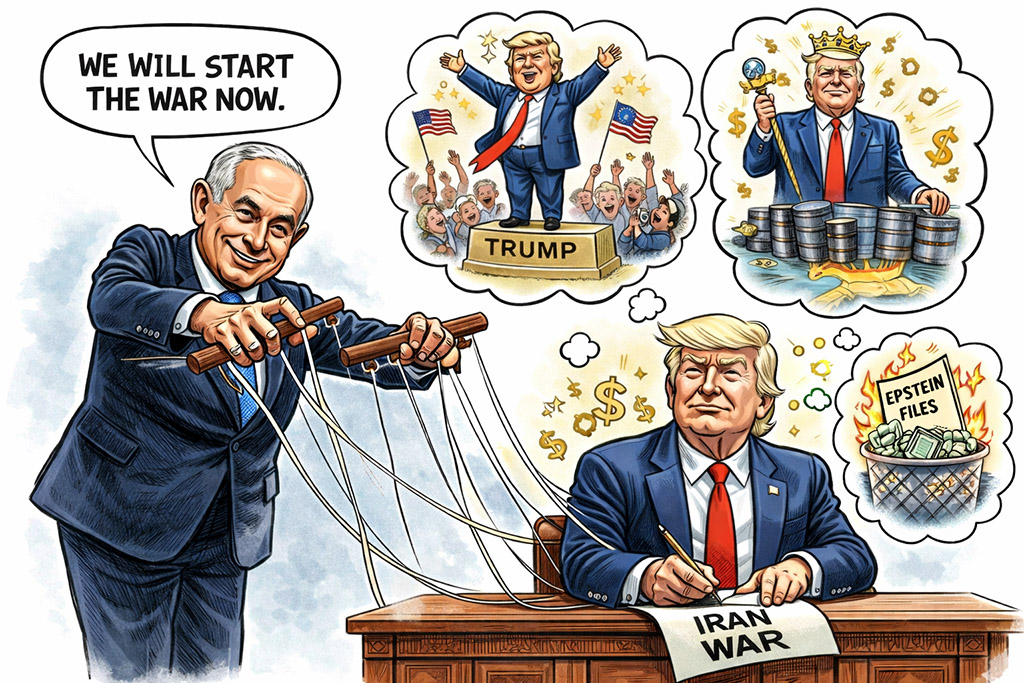
From closed-door origins to shifting public messaging, the same approach defines the war today
The origins of the Iran War are becoming clearer. And what is emerging is not a story of consensus, necessity, or clearly defined strategy. It is a story of a decision made quickly, privately, and largely alone, and a pattern that has continued ever since.
The Moment the War Was Set in Motion
According to detailed reporting, the push toward war accelerated following a high-level presentation by Israeli leadership to the White House.
The pitch was direct, Iran was vulnerable, a joint strike could cripple its military, and regime change was possible. But almost immediately, U.S. intelligence raised serious concerns that key assumptions were described internally as unrealistic, scenarios for regime change were dismissed as implausible, and military leaders warned of escalation risks and resource strain.
One senior official reportedly described parts of the proposal as “farcical.” And yet, the decision moved forward anyway.
Warnings Were Heard, but Not Acted On
The internal process tells an important story. Intelligence officials challenged core assumptions and military leaders outlined risks, including escalation and supply depletion. The vice president warned of economic and geopolitical consequences
But despite these warnings, no one ultimately stopped the decision. Advisers raised concerns but deferred. And in the end, the decision rested on one factor: Presidential “instinct.”
No Broad Consultation at Home or Abroad
Equally significant is how the decision was made. The planning group was intentionally kept small as key cabinet officials were excluded. There was no advance consultation with Congress, nor was there an effort to build allied consensus.
This was not a coalition decision. It was not a legislative decision. It was a unilateral executive decision.
A War Without a Defined Objective
Perhaps the most striking feature of the decision is what was missing; a clear, stable strategic goal. Even within internal discussions regime change was floated but dismissed as unrealistic. Limited military objectives were considered but not clearly defined as the end state. Risks were acknowledged but not tied to a long-term plan.
As a result, the decision to proceed with the war was made without a consistent answer to the question “What does success look like?”
From Origins to Messaging: The Same Pattern
What began as a closed, instinct-driven decision has continued in the way the administration explains the war to the public.
Since the conflict began, the messaging has shifted repeatedly between preemption and urgency, regime change, imminent threat claims, nuclear prevention, and tactical military success. Each explanation has been presented at different moments, but none has remained consistent.
Tactics Replace Strategy
More recently, the messaging has focused on claims like “We destroyed their navy,” “We eliminated their capabilities,” and “We delivered decisive strikes.” These are descriptions of actions taken. They do not explain why the war was necessary or what it is intended to achieve, and an attempt to obscure strategic clarity with tactical successes.
A Continued Reluctance to Inform or Partner
The most concerning pattern is not just how the war began, but how it continues. The administration has shown limited transparency with Congress, minimal engagement with allies, little acknowledgment of economic consequences, and continued reliance on internal decision-making over collaboration and cooperation.
The same approach that led to the war is shaping its execution.
The Cost of Acting Alone
This approach has real consequences.
Economic Impact Without Accountability
Iowans are already experiencing rising fuel costs, increased fertilizer prices, and a higher cost of living. Yet there has been no clear acknowledgment of these tradeoffs and no defined analysis or explanation of the long-term cost.
Increased Risk of Prolonged Conflict
Without a defined objective, exit strategies become unclear, goals shift over time and conflicts expand beyond their original scope. This is how “forever wars” begin.
Erosion of Trust
When decisions are made privately, explained inconsistently, and not shared openly, public confidence declines.
The Bottom Line
The origins of the Iran War reveal a consistent pattern. A decision driven by instinct rather than consensus, warnings raised but not acted upon, no clearly defined strategic objective, and limited consultation with Congress or allies. That same pattern continues today.
Iowa411 Perspective
Wars are not just defined by how they are fought, but by how they begin.
And in this case, the war began without clear consensus, it continues without clear strategy, and it is being explained without consistent justification.
We may win individual battles. But without a defined goal, a shared understanding, and a clear path forward we risk losing the larger outcome.
Conclusion
The most important unanswered question is still the simplest. Why was this war necessary, and what is it meant to achieve?
Until that question is clearly and consistently answered the pattern that started the war will continue to define it.
Iowa’s Fiscal Picture Improves?
The $1.1 Billion Budget Gap Tells Another StoryA modest increase in projected revenue does little to change Iowa's underlying budget problem, or the economic growth Republicans are counting on to solve it.Iowa's fiscal outlook is improving. At least, that's how Gov....
Energy Prices Push Inflation to 3.7% in September
Gasoline prices surge 34% over the past year as higher living costs continue to squeeze American householdsThe Federal Reserve is considering additional interest rate increases as American households face growing affordability challenges ahead of the midterm...
Lahn’s Running Mate Receives $540,000 Mystery Loan
The money is from an undisclosed LLC that had formed a week earlierA mysterious lender, a newly formed Illinois company, and a substantial private loan raise questions about the finances of Zach Lahn's running mate.Three weeks after Republican gubernatorial candidate...
Elon Musk’s Millions Are Helping Finance Iowa’s U.S. Senate Race
$31 million in Musk's super-PAC contributions have been spent to support the Ashley Hinton campaignTwo political organizations receiving $234 million from the billionaire since July have spent nearly $31 million supporting Ashley Hinson or opposing Josh Turek in...
Glyphosates Not Mentioned at Hinson Water Quality Event
Hinson Promises to Stand Up to Trump, but What About His Support for Monsanto's Roundup?After pledging to challenge Trump on policies harmful to Iowa, Hinson hosts a water-quality and cancer roundtable without addressing his administration's support for glyphosate.On...
Johnson Campaigns for Miller-Meeks Before GOP PAC Pulls Ads
Four Days After Johnson Campaigns for Miller-Meeks, GOP Congressional PAC Cuts FundingThe House speaker appeared with the Iowa Republican on Friday. By Tuesday, a major political organization aligned with his leadership was redirecting planned campaign spending...
Top Republican PACs Pull Funding from Miller-Meeks
Major Republican super PACs withdraw planned advertising support for Iowa Rep. Mariannette Miller-Meeks as they redirect funds to other House racesNational GOP groups redirect campaign spending to other House races, leaving Iowa's 1st District incumbent without...