
Iowa Budget Relies on Reserves as Tax Cuts Continue to Reduce Revenue
State Spending Grows as Revenue Falls Short
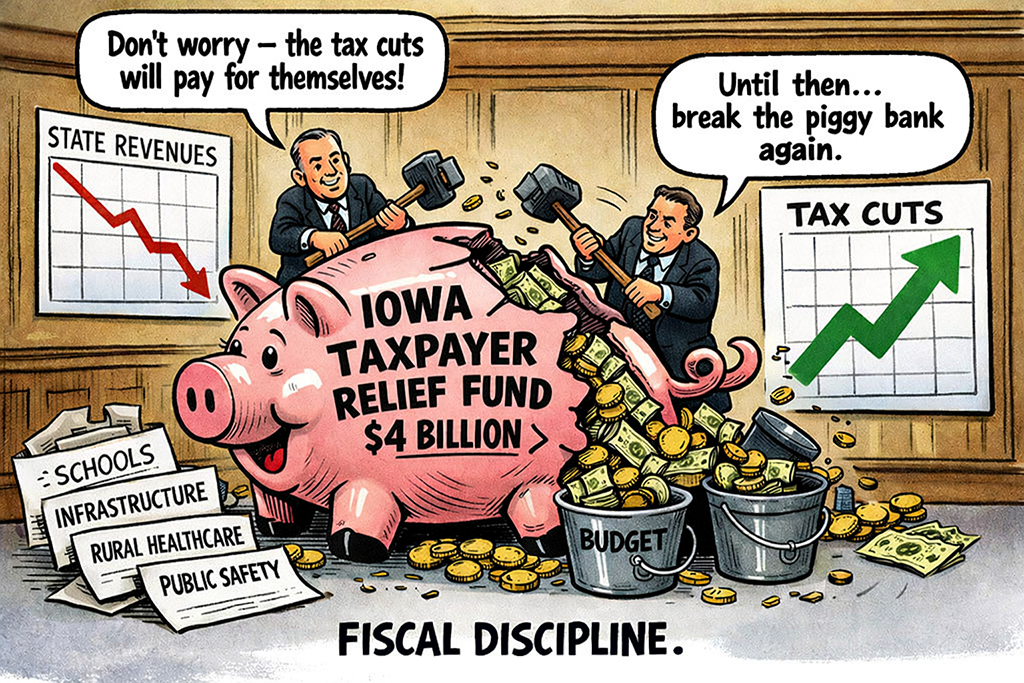
Iowa lawmakers have approved a $9.65 billion state budget for Fiscal Year 2027, representing a modest 1.43% increase over the current year’s spending. However, the state expects to collect only $8.47 billion in revenue, leaving a gap of approximately $1.2 billion that will be covered by transfers from Iowa’s Taxpayer Relief Fund and budget surplus reserves.
Republican leaders have long argued that the state’s reserves were intended to help manage periods of lower revenue as Iowa’s income tax reductions took effect. Democrats, however, warn that the state is increasingly relying on one-time funds to maintain spending levels while revenues continue to decline.
Policy Priorities
The budget continues several major policy priorities of Gov. Kim Reynolds and the Republican-controlled Legislature.
Among the largest investments is the state’s Education Savings Account (ESA) program, which provides public funds for private school tuition and expenses. Both public schools and Education Savings Accounts received a 2% increase in per-student funding. However, the voucher program’s total cost is projected to reach approximately $334 million next year and will continue to grow as participation increases, while public school districts continue to face rising operational costs and enrollment challenges.
Higher education received largely flat funding, while the Board of Regents approved a 3% tuition increase for students attending Iowa’s public universities. Meanwhile, lawmakers cut $1 million from adult education and literacy programs serving workforce and English-language learners.
Investments to Restrict Assistance Eligibility
The budget also dedicates millions of dollars toward public assistance eligibility verification systems, Medicaid work requirement implementation, and additional restrictions on public benefits, while eliminating funding for the Volunteer Physician Network, which provides free medical care to uninsured and underinsured Iowans.
Other notable expenditures include the creation of Iowa’s first dedicated business court, and additional funding for corrections and law enforcement, water quality projects, workforce training facilities at community colleges, and infrastructure improvements at state parks.
State Reserves Shrinking
State reserves remain substantial, but they are shrinking. The Taxpayer Relief Fund is projected to decline from $3.11 billion to $2.57 billion, while the state’s surplus balance is expected to fall from $1.52 billion to approximately $870 million by the end of Fiscal Year 2027.
Our Take
The most important question surrounding Iowa’s new budget is not where lawmakers are spending money today, but whether the state’s current fiscal model is sustainable.
The Republican majority argues that Iowa’s tax cuts are working as intended and that reserve funds were specifically accumulated to bridge periods of lower revenue. Critics counter that the state is spending down savings to maintain services while reducing the revenue needed to support them long-term.
The budget also reveals clear policy priorities. Public funding for private-school vouchers continues to expand, while public universities receive flat support and adult literacy programs face cuts. New investments are directed toward public assistance eligibility enforcement, business courts, and other administrative systems, while some direct service programs for vulnerable Iowans lose funding.
Misinvestment of Technology Funding?
One of the clearest policy signals in this budget is where Iowa chooses to invest its technology dollars. The state is spending millions to build more sophisticated systems for screening, monitoring, and restricting access to public assistance programs. Whether viewed as fiscal responsibility or bureaucratic gatekeeping depends on one’s perspective. But the direction is unmistakable. Iowa is investing heavily to determine who should not receive benefits while making comparatively modest investments in expanding direct assistance to those who do.
Shifting Budget Burden to Local Governments
Another issue that deserves closer attention is the interaction between state tax policy and local government finances. Recent property tax changes may reduce the ability of cities, counties, and school districts to raise revenue locally. While marketed as tax relief, the practical effect may be to shift financial pressure from the state budget to local governments, forcing difficult decisions on schools, public safety, infrastructure, and community services.
The larger pattern appears to be a continued shift toward lower state taxes, increased use of reserves, expanded support for private educational options, and greater reliance on local governments and public institutions to absorb future financial pressures.
Whether that strategy proves sustainable will likely depend on Iowa’s economy, future tax collections, and how long reserve funds can continue to fill the gap between revenues and spending.
Breaking With Trump, or Just His Poll Numbers?
Candidates show some dissent over the Iran war, as Grassley and Ernst vote against limiting Trump’s war powersIowa Republican candidates are changing their positions on the Iran war as Election Day approaches. That is news. Calling it a “break with Trump” may be...
Has the UI Center Lost Its Academic Legitimacy?
How Much Academic Legitimacy Does Iowa's Center for Intellectual Freedom Have Left?Eleven scholars recruited to help establish the Center have resigned. Their departure raises a bigger question about what made this politically created institution academic in the first...
Trump Lost His Lawsuit. But Did the Lawsuit Fail?
An Iowa judge threw out Donald Trump’s lawsuit against Gannett and pollster J. Ann Selzer. But after nearly two years of litigation, the case raises a larger question about what it means to “win.”President Donald Trump lost his lawsuit against Gannett (owner of the...
As Iowans Suffer, Grassley Turns His Focus to Transgender Sports
Iowa already prohibits transgender girls from competing in girls' sports. With farmers struggling with diesel prices and families confronting inflation and housing costs, why is Chuck Grassley making the issue a national priority now?Should we be concerned about his...
Would a Ban of Diesel Exports Actually Lower Prices? Likely Not.
It’s More Complicated Than Grassley BelievesSen. Chuck Grassley says the U.S. should stop exporting diesel to bring down prices for farmers and truckers. The oil industry says that could backfire. Its explanation deserves a closer look.Iowa farmers are heading into...
Iowa Corn Growers Ask for Diesel Price Relief as Harvest Begins
Iowa Corn Growers Association asks for diesel relief as harvest kicks offBy Cami KoonsIowa Capital Dispatch As Iowa farmers begin harvesting their crops, corn growers in the state are asking Iowa congressional delegates to help lower the cost of diesel fuel, which has...
Mortgage Rates Hit 7% as War Increases Housing Market Pressure
Higher energy prices, persistent inflation, and rising borrowing costs are making an already difficult housing market even harder for buyers.The New York Times reports that mortgage rates have climbed above 7% for the first time since January 2025, another economic...