Where is the line between enforcing election law and shaping public perception?
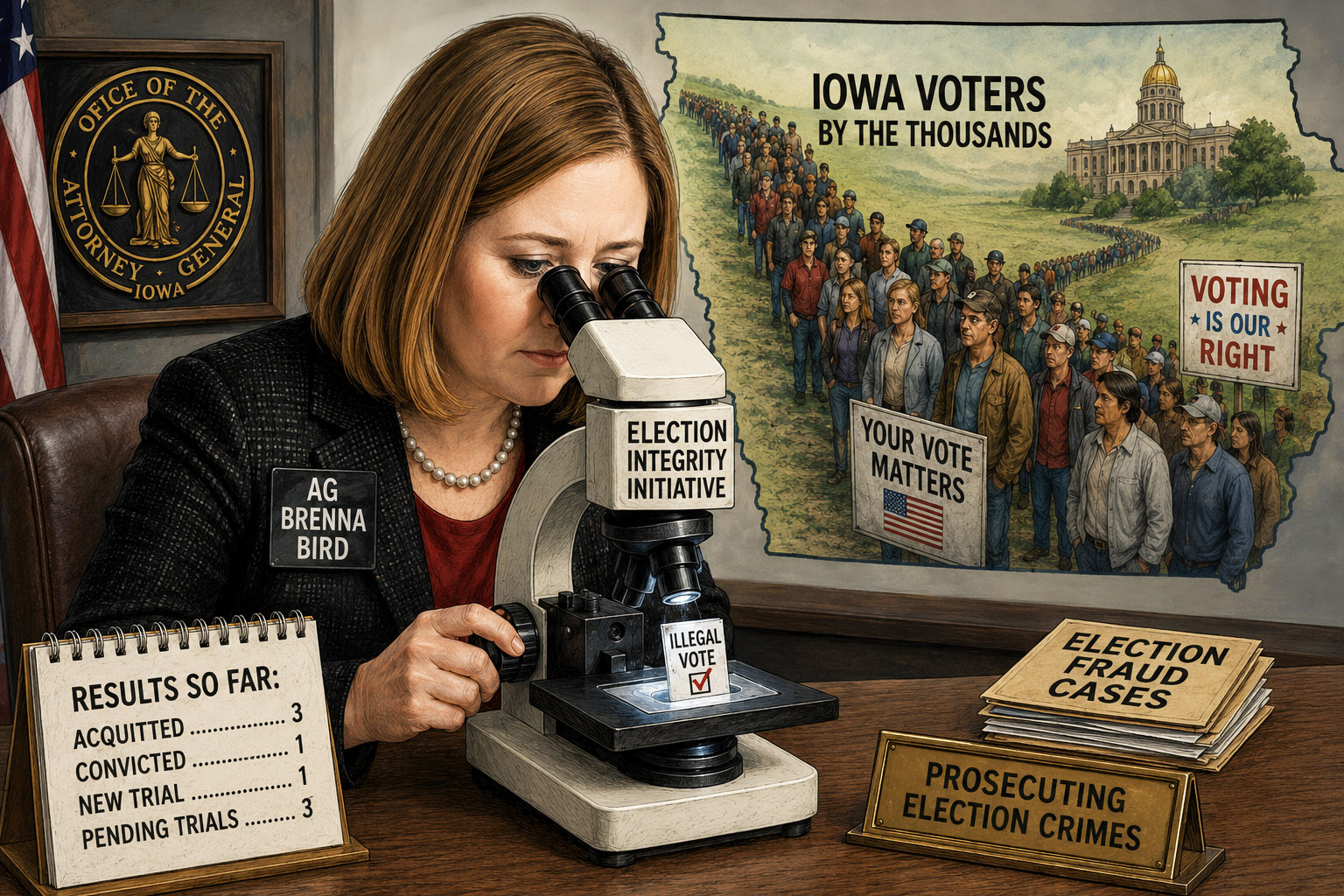
When Does Election Integrity Become a Political Issue?
One of the more interesting questions emerging in Iowa politics isn’t whether illegal voting should be prosecuted. Almost everyone agrees that it should.
The more difficult question is why election integrity continues to occupy such a prominent place in political campaigns when documented cases remain relatively rare.
A national made-up issue
That question surfaced again yesterday during NBC’s Meet the Press. Kansas Senator Roger Marshall defended continued election integrity legislation even after acknowledging there is little evidence that illegal voting has affected election outcomes.
Instead, he emphasized something different. Public perception. “The perception here is reality,” Marshall said. That statement may explain much of today’s political debate over elections.
Obfuscation, Diversion, Non Sequiturs and Outright Lies
A bad solution looking for a problem
Election Integrity
Election integrity efforts increasingly serve two purposes. One is enforcing election law. The other is reassuring voters that elections are secure.
Those goals often overlap. Sometimes they do not.
In Iowa, Attorney General Brenna Bird has made election integrity one of the defining priorities of her administration, continuing to bring criminal prosecutions despite mixed courtroom outcomes.
Two sides
Supporters argue that every illegal vote matters and that consistent enforcement deters future violations. Critics question whether continued emphasis on relatively rare cases risks reinforcing public fears that are not supported by the broader evidence.
Neither side disputes that illegal voting should be prosecuted. The debate increasingly centers on something else.
How much attention should isolated cases receive relative to the overall integrity of Iowa’s elections? That question is likely to remain politically significant as candidates continue making election security a central campaign issue in 2026.
Principles for confidence in elections
One thing is certain. Confidence in elections depends on two equally important principles. Laws must be enforced, and public discussions should remain proportional to the evidence.
Finding the proper balance between those two goals may become one of the defining election administration challenges of the coming decade.
Breaking With Trump, or Just His Poll Numbers?
Candidates show some dissent over the Iran war, as Grassley and Ernst vote against limiting Trump’s war powersIowa Republican candidates are changing their positions on the Iran war as Election Day approaches. That is news. Calling it a “break with Trump” may be...
Has the UI Center Lost Its Academic Legitimacy?
How Much Academic Legitimacy Does Iowa's Center for Intellectual Freedom Have Left?Eleven scholars recruited to help establish the Center have resigned. Their departure raises a bigger question about what made this politically created institution academic in the first...
Trump Lost His Lawsuit. But Did the Lawsuit Fail?
An Iowa judge threw out Donald Trump’s lawsuit against Gannett and pollster J. Ann Selzer. But after nearly two years of litigation, the case raises a larger question about what it means to “win.”President Donald Trump lost his lawsuit against Gannett (owner of the...
As Iowans Suffer, Grassley Turns His Focus to Transgender Sports
Iowa already prohibits transgender girls from competing in girls' sports. With farmers struggling with diesel prices and families confronting inflation and housing costs, why is Chuck Grassley making the issue a national priority now?Should we be concerned about his...
Would a Ban of Diesel Exports Actually Lower Prices? Likely Not.
It’s More Complicated Than Grassley BelievesSen. Chuck Grassley says the U.S. should stop exporting diesel to bring down prices for farmers and truckers. The oil industry says that could backfire. Its explanation deserves a closer look.Iowa farmers are heading into...