
Iowa GOP’s Push for “Intellectual Freedom” Is Neither Intellectual nor Free
Analysis
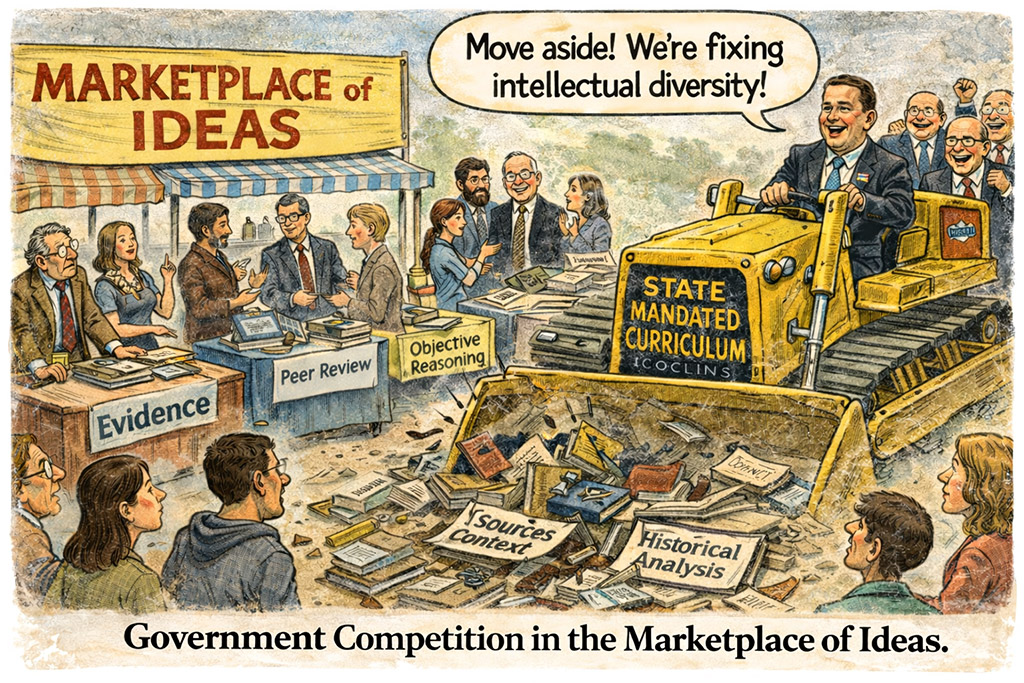
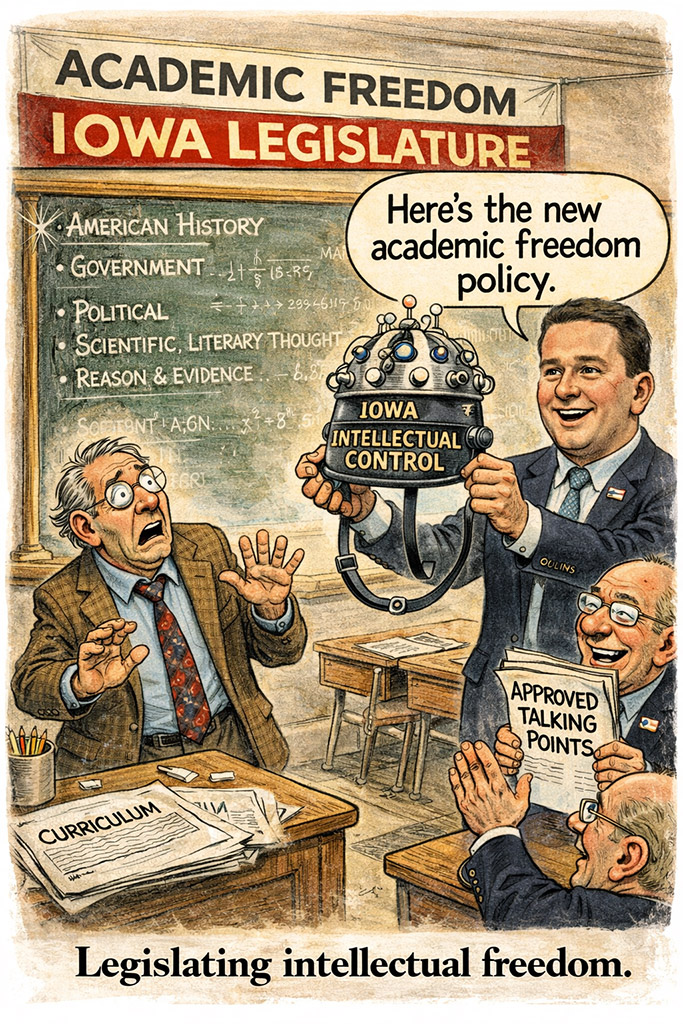
When politicians dictate what universities must teach, the result is not intellectual freedom, it is anti-intellectual political control of ideas.
In recent legislative sessions, Iowa lawmakers have repeatedly claimed they are defending “intellectual freedom” at the state’s universities. The phrase sounds admirable. In a democracy, the free exchange of ideas is essential to education, scholarship, and civic life.
But the policies currently advancing through the Iowa Legislature do not expand intellectual freedom. They restrict it.
Iowa GOP Attempts to Thwart Traditional Academic Principles
Universities have long operated under a basic principle: ideas are evaluated through evidence, research, peer review, and open debate. Scholars test claims against facts and methodology, and over time the strongest arguments gain acceptance while weaker ones are challenged or discarded. This process is not ideological; it is the foundation of academic inquiry.
Legislation now moving through the Iowa House takes a very different approach. Bills directing universities to reshape core curricula, restricting certain fields of study, and empowering political authorities to investigate academic content represent an attempt to supervise scholarship from the top down.
Dictating Ideas Is Intervention, Not Freedom
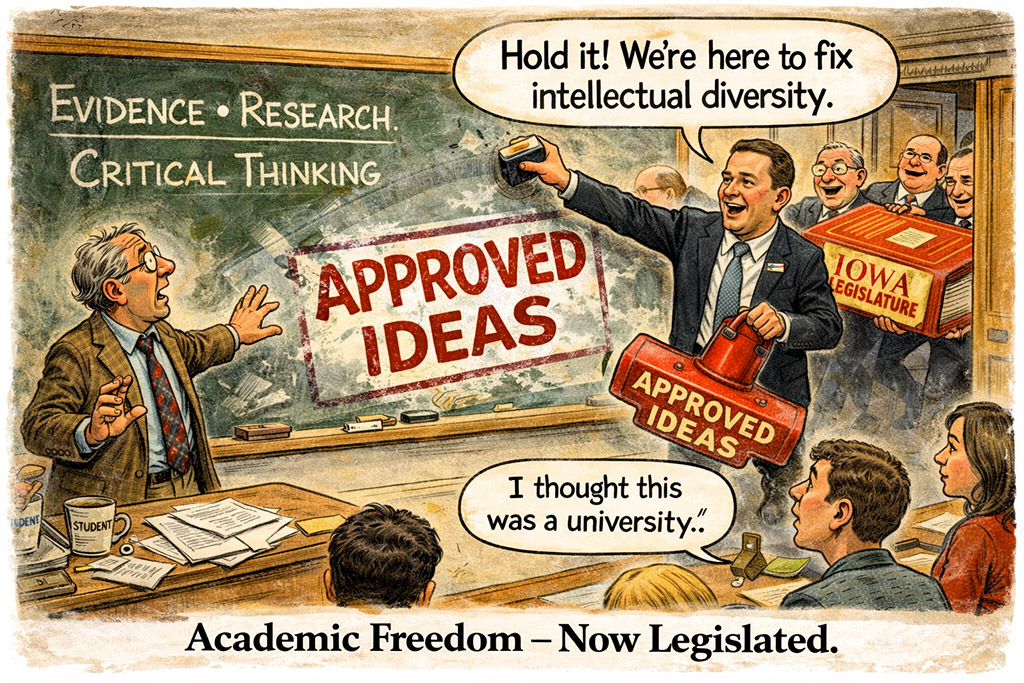
Rather than allowing universities to determine academic standards through faculty expertise and research, lawmakers are increasingly attempting to dictate what ideas may be emphasized or excluded. That is not intellectual freedom. It is political intervention in academic thought.
Supporters of these measures argue they are correcting a lack of “intellectual diversity” on campus. But intellectual diversity does not mean governments imposing viewpoints through legislation. Academic ideas gain influence when they are supported by evidence, withstand criticism, and contribute meaningfully to scholarship.
The legislature’s approach substitutes political preference for academic judgment.
Ironically, the result is likely to harm Iowa’s universities rather than strengthen them. Institutions that are perceived as subject to political control risk damaging their academic reputation, their ability to attract faculty, and their appeal to prospective students.
Allow Existing Academic Freedom to Thrive
Higher education thrives when scholars are free to question prevailing ideas, test new theories, and debate controversial topics without political interference.
The moment government officials begin deciding which ideas must be taught, or which ideas must disappear, the principle of intellectual freedom begins to erode.
Iowa’s universities should remain places where ideas succeed or fail through evidence and debate. Not through legislation.
The current push to legislate “intellectual freedom” also fits into a broader pattern of political micromanagement of education in Iowa. In recent years, lawmakers have moved to rewrite K-12 social studies standards, restrict certain topics from classroom discussion, police diversity programs, and now reshape university curricula.
Long-Term Costs of Political Thought Control
The efforts reveal something far different from a commitment to intellectual freedom. They reflect a growing willingness by political authorities to decide what ideas should be taught and which ones should be discouraged.
That approach may produce short-term political victories, but it carries a long-term cost. Universities thrive on independent inquiry, and states with respect for academic autonomy tend to attract the strongest faculty, the best students, and the most innovative research.
And states that substitute political direction for scholarly judgment risk achieving the opposite.
Intellectual freedom is not strengthened by government control of ideas. It is weakened by it.
Breaking With Trump, or Just His Poll Numbers?
Candidates show some dissent over the Iran war, as Grassley and Ernst vote against limiting Trump’s war powersIowa Republican candidates are changing their positions on the Iran war as Election Day approaches. That is news. Calling it a “break with Trump” may be...
Has the UI Center Lost Its Academic Legitimacy?
How Much Academic Legitimacy Does Iowa's Center for Intellectual Freedom Have Left?Eleven scholars recruited to help establish the Center have resigned. Their departure raises a bigger question about what made this politically created institution academic in the first...
Trump Lost His Lawsuit. But Did the Lawsuit Fail?
An Iowa judge threw out Donald Trump’s lawsuit against Gannett and pollster J. Ann Selzer. But after nearly two years of litigation, the case raises a larger question about what it means to “win.”President Donald Trump lost his lawsuit against Gannett (owner of the...
As Iowans Suffer, Grassley Turns His Focus to Transgender Sports
Iowa already prohibits transgender girls from competing in girls' sports. With farmers struggling with diesel prices and families confronting inflation and housing costs, why is Chuck Grassley making the issue a national priority now?Should we be concerned about his...
Would a Ban of Diesel Exports Actually Lower Prices? Likely Not.
It’s More Complicated Than Grassley BelievesSen. Chuck Grassley says the U.S. should stop exporting diesel to bring down prices for farmers and truckers. The oil industry says that could backfire. Its explanation deserves a closer look.Iowa farmers are heading into...
Iowa Corn Growers Ask for Diesel Price Relief as Harvest Begins
Iowa Corn Growers Association asks for diesel relief as harvest kicks offBy Cami KoonsIowa Capital Dispatch As Iowa farmers begin harvesting their crops, corn growers in the state are asking Iowa congressional delegates to help lower the cost of diesel fuel, which has...
Mortgage Rates Hit 7% as War Increases Housing Market Pressure
Higher energy prices, persistent inflation, and rising borrowing costs are making an already difficult housing market even harder for buyers.The New York Times reports that mortgage rates have climbed above 7% for the first time since January 2025, another economic...