
What Americans Are Learning About Plans for a Post-Election Attack on Iran
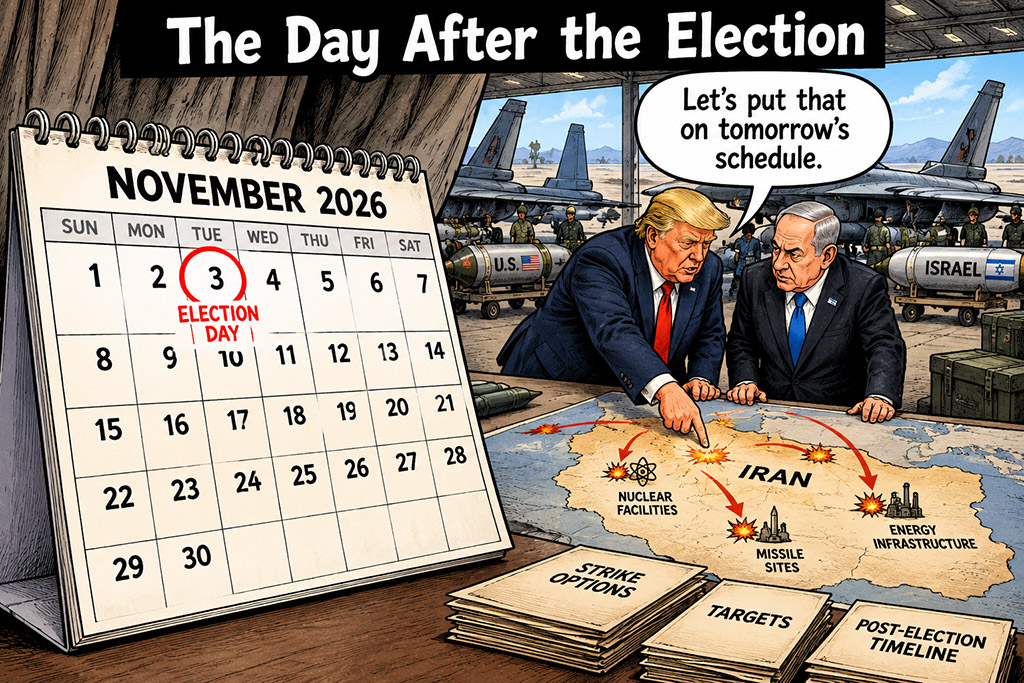
U.S. and Israeli military preparations for possible renewed strikes against Iran raise questions about election timing, foreign policy, and the economic consequences of another escalation.
The United States and Israel are preparing for the possibility of another round of military attacks against Iran shortly after the November 3 U.S. midterm elections, according to reporting by The New York Times and other news organizations. The preparations reportedly include potential strikes against Iranian nuclear facilities, missile installations, and energy infrastructure. The proposed operation could renew a conflict that has already disrupted international energy markets and increased economic uncertainty.
The timing is attracting particular attention because both countries are approaching national elections.
Why the Timing Matters
Israel holds parliamentary elections on October 27, followed by the U.S. midterm elections on November 3. According to reporting by the Financial Times, Israeli Prime Minister Benjamin Netanyahu had considered renewing strikes earlier in October, but President Donald Trump opposed resuming major fighting before the American elections. That reported sequence raises questions about whether electoral considerations are influencing the timing of military decisions.
The preparations may also serve a diplomatic purpose. The threat of renewed military action could be intended to pressure Iran into accepting restrictions on its nuclear program. Either way, the reports provide Americans with information about a potentially consequential foreign-policy decision just before they go to the polls.
The Economic Consequences Could Reach American Households
The United States and Israel launched major military operations against Iran in February, triggering Iranian retaliation and disrupting shipping through the Strait of Hormuz, one of the world’s most important routes for oil shipments.
The conflict contributed to rising energy prices, higher transportation costs, and uncertainty in international markets. Another round of attacks could intensify those pressures, particularly if Iranian energy infrastructure is targeted or Iran retaliates against oil facilities and shipping routes elsewhere in the region.
For American households, renewed disruptions could mean additional pressure on gasoline prices and consumer costs. And for agricultural states like Iowa, higher energy prices can also increase the costs of farming, fertilizer production, manufacturing, and transporting agricultural products.
The extent of those effects would depend on the scope and duration of any renewed fighting.
What Comes After the Elections?
The administration maintains that military and economic pressure can compel Iran to accept restrictions on its nuclear activities. Critics of further military action question whether additional strikes would achieve those objectives or risk another cycle of retaliation.
The reports leave several important questions unanswered: What would another military operation accomplish? How would Iran respond? What economic consequences should Americans anticipate? And how much influence are election calendars having on decisions about renewed fighting?
Perhaps the most significant development is that these questions are being raised before Americans vote, rather than after another military operation has begun. The public now has an opportunity to examine the possibility of renewed conflict, its potential costs, and the foreign-policy decisions that may follow the elections.
Miller-Meeks Claims Credit for Unfinanced Iowa Steel Mill
Campaign follows the withdrawal of advertising support from a major Republican super PACDays after a major Republican super PAC withdrew advertising support, the Iowa congresswoman launched a campaign ad celebrating 1,700 jobs from a steel project that has yet to...
Iowa’s Fiscal Picture Improves?
The $1.1 Billion Budget Gap Tells Another StoryA modest increase in projected revenue does little to change Iowa's underlying budget problem, or the economic growth Republicans are counting on to solve it.Iowa's fiscal outlook is improving. At least, that's how Gov....
Energy Prices Push Inflation to 3.7% in September
Gasoline prices surge 34% over the past year as higher living costs continue to squeeze American householdsThe Federal Reserve is considering additional interest rate increases as American households face growing affordability challenges ahead of the midterm...
Lahn’s Running Mate Receives $540,000 Mystery Loan
The money is from an undisclosed LLC that had formed a week earlierA mysterious lender, a newly formed Illinois company, and a substantial private loan raise questions about the finances of Zach Lahn's running mate.Three weeks after Republican gubernatorial candidate...
Elon Musk’s Millions Are Helping Finance Iowa’s U.S. Senate Race
$31 million in Musk's super-PAC contributions have been spent to support the Ashley Hinton campaignTwo political organizations receiving $234 million from the billionaire since July have spent nearly $31 million supporting Ashley Hinson or opposing Josh Turek in...
Glyphosates Not Mentioned at Hinson Water Quality Event
Hinson Promises to Stand Up to Trump, but What About His Support for Monsanto's Roundup?After pledging to challenge Trump on policies harmful to Iowa, Hinson hosts a water-quality and cancer roundtable without addressing his administration's support for glyphosate.On...
Johnson Campaigns for Miller-Meeks Before GOP PAC Pulls Ads
Four Days After Johnson Campaigns for Miller-Meeks, GOP Congressional PAC Cuts FundingThe House speaker appeared with the Iowa Republican on Friday. By Tuesday, a major political organization aligned with his leadership was redirecting planned campaign spending...