
Cheaper Beef for Consumers, Lower Prices for Ranchers: Is Trump’s Import Plan Working?
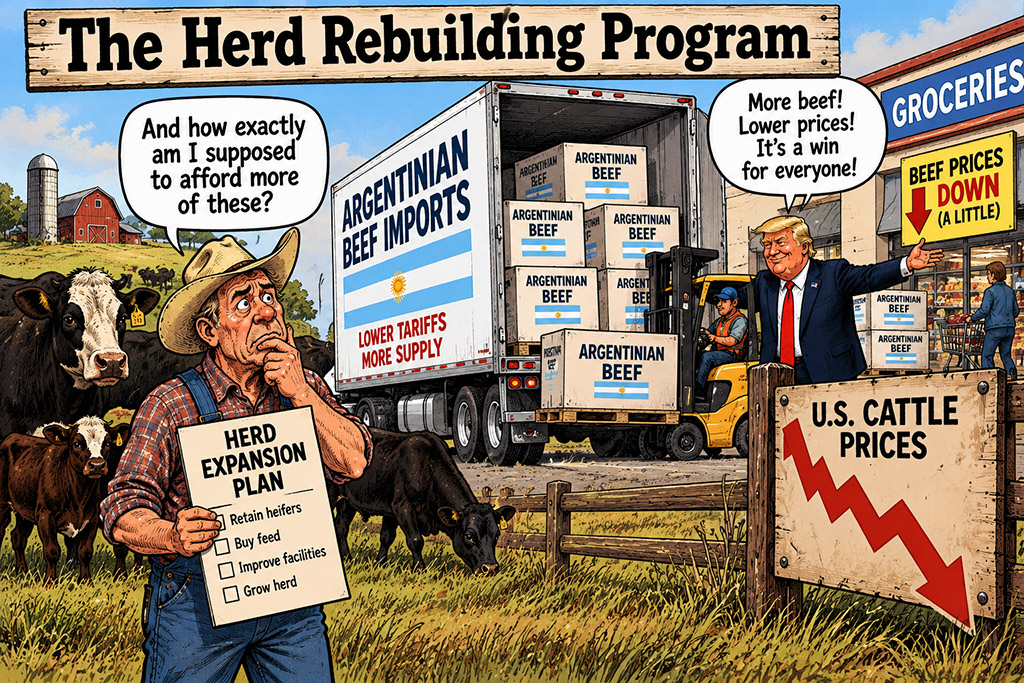
The administration hopes imported beef will lower grocery prices. American cattle producers warn the policy could undermine efforts to rebuild the nation’s shrinking cattle herd.
President Donald Trump’s effort to lower beef prices by increasing foreign imports is producing mixed results. Early reports indicate modest savings for consumers, while some American cattle producers are experiencing substantially lower prices for their animals. The administration argues that importing additional beef will help families struggling with high grocery bills.
Cattle producers counter that the policy could discourage the very investment needed to restore America’s domestic beef supply. And in Iowa, those concerns are particularly significant.
More Foreign Beef, Lower Grocery Prices?
In February, Trump authorized an additional 80,000 metric tons of lean beef imports from Argentina. In August, he expanded the effort, allowing up to 300,000 additional metric tons of beef from other eligible countries to enter the United States at reduced tariffs over three months. The imported lean beef is primarily used in ground beef production.
The administration promoted the August initiative as a way to bring down consumer prices while giving American ranchers time to rebuild the nation’s cattle herd, which has fallen to its lowest level in approximately 75 years. But the early results have been limited. According to a Texas A&M University analysis, approximately 37,500 metric tons of beef entered under the expanded import program during September, less than 40% of the month’s authorized amount.
Retail ground beef prices have declined modestly, but the savings are far smaller than the administration’s stated goal of substantially reducing imported beef prices.
Ranchers Are Seeing a Different Picture
While consumers have experienced relatively small price reductions, cattle producers have reported much larger declines in prices for certain categories of cattle used in ground-beef production. An October analysis by agricultural advocacy organization Farm Action found that retail ground-beef prices declined approximately 1.9% during the first month of expanded imports, while prices for two categories of cattle fell by approximately 12% to 14%.
Those figures do not establish that imported beef caused the entire decline. Seasonal market conditions and other factors also influence cattle prices. Nevertheless, the disparity raises an important economic concern: If ranchers receive less for their cattle, will they have sufficient incentive to expand their herds?
Rebuilding cattle supplies takes years. Producers must retain breeding animals, raise calves, and absorb substantial feed, land, and operating costs before additional beef reaches consumers. And lower cattle prices could make those investments less attractive.
Iowa Cattle Producers Push Back
The Iowa Cattlemen’s Association has criticized the administration’s import policy. Association President Craig Moss described the August announcement as extremely disappointing, warning that additional imports could create market volatility and discourage producers from rebuilding their herds.
The criticism has crossed political lines. Iowa Republican Rep. Ashley Hinson publicly disagreed with Trump’s decision to suspend tariffs on additional beef imports, while Democratic Senate candidate Josh Turek also criticized the policy’s potential consequences for farmers.
The concerns reflect an economic dilemma facing cattle-producing states: Americans want affordable beef, but domestic producers need prices that support continued production and expansion.
A Short-Term Fix With Long-Term Questions
The administration’s approach rests on a straightforward economic principle: Increasing available supplies can help reduce prices. But beef production is not a market that can quickly expand or contract. Rebuilding the domestic cattle herd requires years of investment, and producers make those decisions based partly on the prices they expect to receive. That creates a potential conflict between lowering consumer prices today and encouraging domestic production tomorrow.
The early evidence is not sufficient to determine whether the import policy will ultimately succeed. Consumer savings have been modest, import volumes have fallen short of the expanded allowances, and producers remain concerned about the effect on cattle prices.
The question is whether a policy intended to make beef more affordable today could make it harder for American ranchers to produce more beef tomorrow. For Iowa’s cattle producers, and the consumers who depend on them, the answer will matter long after the current import program ends.
Sources
The White House’s February 6 and August 26 beef-import proclamations; Iowa Capital Dispatch, August 21; The Gazette reporting on Iowa ranchers; and October reporting on producer concerns and beef prices.
After the Elections: Planning Another Attack on Iran
What Americans Are Learning About Plans for a Post-Election Attack on IranU.S. and Israeli military preparations for possible renewed strikes against Iran raise questions about election timing, foreign policy, and the economic consequences of another escalation.The...
Miller-Meeks Claims Credit for Unfinanced Iowa Steel Mill
Campaign follows the withdrawal of advertising support from a major Republican super PACDays after a major Republican super PAC withdrew advertising support, the Iowa congresswoman launched a campaign ad celebrating 1,700 jobs from a steel project that has yet to...
Iowa’s Fiscal Picture Improves?
The $1.1 Billion Budget Gap Tells Another StoryA modest increase in projected revenue does little to change Iowa's underlying budget problem, or the economic growth Republicans are counting on to solve it.Iowa's fiscal outlook is improving. At least, that's how Gov....
Energy Prices Push Inflation to 3.7% in September
Gasoline prices surge 34% over the past year as higher living costs continue to squeeze American householdsThe Federal Reserve is considering additional interest rate increases as American households face growing affordability challenges ahead of the midterm...
Lahn’s Running Mate Receives $540,000 Mystery Loan
The money is from an undisclosed LLC that had formed a week earlierA mysterious lender, a newly formed Illinois company, and a substantial private loan raise questions about the finances of Zach Lahn's running mate.Three weeks after Republican gubernatorial candidate...
Elon Musk’s Millions Are Helping Finance Iowa’s U.S. Senate Race
$31 million in Musk's super-PAC contributions have been spent to support the Ashley Hinton campaignTwo political organizations receiving $234 million from the billionaire since July have spent nearly $31 million supporting Ashley Hinson or opposing Josh Turek in...
Glyphosates Not Mentioned at Hinson Water Quality Event
Hinson Promises to Stand Up to Trump, but What About His Support for Monsanto's Roundup?After pledging to challenge Trump on policies harmful to Iowa, Hinson hosts a water-quality and cancer roundtable without addressing his administration's support for glyphosate.On...