
Will It Actually Lower Diesel Prices? Doubtful.
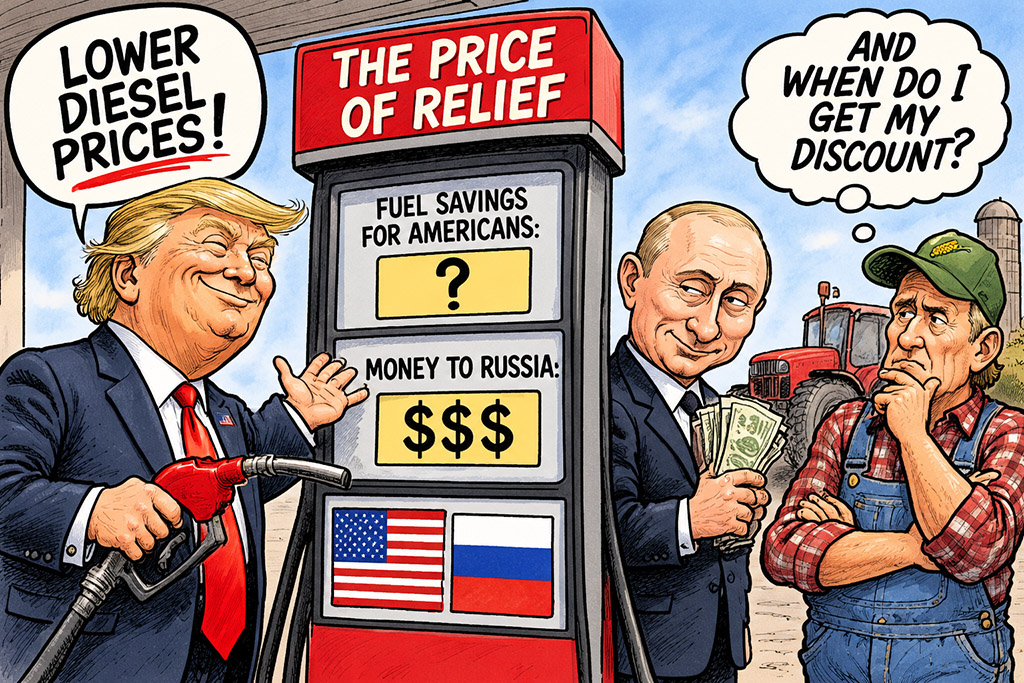
The United States exports more diesel than it imports. Now Trump is turning to a U.S. Adversary, Russia, for additional fuel. This raises questions about the economic benefits, existing law, and who stands to gain.
President Donald Trump announced an agreement with Russian President Vladimir Putin on October 9 to bring Russian diesel into American and global markets, promising relief from soaring fuel prices.
Diesel prices have risen sharply amid the war with Iran, increasing costs for Iowa farmers, truckers, and consumers. But the agreement raises an obvious question: Why turn to Russia when the United States already produces more diesel than it consumes?
How Much Diesel Are We Talking About?
Trump announced that Russia would initially supply 300,000 metric tons of diesel, followed by 500,000 tons in November and another million tons shortly afterward. He said another three million tons could follow.
The initial shipment represents approximately 2.25 million barrels—roughly 14 hours of U.S. ultra-low-sulfur diesel consumption. Energy analysts question whether these relatively small volumes will significantly reduce prices. Russia’s refining capacity has also been damaged by Ukrainian attacks, limiting its ability to increase exports.
Meanwhile, the United States is a major diesel exporter. According to the U.S. Energy Information Administration, American refineries exported approximately 1.3 million barrels of distillate fuel daily in 2025. Canada supplies most of the ultra-low-sulfur diesel that the United States imports. Although diesel prices are influenced by global markets, the United States is not dependent on Russian fuel to meet domestic demand.
What About the Law?
Congress passed the Ending Importation of Russian Oil Act in 2022, prohibiting imports of Russian energy products to restrict revenue supporting Moscow’s war against Ukraine. The law establishes conditions for ending that prohibition, including congressional consultation and review.
Following Trump’s announcement, the Treasury Department issued a temporary license allowing certain Russian diesel transactions through April 2027. A bipartisan group of six senators, including four Republicans, has challenged the decision, arguing that the administration failed to follow the law’s requirements. Thus far, Iowa’s two senators have not voiced any opposition to the deal.
The dispute centers on whether a Treasury license can authorize transactions that remain subject to a congressional import prohibition. Treasury Secretary Scott Bessent maintains that the administration has the authority to proceed.
Russia Is Also Helping Iran
Russia’s relationship with Iran adds another dimension to the agreement, underlining the fact that Russia is an adversary of the United States. Iran has supplied Russia with attack drones used against Ukraine. In March, U.S. intelligence officials reported that Russia was providing Iran with information about American warships, aircraft, and other military assets in the Middle East.
Although the extent of Russia’s involvement in specific Iranian attacks remains uncertain, the reported intelligence sharing raises national-security concerns about easing economic restrictions on Moscow. Russia could also benefit financially from renewed energy sales, potentially increasing revenue available to support its war against Ukraine. The actual benefit depends on sales volumes, prices, and payment arrangements that have not been publicly detailed.
Will Americans Actually Save Money?
The Russian agreement follows another Trump initiative aimed at reducing diesel costs. On October 5, Trump signed an executive order temporarily expanding access to red-dyed diesel, normally reserved for tax-exempt off-road uses. The measure defers federal fuel-tax obligations for certain highway uses through the end of 2026. But farmers already use tax-exempt diesel for qualifying agricultural equipment, and state restrictions complicate its use by interstate truckers. The order does not increase diesel production or resolve global supply shortages.
Both initiatives promise relief from high fuel prices, but their practical benefits remain uncertain. For Iowa farmers, truckers, and consumers, the questions are straightforward: How much will diesel prices actually fall, and how soon?
The Russian agreement raises additional questions. How much revenue will Moscow receive? What legal authority permits the transactions? And what are the foreign-policy consequences of easing restrictions on a government that continues its war against Ukraine while reportedly providing military intelligence to Iran?
The administration says the arrangement will help American consumers. Whether the economic benefits justify the broader consequences remains an open question.
Mortgage Rates Hit 7.49% as Iran War Drives Up Costs
U.S. mortgage rates reach 7.49% in October 2026 amid rising oil prices and inflation concerns linked to the Iran WarIowa411 News BriefThe average interest rate on a 30-year fixed mortgage has climbed to 7.49%, its highest level since November 2023, according to the...
Trump Says He Cut Diesel Taxes. Read the Fine Print.
What Trump's Red-Dye Diesel Executive Order Actually DoesTrump promised “tax-free” diesel for farmers and truckers. His executive order actually directs Treasury to determine whether it can defer the tax while the forces driving record diesel prices remain largely...
Texas City Charges $2 Million for Access to Flock Information
Texas city charges $2 million for Flock records as agencies make it harder to see how cameras are usedHigh invoices and challenges to accessing data on how departments use the surveillance cameras have hindered requests by privacy advocates and journalists.by Ayden...
Iowa Steel Mill Tax Credits: Where the Money Really Goes
Iowa Legislature’s Steel Mill Incentive Is More Than a Tax BreakIowa’s proposed steel mill incentives involve more than simply allowing Mesabi Metallics to pay less in taxes. Because the investment tax credits can be refundable or transferable, they can have financial...
Iowa Farmers Sue USDA Over Canceled Solar Funding
Lawsuit Alleges that USDA Violated Federal Law by Applying New Restrictions to Projects Iowa farmers invested in solar projects expecting federal assistance. Then USDA changed the rules. Now they want a court to make the government honor its commitments.Iowa...
Fool Us Once, Mr. President, Shame On You
Fool Us 13 Times, Shame on UsThere’s an old saying: Fool me once, shame on you. Fool me twice, shame on me. Add 11 more times Iowans were fooled by Donald Trump, and you have the latest Trump promise of the world's biggest steel mill that many feel is nothing more...
Before Iowa Bets On a Steel Mill, First Think About Foxconn
The Proposed Iowa Steel Mill: Lessons from Wisconsin’s Foxconn FailureWisconsin's failed $10 billion manufacturing promise offers lessons as Iowa considers incentives for a proposed $15 billion steel mill.A Wisconsin reader's letter to the Des Moines Register this...